What's inside
- Best kayak seats by paddling situation
- What separates a comfortable kayak seat from a padded one?
- Head-to-head: low-back versus high-back kayak seats
- Drainage matters more than many buyers expect
- Compatibility checklist for sit-on-top kayaks
- Setup steps that prevent sliding and pressure points
- Durability, cleaning, and ownership costs
- Bottom line
As an Amazon Associate I earn from qualifying purchases. This post may contain affiliate links at no extra cost to you.
The best kayak seats for comfort and support are adjustable, well-drained seats with a firm back, a cushion thick enough for your hull, and attachment points that match your sit-on-top kayak rather than simply looking padded.
For most recreational paddlers, a 10–12 inch backrest, approximately 1–2 inches of seat padding, four secure attachment points, and corrosion-resistant hardware provide the best balance. Tall-backed seats suit long outings and people who want more lumbar support; low-backed seats are usually better for active paddling, fishing, and kayaks with limited rear-deck space.
As an Amazon Associate we earn from qualifying purchases at no extra cost to you.


Our Top Picks
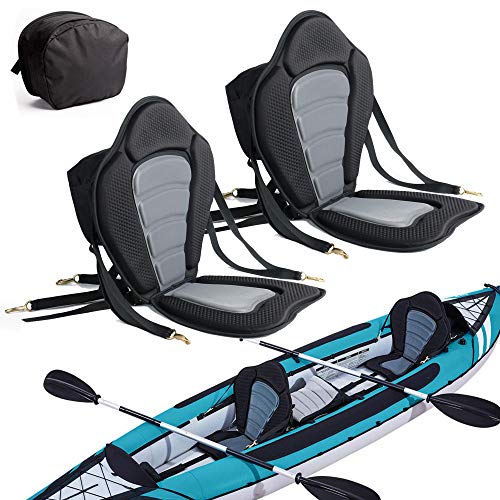
 NEW-Vi Universal Deluxe Detachable Kayak Seat Paddle Board1 Pack14.7 x 11.4 x 18 inches2.1 poundsCheck on Amazon


Best kayak seats by paddling situation
| Situation | Best seat type | Useful specifications | Why it fits |
|---|---|---|---|
| Occasional recreational use | Basic adjustable sit-on-top seat | 10–12 in backrest; 1 in cushion; four straps | Affordable support without unnecessary bulk |
| All-day paddling | High-back padded seat | 12–16 in backrest; 1.5–2 in cushion; breathable mesh | More back and sitting-area support for longer sessions |
| Fishing kayak | Reinforced adjustable seat or raised frame seat | Four or six attachment points; 250–300 lb rated capacity | More stability and easier posture changes while casting |
| Fast or active paddling | Low-back touring seat | 6–10 in backrest; 0.5–1 in cushion; firm side panels | Allows torso rotation and reduces interference with paddle strokes |
| Small sit-on-top kayak | Compact low-profile seat | Seat width under 16 in; short rear panel; flexible straps | Leaves room for the cockpit and avoids deck interference |
What separates a comfortable kayak seat from a padded one?
Seat-back height and support
Backrest height changes both comfort and paddling freedom. A low backrest supports the lower back while leaving the shoulders and upper torso free to rotate. This is usually the better choice for touring strokes, surf play, and narrow kayaks.
A medium or high backrest supports more of the torso and feels more comfortable when relaxing, fishing, or paddling at a modest pace. However, a tall back can press against a rear storage area, snag a paddle during recovery strokes, or make it harder to lean backward. Before buying, measure from the kayak seat pan to the top edge of the rear deck and compare that space with the folded or installed seat.
Cushion thickness and firmness
Thicker foam is not automatically better. A very soft cushion can compress during a long outing, leaving the frame or hull beneath you. It can also raise your hips enough to make the kayak feel less stable. For general use, approximately 1 inch of dense closed-cell or molded foam is a practical starting point. About 1.5–2 inches can be more comfortable for long trips, provided the kayak remains stable with the higher seating position.
Look for a cushion that supports the sit bones without forcing the pelvis forward. A firm base with moderate surface padding typically lasts longer than a deep, loose cushion. Removable cushions are useful because they can be dried separately and replaced if they eventually flatten.
Attachment points and strap layout
A sit-on-top kayak seat should normally use two front straps and two rear straps. The front straps control how far the seat slides forward; the rear straps control backrest angle and prevent it from folding backward. Four independent adjustment points are much more useful than two long straps because they let you level the seat on a sloped or contoured deck.
Inspect the webbing, ladder locks, clips, and anchor loops. Wide webbing—around 1 inch is common—distributes load better than narrow cord. Metal or reinforced polymer hardware resists repeated adjustment, but metal hardware should be rinsed after saltwater use. Never assume a seat’s stated load capacity includes fishing equipment, clothing, and a cooler; add those weights to your body weight when checking compatibility.
Head-to-head: low-back versus high-back kayak seats
Low-back seats
- Usually lighter and easier to fold for transport.
- Allow more shoulder movement and torso rotation.
- Fit better on compact kayaks and narrow rear decks.
- Offer less support when leaning back or resting between strokes.
- Can be less comfortable during long, relaxed fishing sessions.
High-back seats
- Provide more upper-back support and a more relaxed sitting position.
- Are often preferable for fishing, photography, and leisurely paddling.
- Can interfere with rear hatches, tank wells, and paddle recovery.
- May add several pounds compared with a simple low-back seat.
- Can make a high-seated kayak feel less stable.
If you paddle actively, choose the lowest backrest that supports your lower back. If you spend much of the trip sitting still, a taller backrest may be worth the extra bulk. A medium-height design is the safest compromise when you use one kayak for several activities.
Drainage matters more than many buyers expect
A sit-on-top kayak seat will get wet from paddle drip, splash, rain, and water draining through the deck. A seat that holds water against the fabric can stay damp for days, develop odors, and increase mildew risk. Look for open mesh panels, drain holes in the cushion, quick-drying foam, and a design that does not trap water between the seat and hull.
Drainage should not mean a thin seat with no structure. The most useful designs combine a supportive foam pad with mesh in the backrest or a perforated cushion. Avoid permanently sealed, absorbent padding unless you can remove it for drying.
Compatibility checklist for sit-on-top kayaks
Before ordering, check these dimensions and attachment locations:
- Seat-pan width: Measure the usable flat area, not the widest point of the kayak. Allow at least 1 inch of clearance on each side.
- Front anchor distance: The front clips need reachable loops, D-rings, or molded attachment points ahead of the seat.
- Rear anchor distance: Confirm that the rear straps can reach without crossing a hatch or rubbing on sharp plastic edges.
- Backrest clearance: Fold the backrest forward and check that it does not cover a hatch, tank well, or rudder control.
- Seat height: A thick or raised seat changes the center of gravity. Test stability in shallow water before going far from shore.
- Capacity: Add your body weight, clothing, personal gear, and any mounted accessories before comparing the seat’s rating.
Universal straps are convenient, but “universal” does not mean every kayak will feel secure. A kayak with molded channels or dedicated seat anchors may perform better with its manufacturer’s replacement seat. Established kayak brands such as Ocean Kayak, Wilderness Systems, Perception, Old Town, and Hobie offer model-specific or compatible seating options for parts of their ranges; still, confirm the exact hull and attachment pattern before purchasing.
Setup steps that prevent sliding and pressure points
- Center the seat. Align the cushion with the kayak’s centerline. An off-center seat can make the kayak feel uneven and cause one strap to carry more load.
- Connect all straps loosely. Attach both front and both rear straps before tightening any of them.
- Set the seat base first. Pull the front straps until your knees are slightly bent and your feet can brace naturally. Do not pull the seat so far forward that your legs feel cramped.
- Adjust the backrest. Tighten the rear straps evenly until the backrest supports you without forcing you into a reclined position.
- Check movement. Sit down, rotate your torso, and gently lean backward. The seat should not shift more than a small amount or pull its anchor points sideways.
- Recheck on the water. After several minutes, stop and retighten straps if the webbing has settled.
Do not use a seat with damaged webbing, cracked clips, torn anchor loops, or exposed sharp hardware. A strap that looks merely frayed on land can fail when repeatedly loaded by waves and body movement.
Durability, cleaning, and ownership costs
The parts most likely to wear first are strap adjusters, rear clips, foam edges, and stitching near attachment points. Salt, sand, ultraviolet light, and repeated wet storage accelerate deterioration. After saltwater use, rinse the seat and hardware with fresh water, open the straps so sand can escape, and dry the seat completely out of direct sunlight. Do not store it sealed in a kayak hatch while damp.
A washable removable cover is valuable because it lets you clean sunscreen, sweat, and fish residue without soaking the entire seat. Replacement straps or clips may extend the life of a good seat, but inexpensive seats can become uneconomical if the cushion, webbing, and hardware all fail together. For frequent paddling—roughly 30 or more outings per year—a better-made seat with replaceable or reinforced straps can cost less per use than repeatedly replacing a thin universal pad.
Bottom line
Choose a low-back seat with moderate padding for active paddling and compact sit-on-top kayaks. Choose a high-back, breathable seat with thicker support for fishing and long, relaxed outings. Whatever the style, prioritize four independently adjustable attachment points, adequate drainage, a compatible width, and a seat height that does not compromise stability. Those details matter more than maximum padding or a long list of cosmetic features.