What's inside
As an Amazon Associate I earn from qualifying purchases. This post may contain affiliate links at no extra cost to you.
The best side cutting pliers for most woodworking-shop tasks are 7-inch, high-leverage cutters with induction-hardened jaws and a clearly stated capacity for the wire you actually cut; choose flush-cut jaws for trim work, compact jaws for tight access, and insulated models only when their voltage rating and certification suit the electrical work.
“Side cutters” cover several different tools. A cutter suited to trimming brads or soft copper wire may be damaged by hard piano wire, while a broad-jawed lineman’s plier may not reach into a crowded project. Match jaw geometry and cutting capacity first, then consider handle length, grip, and insulation.
As an Amazon Associate we earn from qualifying purchases at no extra cost to you.


Our Top Picks
 Klein Tools D213-9NE High Leverage Side Cutting Pliers9-Inch12 x 4 x 0.75 inches1.1 PoundsCheck on Amazon
 BOENFU Wire Cutters Heavy Duty Snips Flush Cut6-inches6.3 x 4.33 x 0.39 inches4.83 ouncesCheck on Amazon

Compare the main types
| Type | Typical length | Typical weight | Best suited to | Important limitation |
|---|---|---|---|---|
| Compact diagonal cutter | 5–6 in (127–152 mm) | 3–5 oz (85–142 g) | Small wire, electronics, and confined spaces | Short handles provide less leverage; capacity is often modest |
| General-purpose diagonal cutter | 6–8 in (152–203 mm) | 5–9 oz (142–255 g) | Common workshop wire and general repair | “General purpose” does not mean suitable for every wire hardness |
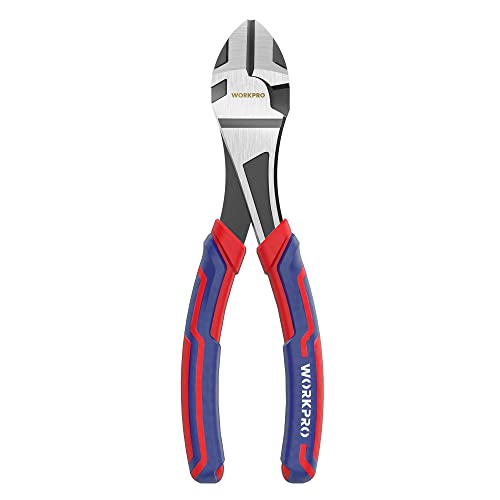
| High-leverage diagonal cutter | 7–8 in (178–203 mm) | 7–11 oz (198–312 g) | Frequent cuts or wire near the tool’s rated capacity | Larger head can be awkward in a narrow opening |
| Flush cutter | 4.5–6 in (114–152 mm) | 2–5 oz (57–142 g) | Close trimming of soft wire, ties, and plastic sprues | Thin edges are easy to chip on hard or oversized material |
| Insulated diagonal cutter | 6–8 in (152–203 mm) | 6–12 oz (170–340 g) | Electrical work when the tool is appropriately rated | Insulated handles do not make an unrated tool safe for energized work |
These are useful size and weight ranges, not performance ratings. Cutting capacity varies by model and material. Check the manufacturer’s specifications for wire diameter or gauge and hardness; gauge numbers alone can be misleading because the same gauge does not describe every material’s cutting difficulty.
Choose by the work in front of you
| Your situation | Best fit | Why |
|---|---|---|
| Occasional cuts on small, soft wire | 6-inch general-purpose diagonal cutter | A versatile size is easier to control than an oversized cutter and usually costs less than a specialty tool. |
| Frequent cuts or thicker wire within the stated rating | 7–8-inch high-leverage diagonal cutter | Longer handles reduce the hand force needed, though the jaws must still be rated for the material. |
| Flush trimming on soft material | Flush cutter | The cutting faces can leave a closer finish, but the delicate edge needs careful use. |
| Working beside a panel, hinge, or crowded assembly | Compact cutter with a narrow head | Access and visibility matter more than maximum leverage in tight spaces. |
| Electrical maintenance | Insulated cutter with an appropriate, verifiable rating | Look for the specific voltage and applicable safety standard on the tool, and follow safe-work procedures. |
If one pair must cover most woodworking-shop repairs, a 7-inch diagonal cutter is a sensible starting point. Add a flush cutter only if close trimming is a recurring task, rather than using it as a tougher all-purpose substitute.
Jaw geometry, leverage, and cutting capacity
Jaw shape controls access and finish
Diagonal cutters have angled cutting edges that can reach wire close to a surface. A narrow nose improves access between components; a broader head can feel more stable on larger work. Flush cutters are designed to leave one side of the cut nearly level with a surface. That finish is useful for soft wire or plastic, but it comes with a trade-off: the thin edge is less tolerant of hard material, twisting, and sideways loading.
For woodworking, consider what is actually being cut. Soft electrical wire, cable ties, and small soft-metal ties may call for different edges than a protruding nail or hardened brad. A side cutter is not a substitute for a nail nipper or end-cutting plier rated for nails. Cutting hardened fasteners with an unsuitable edge can cause chips or leave the jaws permanently misaligned.
Leverage helps, but it does not change the rating
Longer handles and a well-positioned joint can make repeated cuts less tiring. They also make it easier to apply excessive force. Do not extend the handles with a pipe or use the tool as a pry bar: extra force can overload the cutting edges and pivot. If a cut takes a hard squeeze, stop and check the material, the stated capacity, and whether a larger or purpose-built cutter is needed.
Read capacity as a material-specific limit
A listing may specify maximum capacity for soft wire, medium-hard wire, or hard wire separately. Those ratings are not interchangeable. If the tool gives a wire diameter, compare that figure with the actual conductor or material diameter. For nail-like stock, confirm that the maker explicitly rates the cutter for it. When a product page gives only a vague claim such as “cuts heavy wire,” ask for a material-specific specification or choose a tool with clearer documentation.
Insulated handles: what they do and don’t mean
Comfort-grip handles help reduce slipping and can make repeated cuts more pleasant. Insulated tools are a different category: they are designed and marked for defined electrical work. Check for a recognized rating, its voltage limit, and the condition of the insulation before use. A soft grip or thick coating by itself is not proof of electrical protection. Keep hands and tools away from energized conductors unless you are qualified, equipped, and following the relevant safety procedures.
Ownership: what wears first and how to avoid damage
With regular use, the cutting edges are usually the first part to show damage: they may develop nicks, dull spots, or a gap that leaves a wire partly attached. The pivot can also loosen or become stiff. Keep the jaws clean and dry, wipe off sap, adhesive, and metal debris, and apply a small amount of light machine oil to the joint if it begins to bind. Store flush cutters so their thin edges cannot strike other tools.
- Cut near the base of the jaws when the tool’s design allows; this usually gives better leverage than cutting at the tip.
- Keep the wire square between the edges rather than twisting the handles during a cut.
- Use a purpose-made cutter for hardened or unusually stiff material.
- Replace or service a cutter if the jaws chip, no longer meet cleanly, or develop noticeable side play.
Before buying, check the length, weight, head width, handle shape, and specific cutting capacities—not just the word “heavy duty.” The best side cutting pliers are the pair that can reach the work, cut its material within the maker’s rating, and leave an acceptable finish without forcing the handles.