What's inside
As an Amazon Associate I earn from qualifying purchases. This post may contain affiliate links at no extra cost to you.
Our Top Picks


Best Craftsman Socket Sets for Home Mechanics
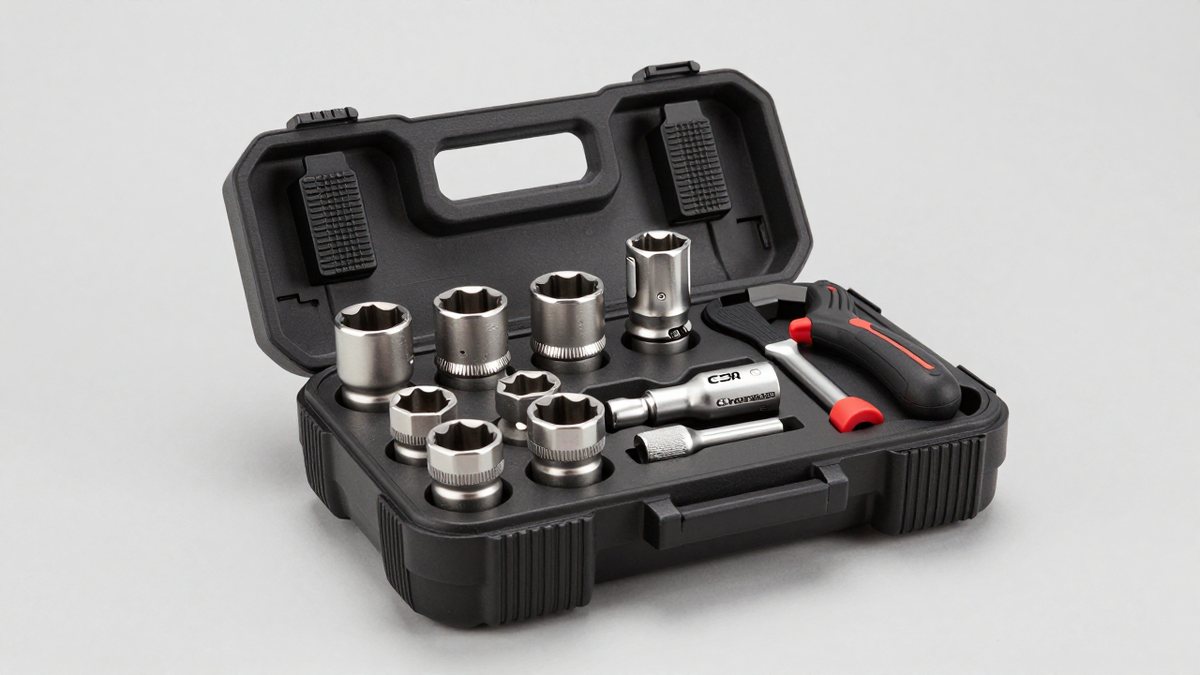
The best Craftsman socket set for most home mechanics is a 1/4- and 3/8-inch drive set with both SAE and metric sockets, a useful spread of shallow and deep sizes, and a ratchet you can service or replace without buying another full kit. For occasional repairs, a compact 3/8-inch set is better value; for vehicle maintenance, prioritize coverage and a sturdy case over a high piece count.
How Craftsman sets differ—and what the numbers mean
Craftsman has sold socket sets across multiple generations, and the contents and ratchet details can vary by model and production year. A large piece count does not necessarily mean broad working coverage: bit sockets, extensions, adapters, and duplicate sizes count toward the total. Check the actual included-socket list before comparing sets.
As an Amazon Associate we earn from qualifying purchases at no extra cost to you.


The table below compares useful set formats rather than promising the specifications of one particular SKU. Size ranges are representative; confirm the current package contents, ratchet tooth count, and warranty terms with the seller or Craftsman before buying.
| Set format | Typical drive and coverage | Ratchet and finish considerations | Best fit |
|---|---|---|---|
| Compact 3/8-inch set | About 8–19 mm metric and 5/16–3/4 in. SAE; often shallow sockets, with a smaller deep-socket selection | Usually one ratchet; chrome-finished sockets are common. Confirm whether the ratchet has a quick-release button and reversible direction switch. | Small repairs, furniture, and occasional vehicle work |
| 1/4- and 3/8-inch combination set | Often about 4–14 mm in 1/4-inch drive and 8–19 mm in 3/8-inch drive, plus SAE equivalents; shallow and deep sockets vary by kit | Two ratchets reach different spaces. A 72-tooth ratchet, if specified, advances about 5 degrees per click; tooth count alone does not indicate strength. | Most home garages and mixed household or car maintenance |
| 1/4-, 3/8-, and 1/2-inch set | Broad metric and SAE coverage, with larger 1/2-inch sockets commonly reaching roughly 19–32 mm or 3/4–1 1/4 in.; exact limits vary | Three drive sizes add reach and leverage options, but the case is larger. Standard chrome sockets are not a substitute for impact-rated sockets. | Frequent vehicle work, larger fasteners, and a dedicated garage setup |
| Older or used Craftsman set | Depends on the original kit; inventory individual sizes and drive tools rather than relying on its marked piece count | Inspect for rust, rounded corners, a loose ratchet head, skipped teeth, and missing case clips. Alloy and finish claims depend on the specific generation. | Buyers who can inspect condition and verify replacement or warranty options |
Choose by the work you actually do
- For a tight budget or occasional fixes: Get a compact 3/8-inch set with metric sockets and a usable ratchet. Add SAE sockets only if you encounter SAE fasteners; buying a broad kit up front can leave you paying for sizes and accessories that never leave the case.
- For a first home garage: A 1/4- and 3/8-inch combination set is the best balance. The smaller drive fits light, confined work, while 3/8-inch covers many household and vehicle fasteners. Look for both shallow and deep sockets in commonly used sizes, not simply a large piece count.
- For regular automotive maintenance: Favor a 1/2-inch drive option if the jobs include larger fasteners. It is not a license to overtighten: use a torque wrench where a specification matters, and do not use standard chrome sockets with an impact wrench.
- For limited storage: A compact, clearly labeled case beats a sprawling kit with awkward trays. Check that sockets stay put when the case is carried and that the ratchet and extensions have designated slots.
- For a used or older set: Buy based on condition and verified contents, not nostalgia or an assumed lifetime replacement. Confirm the current warranty process and exclusions before treating warranty coverage as part of the value.
Ratchet design, socket alloy, and finish
Newer Craftsman ratchets may offer features such as quick release, a reversible switch, or a finer-tooth mechanism, while older generations can have different head shapes and mechanisms. Those details matter in a cramped engine bay: a finer ratchet needs less swing to engage, but fine teeth are not automatically more durable. For a used tool, test that the direction changes cleanly and that the drive does not slip under hand pressure.
Socket material and finish deserve equal attention. Many hand sockets use chrome-vanadium steel with a polished chrome finish, but do not assume every generation or accessory shares the same specification; read the markings or package details. Chrome helps resist corrosion and makes grease easier to wipe away. It can still pit if stored damp, and worn or poorly fitting sockets can round fasteners. Match the socket to the fastener and press it fully into place before applying force.
Deep sockets are useful when a nut sits on a long stud; shallow ones are shorter and often easier to fit in confined spaces. Neither replaces a correctly sized six-point socket when a stubborn fastener is at risk of rounding. If a set contains mostly twelve-point sockets, check whether that trade-off suits your jobs before paying a premium for the kit.
Compare value by usable tools, not piece count
A simple way to compare sets is to calculate cost per useful socket: divide the set price by the number of socket sizes you expect to use, counting each size once and excluding duplicate drives, bits, adapters, and accessories. For example, a hypothetical $90 kit with 45 listed pieces but only 24 socket sizes you need costs $3.75 per useful socket ($90 ÷ 24). A hypothetical $65 kit with 20 relevant socket sizes costs $3.25 each. The larger set is not automatically the better buy.
This calculation is only a screening tool: it does not price in ratchet quality, case durability, or warranty. Compare comparable sets in the same general market-price range, then check whether the cheaper option omits deep sockets, a second drive size, or the metric sizes your work calls for. Prices fluctuate, so treat advertised prices as a range rather than a fixed benchmark.
Warranty and ownership: check before you count it
Craftsman warranty coverage and claim procedures can depend on the product, purchase channel, and applicable terms. A warranty is useful only if the tool is eligible and the replacement process works for the item in question. Check current Craftsman terms for the exact set instead of assuming that every older Craftsman socket or ratchet has identical lifetime coverage. Keep proof of purchase when available.
In normal home use, ratchet wear is often the first problem to notice: a mechanism may skip, feel rough, or fail to hold its direction. Cases also take wear—hinges, latches, and molded socket clips can break or loosen, leading to missing pieces. After use, wipe off oil and moisture, return sockets to labeled positions, and store the set somewhere dry. Avoid using a ratchet as a breaker bar; the extra leverage can damage the mechanism. For seized fasteners, use an appropriately rated breaker bar instead.
Bottom line
For most home mechanics, choose a Craftsman 1/4- and 3/8-inch set with metric and SAE coverage, shallow and deep sockets in the sizes you use, and a ratchet that feels suitable for restricted spaces. Choose a compact 3/8-inch kit if work is occasional, or add 1/2-inch drive for larger automotive fasteners. Before purchasing, verify the exact size list, socket type, ratchet features, case layout, and current warranty terms. Those details tell you more about real value than the generation name or headline piece count.