What's inside
- Demolition Hammer vs. Rotary Hammer: The Core Difference
- Spec Comparison: Impact Energy, Weight, and Concrete Capacity
- How to Choose by Job Size and Material
- Decision Matrix: Match Your Situation to the Right Electric Hammer
- Vibration Control and Weight: Why They Matter More Than Advertised Power
- Durability and Ownership Realities
- Worked Calculation: Is a Bigger Breaker Worth It?
- Final Picks by Situation
As an Amazon Associate I earn from qualifying purchases. This post may contain affiliate links at no extra cost to you.
The best electric hammer for demolition is a dedicated demolition hammer if you need to break slabs, foundations, or thick walls, while a rotary hammer is the better choice if you need to drill anchor holes, chip tile, and do light-to-medium demolition with one tool. For heavy breaking, look for 20-45 Joules of impact energy and SDS-Max or hex shank; for drilling and chipping versatility, target 5-12 Joules with SDS-Plus or SDS-Max and a rotation-stop mode.
As an Amazon Associate we earn from qualifying purchases at no extra cost to you.


Our Top Picks
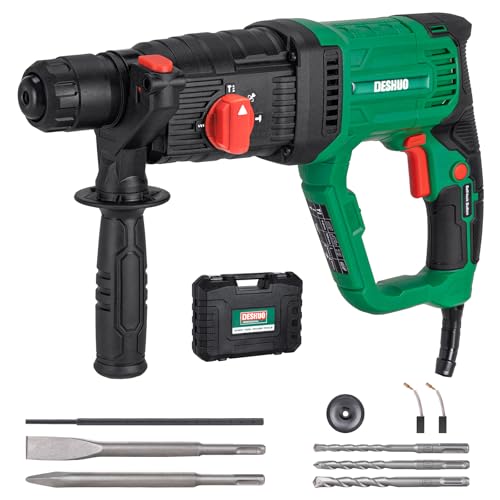 Deshuo 1" SDS-Plus Lightweight Rotary Hammer Drill forSmall15.15 x 8.85 x 3.93 inches7.19 PoundsCheck on Amazon
 ENEACRO 1-1/4 Inch SDS-Plus 13 Amp Heavy Duty13A15.35 x 10.24 x 4.53 inches12.6 poundsCheck on Amazon
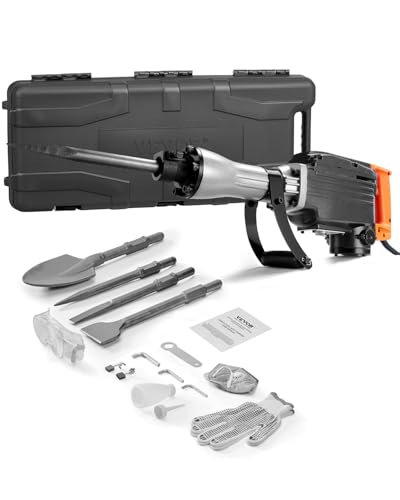 VEVOR Demolition Jack Hammer 2200W Electric Jackhammer Concrete2200W + 4 Chisel Bit Set + Black25.6 x 4.7 x 8.9 Inches56.2 PoundsCheck on Amazon

Demolition Hammer vs. Rotary Hammer: The Core Difference
Both are electric hammers, but they work differently and solve different problems. Confusing them leads to buying a tool that is either underpowered for the slab or too heavy to drill overhead.
Rotary Hammer (Combi Hammer)
A rotary hammer uses a piston-driven hammer mechanism plus rotation. It has three modes on most SDS-Max models: rotation only, hammer drilling, and hammer only (chiseling). The bit is held by an SDS-Plus or SDS-Max chuck that allows the bit to slide and hammer without the chuck spinning free. You use it to drill quickly into concrete, brick, and stone, and to chip, chase, and remove tile when you lock rotation off. Concrete drilling capacity is typically 1/2 inch to 2-1/8 inch diameter, with core bit capacity up to 3-1/2 to 6 inches depending on the model.
Demolition Hammer (Breaker Hammer)
A demolition hammer has no rotation, only hammering. All motor power goes into raw impact energy, so it hits significantly harder per blow than a rotary hammer of the same weight. It accepts chisels, spades, and scaling tools in SDS-Max, 1-1/8 inch hex, or 3/4 inch hex shanks. You use it for breaking concrete slabs, cutting asphalt, removing foundations, driving ground rods, and heavy chipping. It does not drill.
If you need one electric hammer for masonry work that involves drilling, a rotary hammer is more versatile. If you need to break 4-inch or thicker concrete for more than an occasional patch, a dedicated demolition hammer will do the job 2 to 4 times faster and with less bit wear.
Spec Comparison: Impact Energy, Weight, and Concrete Capacity
Impact energy (measured in Joules or ft-lbs), tool weight, and blows per minute (BPM) determine real-world breaking speed and control. Vibration control determines how long you can actually work. Use this table to set a baseline before you compare any specific model.
| Tool Type & Example Model | Shank / Chuck | Impact Energy | Tool Weight | BPM | Max Solid Bit in Concrete | Vibration Control |
|---|---|---|---|---|---|---|
| Light Rotary Hammer – Bosch 11255VSR / Makita HR2475 | SDS-Plus | 2.0 – 3.0 J (1.5 – 2.2 ft-lbs) | 6.5 – 7.7 lbs (2.9 – 3.5 kg) | 0 – 5,800 | 1 inch | Basic dampening handle |
| Mid-Size Rotary Hammer – Bosch 11316EVS / Hilti TE 60-AVR | SDS-Max | 8.0 – 11.0 J (5.9 – 8.1 ft-lbs) | 14 – 17.5 lbs (6.4 – 7.9 kg) | 1,350 – 2,900 | 1-5/8 inch | Active Vibration Reduction (AVR) / ATC |
| Heavy Rotary Hammer – Makita HR5212C / DeWalt D25614K | SDS-Max | 12.0 – 19.0 J (8.8 – 14 ft-lbs) | 24 – 27 lbs (10.9 – 12.2 kg) | 1,100 – 2,150 | 2-1/16 inch, 6 inch core | AVT + soft start, shock-absorbing handle |
| Mid-Weight Demolition Hammer – Bosch 11304 / Makita HM1203C | SDS-Max | 14.0 – 19.1 J (10.3 – 14.1 ft-lbs) | 20 – 23 lbs (9.1 – 10.4 kg) | 950 – 1,900 | Chipping only | AVT / vibration-dampened housing |
| Heavy Demolition Hammer – Bosch 11388 / Makita HM1812 / DeWalt D25980K | 1-1/8″ Hex | 30 – 62 J (22 – 46 ft-lbs) | 63 – 70 lbs (28.5 – 31.7 kg) | 730 – 1,300 | Breaking only | Full-body isolation, padded handles |
What the numbers mean on the job: Below 8 Joules, you will struggle to break 3-inch reinforced concrete at any practical speed. Above 25 Joules, you can break a 4-inch unreinforced slab at roughly 1 to 2 linear feet per minute with a 5-inch spade, but the tool is too heavy for wall or overhead work. BPM matters inversely to energy; high BPM with low energy excels at drilling and scaling, low BPM with high energy excels at cracking thick concrete.
How to Choose by Job Size and Material
Small Jobs: Tile, Mortar, Brick, and Holes Under 1 Inch
Choose an SDS-Plus rotary hammer, 7 to 9 lbs, 2 to 4 Joules. It will drill 3/16 to 5/8 inch holes for Tapcons and plastic anchors without over-drilling, and with a flat chisel it will strip thin-set, remove bathroom tile, and chase mortar joints. A demolition hammer is excessive here and will damage substrate and fatigue you quickly.
Medium Jobs: Walls, Steps, Patch Removal, and Holes to 1-5/8 Inch
Choose an SDS-Max rotary hammer, 14 to 27 lbs, 8 to 19 Joules. This is the sweet spot for most masonry and remodeling contractors. You can drill 3/4 to 1-5/8 inch holes for rebar and all-thread, core 3 to 4 inch holes for pipe, and chip out window openings or 3-inch slabs in sections. Models like the Hilti TE 60-AVR, Bosch 11316EVS, and DeWalt D25614K balance impact energy with vibration control that lets you work a full day on walls without losing accuracy.
Large Jobs: Slabs, Footings, Foundation Walls, and Asphalt
Choose a dedicated demolition hammer. For interior slab removal where you must carry the tool inside, a 20 to 30 lb SDS-Max breaker (14-19 Joules) is maneuverable and breaks 3 to 4 inch concrete. For exterior or basement slabs over 5 inches, or reinforced footings, step up to a 60 to 70 lb 1-1/8 inch hex breaker (35-62 Joules). The added weight is not a disadvantage on floors; it increases impact force and holds the chisel against the work so you do not have to push.
Decision Matrix: Match Your Situation to the Right Electric Hammer
Use this matrix to close the decision when specs overlap. Find the row that describes your frequency of use, space, and budget.
| Your Situation | Recommended Type | Why It Fits | Market Price Range in 2026 (Tool Only) |
|---|---|---|---|
| Homeowner, occasional drilling & tile removal, tight storage | SDS-Plus Rotary Hammer, corded 7-8 lbs | Lightest, cheapest, drills and chips; fits in a toolbox | $180 – $350 |
| Remodeler / handyman, weekly masonry drilling + light chipping | SDS-Max Rotary Hammer, 14-17 lbs with AVR/AVT | One tool covers 90% of tasks; vibration control prevents fatigue on overhead work | $500 – $950 |
| Mason / concrete contractor, frequent wall demo and core drilling | Heavy SDS-Max Rotary Hammer, 24-27 lbs | Highest drilling capacity with chipping power to avoid switching to a breaker | $750 – $1,200 |
| DIY slab or patio removal, 1-2 times per year | Rent 60-lb Hex Breaker, or buy mid-weight SDS-Max breaker if you will reuse | Cost per use is lower to rent a heavy breaker than to burn out a rotary hammer | Rental $75-$120/day; Purchase $550-$900 |
| Pro demolition crew, daily breaking of 4″+ reinforced concrete | 1-1/8″ Hex Heavy Breaker, 63-70 lbs | Maximum Joules per blow; consumables and service intervals built for continuous breaking | $1,300 – $2,100 |
Vibration Control and Weight: Why They Matter More Than Advertised Power
Impact energy sells tools, but vibration and weight determine usable power. A 17 lb rotary hammer without effective dampening will transmit 15 to 20 m/s² to your hands. With modern Active Vibration Technology (AVT) or Active Vibration Reduction (AVR), that drops to 8 to 11 m/s², which roughly doubles the time you can work before numbness and accuracy loss. For comparison, heavy hex breakers without isolation can exceed 18 m/s² and require scheduled breaks to stay within exposure limits.
Weight strategy: For horizontal floor breaking, heavier is better up to 65 lbs because gravity assists. For vertical and overhead work, every pound over 17 lbs dramatically increases shoulder fatigue and reduces control. If more than 30% of your work is on walls or ceilings, prioritize a lighter SDS-Max rotary hammer with superior vibration control over a heavier model with higher Joules.
Durability and Ownership Realities
Electric hammers are durable, but they have predictable wear points that affect total cost more than the purchase price.
- Grease and seals: Hammer mechanisms require periodic re-greasing. Most rotary hammers need fresh grease every 80 to 120 hours of hammering, demolition hammers every 50 to 80 hours. Dry mechanisms overheat and crack piston seals, leading to a $150-$300 repair. Follow the interval in the manual and use only the specified grease type.
- Brushes and armatures: Brushed motors need brush replacement around 150 to 250 hours. Brushless models like newer Makita and DeWalt rotary hammers extend that to 500+ hours and reduce dust intake, which is valuable in masonry dust.
- Chisels and bits wear first: SDS-Max chisels mushroom and SDS-Plus drill flutes dull long before the tool itself wears out. A dull chisel can cut breaking speed by 40%. Sharpen flat chisels with a grinder at a 60-degree bevel and keep at least two points and two flats on rotation. Replace carbide-tipped drill bits when the carbide edge rounds or you need excessive pressure to advance.
- Dust and cleaning: Concrete dust is abrasive. Blow out motor vents daily with low-pressure air, wipe and lightly oil the shank before inserting, and do not use the tool as a pry bar. Side-loading chisels is the most common cause of premature retainer and striker failure.
- Corded vs. cordless: In 2026, cordless SDS-Max rotary hammers on 40V/60V platforms (such as Bosch Profactor 18V, Makita 40V XGT, DeWalt FlexVolt) deliver 8 to 10 Joules and run 30 to 50 holes of 5/8 x 3-1/2 inch per 8Ah battery. They are ideal for anchor holes on scaffolding, but for all-day chipping or slab breaking, corded models maintain consistent impact energy without battery swaps and cost far less per Joule.
Worked Calculation: Is a Bigger Breaker Worth It?
To see if stepping up in size saves money, estimate cost per square foot of broken concrete. Assume you need to remove 120 sq ft of 4-inch unreinforced slab.
A 14-Joule SDS-Max breaker breaks at roughly 4 sq ft per hour in this material. The job takes 30 hours. At a $550 tool purchase + $60 in chisels, cost is $610 / 120 = $5.08 per sq ft in tool cost, plus significant labor time.
A 45-Joule hex breaker breaks the same slab at roughly 12 sq ft per hour. The job takes 10 hours. At a $1,700 tool purchase + $90 in steel, cost is $1,790 / 120 = $14.91 per sq ft if you buy for one job only. This is why single-job purchase favors renting the large breaker or using a mid-weight breaker you already own. If you repeat that job 5 times per year (600 sq ft), the hex breaker cost spreads to $2.98 per sq ft plus 50 hours saved, making the larger tool the economical choice. Always include labor time in the calculation.
Final Picks by Situation
Best all-around electric hammer for masonry pros: SDS-Max rotary hammer in the 14 to 17 lb class with AVR/AVT, such as Hilti TE 60-AVR or Bosch 11316EVS. It drills to 1-5/8 inch, chips effectively, and remains usable on walls all day.
Best for heavy floor demolition: 1-1/8 inch hex demolition hammer in the 63 to 70 lb class, such as Bosch 11388 or Makita HM1812. Nothing lighter breaks thick reinforced slab at a profitable pace.
Best compact choice for homeowners: SDS-Plus rotary hammer like Bosch 11255VSR or Makita HR2475. Low cost, low weight, and it handles drilling and light chipping without the need for a second tool.
Best cordless for field drilling: 40V/60V SDS-Max rotary hammer from Makita XGT, DeWalt FlexVolt, or Bosch Profactor if you work off scaffolding or away from power. Keep a corded breaker in the shop for extended chipping.
Choose by impact energy and shank first, weight and vibration control second, and brand ecosystem last. A correctly sized electric hammer with sharp, properly sized bits will outperform a larger, heavier tool run with worn consumables every time.