What's inside
As an Amazon Associate I earn from qualifying purchases. This post may contain affiliate links at no extra cost to you.
Our Top Picks
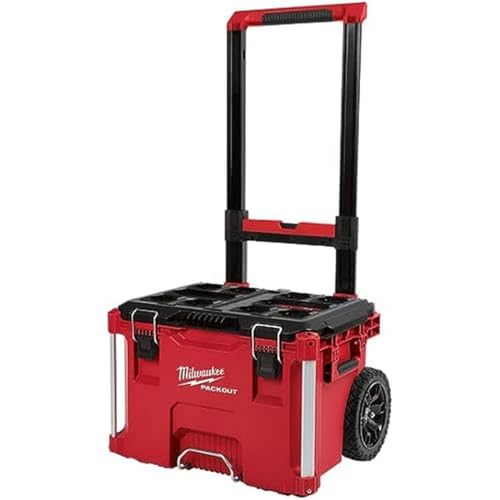 Milwaukee 48-22-8426 Packout22.1" x 18.9" x 25.6"22.1 x 18.9 x 25.6 inches23.4 PoundsCheck on Amazon


Best Milwaukee Tool Boxes: The Packout System Explained
The best Milwaukee tool box for most people is the PACKOUT Rolling Tool Box for a mobile base, paired with a PACKOUT Tool Box or Compact Tool Box for daily-carry tools; choose the XL Tool Box when your kit includes larger saws or bulky accessories. PACKOUT is a modular system, not one box size: its pieces lock together, but each has different capacity, weather protection and practical tool fit.
PACKOUT choices at a glance
The figures below are published product specifications for representative North American PACKOUT boxes. Dimensions are approximate external dimensions; internal space is smaller, and Milwaukee may update specifications or regional models. Check the exact product page before buying, especially if a tool must fit flat.
As an Amazon Associate we earn from qualifying purchases at no extra cost to you.


| PACKOUT unit | Approx. external size (L × W × H) | Capacity | Weight rating | Protection and best use |
|---|---|---|---|---|
| Rolling Tool Box | 22.1 × 18.6 × 25.6 in. | Up to 250 lb | 250 lb stacked load | IP65-rated; wheeled base for a large kit |
| Tool Box | 22.1 × 16.2 × 11.3 in. | Up to 100 lb | 100 lb stacked load | IP65-rated; general-purpose hand and power tools |
| XL Tool Box | 22.1 × 16.2 × 16.2 in. | Up to 100 lb | 100 lb stacked load | IP65-rated; taller tools and bulky gear |
| Compact Tool Box | 16.2 × 11.9 × 6.5 in. | Up to 75 lb | 75 lb stacked load | IP65-rated; smaller service or accessory kit |
| Organizer | 19.7 × 15.2 × 4.6 in. | Up to 50 lb | 50 lb stacked load | IP65-rated; divided storage for small parts |
| Compact Organizer | 10.2 × 15.2 × 4.6 in. | Up to 20 lb | 20 lb stacked load | IP65-rated; fasteners and compact accessories |
Stack ratings are not the same as the amount you should pack into every box. The rating limits the load carried by that unit in the stack; also account for the total weight, the rolling base’s handling, stairs and vehicle loading. IP65 applies to specified sealed units when properly closed and latched. It means protection against dust and water jets under test conditions, not permission to submerge a case or leave it open in rain.
Pick by the tools you actually own
For a cordless drill, impact driver and daily essentials
Start with the standard Tool Box if you want one deeper case for a drill or impact driver, batteries, charger and hand tools. A Compact Tool Box works for a lighter service kit, but it is shallow: measure the tool with its battery attached, then allow room for handles, belt clips and padding. A box’s outside height is not usable interior height.
For saws, grinders and bulky accessories
Choose the XL Tool Box when a circular saw, grinder, larger charger or irregularly shaped equipment needs to lie flat. The extra height is useful, but do not assume every Milwaukee saw will fit just because it fits the exterior dimensions. Measure the longest and widest points, including a blade guard, handle or dust port. For a tool that cannot be safely stored on its side, check its manual and plan the layout around that orientation.
For a rolling shop-to-site setup
The Rolling Tool Box makes sense when you regularly move several cases across a jobsite. Its large wheels and telescoping handle reduce carrying, while the stack footprint keeps compatible PACKOUT cases together. It is less convenient on stairs, in tight truck beds or where the loaded stack must be lifted frequently. For those routes, two lighter stacks may be easier than one tall tower.
For fasteners, blades and small parts
Use an Organizer for a larger assortment and the Compact Organizer when you only need a small selection of screws, anchors or fittings. Dividers are useful only if they stay put for the parts you carry; verify that the compartments suit the length of your fasteners. Keep heavy tools out of organizers: the shallow format is designed for separated small items, not as a substitute for a deep tool case.
Which setup fits your situation?
| Your situation | Practical starting choice | Why |
|---|---|---|
| Occasional home projects; limited storage | Compact Tool Box or Compact Organizer | Smaller footprint avoids buying rolling capacity you may not use. |
| Daily service calls with a drill and hand tools | Tool Box plus Organizer | Separates bulky tools from small parts and keeps frequently used items accessible. |
| Several power tools moved between van and site | Rolling Tool Box with Tool Box or XL Tool Box above | Wheels help over level ground; size the upper case to the largest tool. |
| Wet, dusty or outdoor work | IP65-rated sealed cases and organizers | Gasketed protection adds a barrier when closures are maintained; it does not replace careful handling. |
| Mostly stationary workshop storage | Individual boxes or organizers sized to shelves | A rolling stack may add bulk without improving access. |
Measure before you build a stack
A quick fit check prevents the common mistake of buying by advertised capacity alone:
- Measure the tool’s longest, widest and tallest dimensions in the storage position you intend to use.
- Measure around protrusions: battery packs, handles, belt hooks, guards and attached accessories often determine fit.
- Compare those measurements with the internal dimensions for the exact box model, not its exterior listing dimensions.
- Leave space for padding or dividers and for removing the tool without catching its controls or accessories.
- Put the heaviest cases at the bottom and keep the stack within each unit’s load rating.
For example, a 17-inch tool does not automatically fit a box listed as 22 inches long: the usable interior is shorter than the outside, and molded corners or a lid may reduce clearance further. If the manufacturer does not publish internal dimensions, ask the seller or measure the case in person rather than relying on the nominal exterior size.
Ownership details that affect the decision
PACKOUT’s main advantage is compatibility: you can begin with one case and add matching components as your kit grows. The trade-off is that a fully loaded stack becomes heavy and can be awkward to reach into; the tools you use most should stay in the top case or in a separate carry bag.
Seals and latches are the parts to inspect routinely. Dust, wood chips and grit around a gasket can stop a lid from closing evenly, while a damaged or compressed seal reduces its protective value. Brush debris from the rim, wipe the gasket clean, and make sure every latch engages before transporting a sealed case. Do not force a latch over an overfilled box, and avoid using the lid as a step or seat unless the exact product is rated for that use.
Prices vary by retailer, region and promotions. As a broad market guide, individual PACKOUT boxes and organizers commonly range from a few dozen dollars to roughly $150, while rolling bases and larger bundles can cost more. A sensible budget is to buy the smallest configuration that fits the tools you own now, then add components only when a real storage or transport need appears.
Bottom line
For a versatile Milwaukee tool box setup, choose the standard Tool Box for everyday power tools, the XL version for taller or bulkier equipment, and the Compact Tool Box for a lighter kit. Add an Organizer for small parts, and pay for the Rolling Tool Box only if you regularly move a substantial stack. Confirm internal fit and total loaded weight before committing; those checks matter more than the largest capacity figure on the label.