Key takeaways
- Bosch wins specific categories outright. DeWalt wins the platform. That is the whole comparison in two sentences.
What's inside
As an Amazon Associate I earn from qualifying purchases. This post may contain affiliate links at no extra cost to you.
This comparison is unusual because the two brands barely compete head-on in the United States. DeWalt sells a platform; Bosch sells excellent individual tools. Bosch’s professional cordless range is thinner here than it is in Europe, so in most American shops the two names end up on different shelves, bought at different times, for entirely different reasons.
Which means the useful question is not “which brand is better”. It is two questions asked in order: which battery family runs the tools you pick up every day, and who makes the best version of the specific tool you are about to buy. Answer them separately and the money sorts itself out. Answer them as one question and you end up with a half-finished platform and a specialty tool you cannot feed.
As an Amazon Associate we earn from qualifying purchases at no extra cost to you. Product prices and availability are accurate as of the date shown and are subject to change.


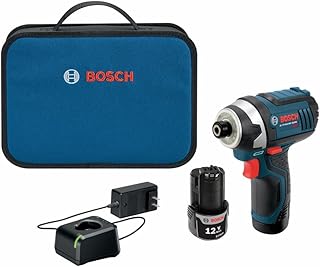


We are not going to declare an overall winner, because at the category level there is not one. What follows is a comparison desk view: what each company optimizes for, where that shows up on the bench, and which type of buyer gets punished by each choice.
| Category | Bosch | DeWalt | Winner |
|---|---|---|---|
| Jigsaws | Class-leading | Good | Bosch |
| Routers | Class-leading | Good | Bosch |
| Miter saws | Glide, space-saving | Wide range, FlexVolt | Depends on shop |
| Rotary hammers | Excellent | Very good | Bosch, narrowly |
| Cordless platform breadth | Moderate in US | Largest | DeWalt |
| Table saws | Good | Excellent jobsite range | DeWalt |
| Availability | Good | Everywhere | DeWalt |
| Discounting | Rare | Frequent | DeWalt |
How To Weigh The Criteria Against Each Other
Ranking the criteria before you shop is most of the work, because the wrong order is what produces regret purchases. For a woodworking shop, roughly this priority:
- Frequency of use. The tools in your hand every working day — drill, impact driver, circular saw — decide the battery. Anything used a handful of times a year can be corded and does not owe loyalty to any platform.
- Cost of ownership, not tool price. Batteries and chargers are the expensive, recurring part of a cordless system. Adding a second platform duplicates all of it, plus an outlet and shelf space you did not plan for.
- Cut quality and vibration. For jigsaws, routers and trim work this is the entire point of the purchase, and it is where Bosch earns its price.
- Shop geometry. A miter saw’s clearance behind the fence can matter more than its blade diameter or its motor.
- Service and parts. Where do you take a dead tool, and can you still buy a switch or a brush holder for it in a few years?
- Discount cadence. One of these brands is on promotion constantly and the other is rarely discounted. Budget accordingly rather than waiting for a sale that does not come.
The interesting part is what happens when two criteria conflict. Frequency beats almost everything, so if a tool lives in your hand, platform breadth wins even over a slightly better competitor. But the reverse is just as strong: for a tool used standing still at a bench, cut quality wins outright, because buying it corded costs nothing in battery infrastructure. Brand loyalty appears nowhere on the list, and neither does the drill spec sheet everybody argues about.
Buy Bosch For These
Jigsaws, compact routers, the Glide miter saw and SDS rotary hammers. In each of these, Bosch’s engineering advantage is real and noticeable, particularly on cut quality and vibration.
Concretely, that means a jigsaw that follows a scribed line instead of drifting away from it, blade guidance that holds the cut square through thicker stock, and a base that stays flat with adjustments that repeat after you change them. On a curved cut in hardwood or a laminate worktop, that difference is visible without measuring anything. The compact router’s virtue is control rather than power: fine height adjustment you can set by feel, sane balance in one hand for edge work, and accessories ��� guides, bases, dust ports — that fit properly instead of almost fitting.
The rotary hammers go to Bosch narrowly, and the Glide saw wins on footprint rather than on cut: it needs far less clearance behind the machine, which is the deciding factor in a garage shop against a wall. The quiet reason all of these fit into any shop is that they are bought as tools, not as platform commitments. A corded Bosch jigsaw does not care what colour your batteries are.
Bosch routers and jigsaws
The two tools most American woodworkers buy from Bosch regardless of what platform their cordless kit is on.
Buy DeWalt For The System
If you want one battery running drills, drivers, saws, nailers, lights, vacuums and outdoor tools, DeWalt gives you more options in the US than Bosch. FlexVolt then covers the heavy cutting tools without a second platform.
Breadth has second-order benefits people underrate. Batteries and common tools are stocked in every big box store, so a failure mid-project is a drive rather than a shipping delay. Discounting is frequent and predictable enough that patient buyers pay noticeably less for the same kit. Because so many people already own the batteries, bare tools stay cheap and the used market is deep. Parts diagrams and service access are easy to find for tools that are several years old, which is exactly the signal that matters when nothing on the box tells you about durability.
The tradeoff is a wide quality band. The best DeWalt tools are genuinely excellent, and some are merely adequate, because the platform’s job is coverage rather than winning every category. Judge it tool by tool, not by the badge, and do not assume a strong table saw implies a strong jigsaw.
DeWalt 20V MAX and FlexVolt
Widest tool catalogue on one battery family in the American market, plus regular deep discounts.
What Separates A Good Pick From A Bad One At Each Price Band
Entry Money
At this level you are not buying tools, you are choosing which battery you will be married to. A good pick is a small DeWalt combo — drill and impact driver, two compact packs, a charger that is not the slow trickle unit — bought on one of the promotions that come round regularly, then grown one tool at a time. A bad pick is the giant bundle of six tools you will use twice, a bare tool on a platform you do not own yet, or entering Bosch cordless here in the US, where you pay for the engineering but inherit the thinnest catalogue of the four majors.
Mid Money
This is where the hybrid shop appears, and it is the best value point in the whole comparison: a DeWalt core kit for everything that moves, plus one or two corded Bosch precision tools that never need a battery. The bad version of the same budget is spreading it thinly across more DeWalt tools you rarely touch while your jigsaw and router stay cheap. Leave room for blades, bits and a dust extraction hose that actually fits the port, because a class-leading jigsaw with a worn blade cuts worse than a mediocre one with a fresh blade.
Pro Money
Now downtime costs more than tools do, so availability, parts and service weigh heavier than a small performance edge. FlexVolt for heavy cutting away from power, DeWalt for jobsite table saws and range depth, Bosch for the rotary hammer and the fixed bench saw where clearance is tight. The mistake at this level is buying a second full cordless platform to get one specialty tool, when the corded version of that tool is often better anyway.
Mistakes That Cost Real Money
- Letting a specialty tool choose your platform. A good sale price on one saw is not a reason to start a second battery family.
- Buying all the same battery size. Compact packs for drivers and overhead work, high-capacity packs for saws and heavy cutting. All large is heavy and expensive; all small throttles the big tools.
- Comparing drills to decide a brand. Everyone’s mid-range drill is fine. The decision lives in the tools you use for hours, and in what the rest of the catalogue looks like.
- Assuming batteries or adapters will bridge the gap. They do not, and third-party adapters are not a serious answer for tools that draw real current.
- Over-buying the machine and under-buying the consumable. Blade, bit and abrasive quality change results more than the last increment of tool price.
- Ignoring the space the tool needs. Miter saw clearance, router table height, hose routing. Measure the bench before you order.
Who Should Skip Each Brand
Skip Bosch cordless if you want one battery for the whole shop and yard, or if you buy mainly on discount, because the promotions are rare and the US catalogue will strand you. Skip Bosch entirely only if your work never involves fine cuts — no curves, no edge profiling, no masonry.
Skip DeWalt for a specific tool if that tool is a jigsaw or a compact router and cut quality is the reason you are buying it. Skip DeWalt as a platform only if you are already committed to another major battery family and buying tools occasionally; in that case, add corded Bosch specialties instead of starting over.
The Sensible Outcome
Most well-equipped shops end up with a DeWalt cordless kit and two or three corded Bosch tools on the bench. That is not indecision; it is buying each tool from whoever makes it best. The structure is what makes it work: one battery family carrying everything mobile and frequent, and a short list of corded specialists chosen purely on results, with no platform tax attached. Build it in that order — batteries first, precision tools as they are needed — and you never pay twice for the same capability.
FAQ
Is Bosch cordless worth buying in the US? Only for a specific tool that is best in class, and only if you accept it as a one-off rather than a foundation. The platform is thinner here than DeWalt, Milwaukee or Makita, so the second and third tool you want may not exist on it.
Which miter saw? Bosch Glide if bench space behind the saw is tight; DeWalt if you want cordless or a lower price. Measure the clearance behind your bench before comparing anything else, because that single number decides it more often than capacity does.
Do their batteries cross? No. Budget for one platform’s chargers and packs, and buy anything outside that platform corded where you can.
I already own DeWalt. What Bosch should I add first? The jigsaw, if you cut curves or finish edges; otherwise the compact router. Both are corded purchases that improve the work immediately and cost nothing in platform terms.
Check prices →