Key takeaways
- A structured breakdown of when corded still wins and when cordless is the obvious choice across every tool type.
What's inside
As an Amazon Associate I earn from qualifying purchases. This post may contain affiliate links at no extra cost to you.
The corded-versus-cordless debate isn’t one answer — it changes by tool and by task. We built this structured comparison so you can decide per tool instead of arguing in generalities. The argument never settles online because both sides are describing real experience with different work: a remodeler who changes rooms twice a day and a hobbyist at a fixed bench are both right, and neither conclusion transfers. This guide covers corded vs cordless power tools the way a buyer actually has to think about it — one tool at a time, weighed against how long you hold the trigger, how far you stand from an outlet, and how much money you have already committed to a battery platform.
We are not going to quote runtime figures, because they date badly and were never measured on your work anyway. Amp-hours climb, motors get more efficient, and the boundary keeps moving in cordless’s favor. What does not move is the physics. A battery holds a finite amount of energy and has to shed waste heat through a small pack sitting in your hand; a cord delivers effectively unlimited energy and lets a bigger tool with a bigger fan do the cooling. Everything below is downstream of that one difference.
As an Amazon Associate we earn from qualifying purchases at no extra cost to you. Product prices and availability are accurate as of the date shown and are subject to change.



The Four Criteria That Actually Decide It
The first and heaviest is duty cycle — not what the tool can do, but how long you keep it under load without stopping. Driving forty screws is a series of two-second bursts with cooling time in between. Sanding a tabletop, cutting sheet after sheet, mixing a bucket of compound or running a large hole saw through joists is one long pull. Batteries are excellent at the first pattern and are punished by the second, because heat builds in the pack and the tool exactly when you least want to stop.
The second is power ceiling: the output a tool can hold, not the figure it can flash for a second. Cordless has closed most of the gap on burst performance, and the honest remaining gap is sustained output at the top of the range. If a job routinely bogs the tool down — thick stock, masonry, steel, big bits — you are shopping for headroom, and headroom is cheaper on a cord.
The third is where the work happens. Count the outlets, then count how many times a day you would unplug, coil, move and re-run a cord. Ladders, roofs, crawlspaces, yards and furnished rooms all charge a tax on corded tools that never appears on a spec sheet, and a cord is a genuine hazard near a spinning blade or under your feet on a ladder.
The fourth is platform economics, and it breaks ties. With cordless you are not buying a tool, you are buying a battery family, and every purchase after the first is either cheap (tool-only, same packs) or expensive (new charger, new packs, second wall of dead weight). Corded tools belong to no platform, which is exactly why they suit the tool you use twice a year. Weigh these in order: a hard yes on continuous duty overrides everything, and if duty cycle is intermittent, mobility usually decides.
Where cordless wins
Drills, drivers, circular saws for general use, and anything you carry around a site — cordless convenience is now backed by real power. For the majority of tasks, batteries are the default. These are intermittent-duty tools, and if you add up actual trigger time across a day of assembly, framing or repair work, it is a small fraction of the hours. The tool spends most of its life being set down, picked up and repositioned, which is precisely where a cord costs you.
Cordless also wins wherever setup dominates the cut: one crosscut on a fence rail, a pilot hole above a doorway, one-handed work at the top of a ladder, punch-list fixes in a house where you cannot run cable across a hallway. On these tools the deciding variable is rarely the tool itself — it is the pack. A good brushless drill with one small battery feels worse in use than an average one with two mid-size packs on rotation.
Where corded still wins
Continuous heavy work — table saws, big grinders, mixing, large hole saws — favors corded for constant power and no downtime. Stationary tools especially have no reason to go cordless: a bench-mounted machine already lives in a fixed spot next to an outlet, so a battery adds cost, weight and an interruption while removing nothing.
Corded holds two less obvious advantages. One is sustained thermal behavior ��� a full-size fan, no cells to protect, and no cutout mid-cut, which matters for sanding, polishing, surface prep and extraction. The other is cost per watt on tools you rarely touch. If you need a beefy hammer drill, a bench grinder or a shop vacuum a handful of times a year, corded gets the work done without buying into anything, and it starts on the first pull after a year in a cupboard, which is more than can be said for a neglected battery.
| Task | Best choice |
|---|---|
| Drilling/driving | Cordless |
| Site carpentry | Cordless |
| Table saw / stationary | Corded |
| Heavy grinding/mixing | Corded |
What Separates A Good Pick From A Bad One At Each Price
Entry level
The failure mode here is the kit that looks complete and isn’t: one small pack, a slow trickle charger, a brushed motor and a plastic chuck. If you buy at this level, take the version with two batteries or budget for a second immediately, and check the chuck and charger before you read the headline torque number. On corded tools, the entry-tier compromises are a short thin cord, an unsealed trigger and vents that feed dust straight into the switch.
Mid range
Where most readers should buy and stop. You are paying for a brushless motor, metal where the load actually goes, two mid-size packs so one is always charging, a charger that refills over a coffee break rather than a lunch break, and a battery family broad enough that your next three tools are tool-only purchases. On corded, look for an honest amperage rating, a comfortable lockable switch, accessible brushes, and a cord long enough that you are not instantly reaching for an extension.
Professional tier
Worth it only when duty cycle justifies it. What you get is sealing against dust, high-output packs that sag less under heavy draw, better heat management, a service network and published parts diagrams. Weekly work under load repays that. Monthly light work does not — a mid-range tool plus a spare pack is the better buy.
Common Mistakes
- Buying a whole platform for one tool. Choose the battery family for the five tools you will own in three years, not the one on sale today.
- Under-sizing packs on high-draw tools. Compact batteries on a saw or grinder sag under load, run hot and age faster. Match pack size to the tool’s appetite.
- Reading voltage as power. Nominal voltage tells you which family a pack belongs to. Motor design, electronics and cell quality decide output.
- Going cordless on stationary machines. You pay for mobility you cannot use and accept an interruption you did not need.
- Starving a corded tool with the wrong extension cord. A long, thin cord drops voltage before the motor sees it, so the tool runs hot and feels gutless. Short and thick beats long and cheap.
- Buying for the hardest job you can imagine. Equip for the work you repeat, and rent or go corded for the once-a-year monster.
Who Each Option Suits — And Who Should Skip It
Go cordless-first
If your work moves: repairs, remodeling, decks and fences, installs, assembly, outdoor and overhead jobs, or a house where projects happen in a different room each weekend. Skip cordless as your primary answer if everything you build happens at one bench and you have no interest in managing packs.
Stay corded-first
If your shop is fixed and your cuts are long: table saw, jointer, planer, bandsaw, sanding, lathe work, extraction — plus any heavy tool you use too rarely to justify batteries. Skip corded-first if you are constantly relocating or working where there is no power.
Run both, on purpose
Most well-equipped shops end up mixed, and the mix should be planned: one cordless platform for everything handheld and mobile, corded for anything bolted down or run continuously. That is two decisions instead of twenty.
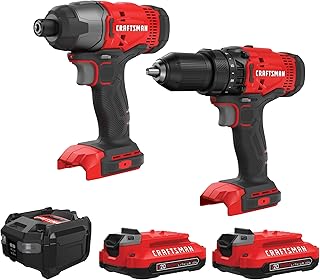
Cordless Drill (Everyday Default)
For the tasks where cordless wins — which is most of them — a solid brushless cordless drill is the tool you’ll reach for daily. Power, runtime and freedom in one.
FAQ
Is cordless powerful enough to replace corded entirely?
For handheld, intermittent work, yes for most users. Continuous duty is the exception that has not changed: long sanding sessions, heavy grinding, mixing and stationary machines still favor a cord, mainly for heat and uninterrupted power rather than raw output. Replacement happens task by task, not wholesale.
How many batteries do I actually need?
Two as a floor, so one charges while one works. Three or four once you own high-draw tools like saws and grinders — mid-size or large packs for those, and keep a compact pack for drills and drivers where balance matters more than runtime.
Does a bigger battery make a tool more powerful?
Not in the way people mean. A larger pack buys runtime and holds voltage better under heavy load, which feels like more power because the tool stops sagging, but it does not raise the tool’s ceiling. It also adds weight and worsens balance, which is why compact packs often win on a drill.
Can I mix battery brands?
Practically, no. Packs are not interchangeable between brands, and adapters compromise fit, cooling and warranty. Commit to one main platform for the tools you use weekly, and cover occasional heavy jobs with corded tools so you are never forced into a second battery family.
The takeaway
Go cordless for handheld, mobile work; keep corded for stationary and continuous-duty tools. Decide per tool, not per philosophy. Run the four questions in order — duty cycle, power ceiling, where the work happens, platform cost — and most purchases answer themselves before you read a single spec sheet. See it in action in our angle grinder comparison.