Key takeaways
- Both solve "how do we run big tools on batteries". One keeps your existing packs. The other starts a new collection.
What's inside
As an Amazon Associate I earn from qualifying purchases. This post may contain affiliate links at no extra cost to you.
By the mid-2010s both Makita and DeWalt faced the same problem: 18V could not comfortably run table saws, big miter saws and heavy rotary hammers all day. Cells and brushless motors had improved faster than the pack itself, and the bottleneck had become current delivery, heat and voltage sag under sustained load. They solved it in opposite ways. DeWalt built a battery that rewires itself depending on the tool it is dropped into. Makita designed a new platform from the ground up and accepted that it would not talk to anything already in its customers’ cases.
That difference, not voltage, is the entire comparison. Almost nobody should choose between these systems on a spec sheet, because the figures printed on the box describe packs rather than platforms. What decides it is what is already in your battery drawer, how many heavy tools you actually intend to own, and how much duplicated hardware you are willing to buy to get there.
As an Amazon Associate we earn from qualifying purchases at no extra cost to you. Product prices and availability are accurate as of the date shown and are subject to change.


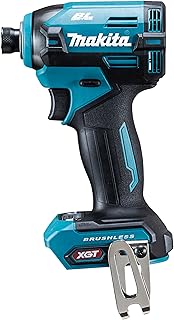


| Aspect | Makita XGT 40V | DeWalt FlexVolt 60V |
|---|---|---|
| Compatible with existing 18V/20V tools | No | Yes |
| Requires new charger | Yes | No (FlexVolt charges on 20V chargers) |
| Battery weight | Heavy | Heavy |
| Data communication | Full tool-battery comms | Standard |
| Tool range | Growing | Established |
| Migration cost | High — new platform | Low — additive |
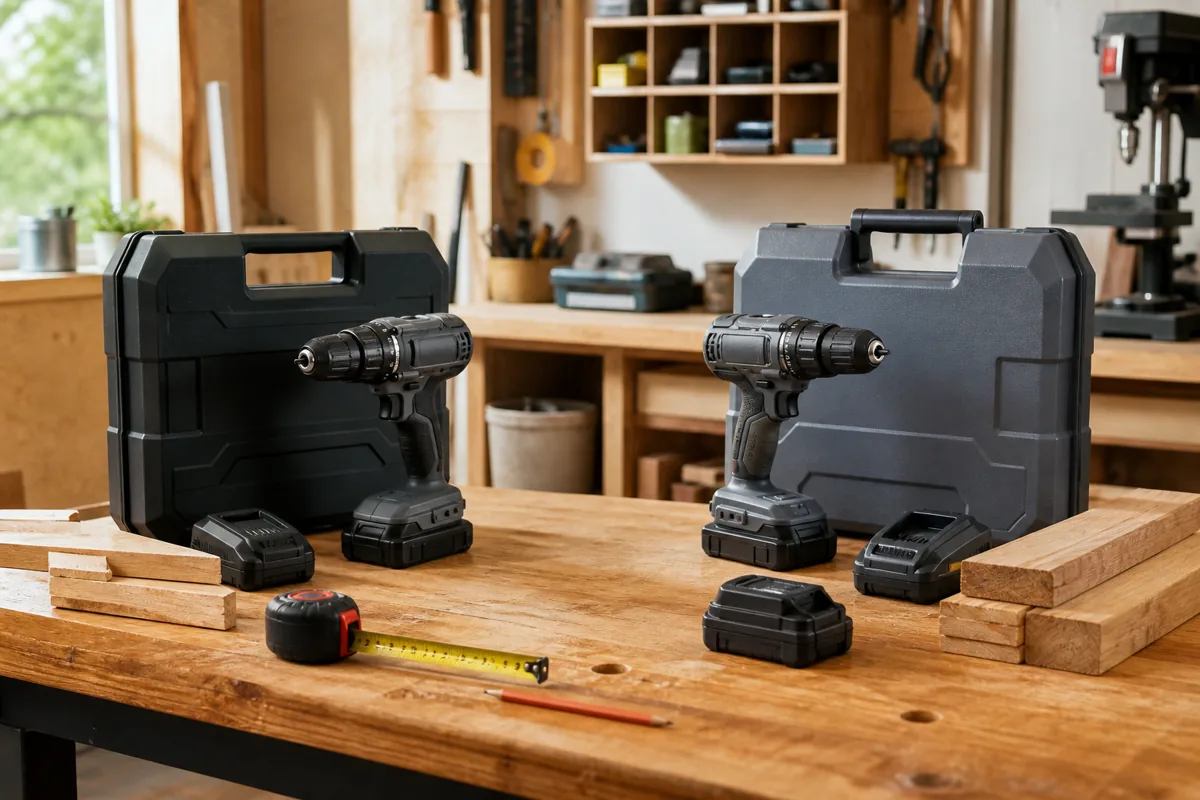
FlexVolt: additive
A FlexVolt pack is backward compatible. Drop it into any 20V MAX tool and it runs as a large 20V battery; drop it into a 60V tool and it reconfigures. Existing DeWalt owners can buy one battery and one big tool and be done.
That backward compatibility is the single strongest argument in this comparison. It removes the two costs that usually make a platform jump hurt: you are not buying into a second charger family, and you are not buying batteries that fit exactly one tool in the shop. The pack that came with the 60V saw is also the longest-running battery you own for the drill, the light and the vacuum, so the money is never stranded even if the heavy tool turns out to be a mistake.
The honest caveat is mass and shape. A FlexVolt pack is physically large, and in a compact drill or impact driver it turns a balanced tool into a nose-heavy one. Most owners end up keeping small 20V packs for handheld work and reserving the big packs for the tools that need them. One battery fits everything; it is not the right battery for everything.
DeWalt FlexVolt tools and batteries
Buy one FlexVolt pack with your first 60V tool and your whole existing 20V kit gains a high-capacity battery too.
XGT: clean sheet
Makita chose not to compromise. XGT has its own terminal design, its own electronics and its own thermal management, built specifically for sustained high current. Technically it is the more modern design — and it is completely separate from LXT.
A clean sheet buys real things. Terminals are sized for the current the platform was designed around rather than inherited from an older, lighter-duty family. Tool, pack and charger carry full communication between them instead of a temperature pin, so protection and charging behaviour are managed with actual data. Cooling is laid out around the pack that exists now, not the one from a decade earlier. If you intend to run a heavy tool near its limit for hours, that is the engineering you want underneath it.
That means an existing Makita owner buying XGT starts a second battery collection from zero — a second charger on the bench, a second family of pack sizes to track, and eventually a second set of packs to replace. None of that is hidden or unfair. It is the price of the design, and it has to be counted.
Makita XGT 40V tools
Excellent under sustained load. Worth it if you are buying a heavy-duty kit from scratch rather than upgrading an LXT collection.
How To Weigh The Criteria Against Each Other
Four things decide this, and they are not equally important.
The first and heaviest is how many batteries you already own. Count packs, not tools. Every usable pack is money that stays useful if you go additive and money that sits idle if you start a new platform. Somebody with six 20V packs is making a very different decision from somebody with two.
The second is how many heavy tools you will genuinely run. One occasional high-draw tool rarely justifies a second platform. Three or four in weekly use change the maths, because the fixed cost of chargers and spare packs is then spread across real work.
The third is duty cycle. Cutting sheet goods for twenty minutes and cutting all day are different problems. Sustained load is where thermal design and current headroom show up, and it is the one place a purpose-built platform earns its separation.
The fourth is availability and service for the specific tool you want. A platform is only as good as the model you need being obtainable, with a parts diagram you can find and somewhere to send it. Range on paper and range in your region are not the same thing.
Weigh them in that order. Existing packs beat engineering elegance for most buyers, and duty cycle overrides existing packs only when the work is genuinely heavy and continuous.
Good And Bad Buys At Each Price Band
- Entry spend. A bare heavy tool with a single pack is the classic bad buy on either system: a tool you cannot keep fed and a charging queue that stops work. Buy a kit with a charger and enough capacity to keep cutting while something charges.
- Mid spend. Here the platforms diverge most. On FlexVolt the money goes into one large pack and the tool, because the rest of the kit already exists. On XGT the same money must cover charger and packs first, so buy fewer tools of higher relevance rather than a broad starter set.
- Top spend. Full heavy kits only make sense if the tools are earning. Judge on charge time, the spread of pack capacities and service access rather than headline voltage. A platform that cannot recharge as fast as you drain it is the expensive mistake at every level.
Common Mistakes
- Founding a platform on one tool. If the heavy tool comes out once a quarter, hiring it or buying corded is cheaper than building an ecosystem around it.
- Reading voltage as power. Higher nominal voltage is a design choice about current and heat, not a promise of more work done.
- Under-buying chargers. On heavy tools the charger, not the pack, usually limits the day.
- Expecting a big pack to upgrade an old tool. A FlexVolt pack in a 20V tool gives runtime and steadier voltage, not a different motor.
- Planning around adapters, or buying light tools on the heavy platform. Drills, drivers and lights belong on the lighter system in both camps.
Which to choose
Already on DeWalt 20V: FlexVolt, obviously. The upgrade is incremental — chargers stay, existing tools benefit, and the downside risk is close to zero.
Already on Makita LXT: think carefully. Only go XGT if your heavy tools genuinely need it; otherwise stay LXT. If you do jump, jump for the heavy tools alone and keep LXT for everything handheld instead of migrating the whole shop.
Starting from zero, heavy work: either is defensible. FlexVolt gives a wider immediate tool range in the US; XGT arguably has the better engineering for sustained load. Decide on the specific tools you need and on what your local dealer can service.
Who should skip both: anyone whose heavy cutting and drilling happens near a wall socket. Corded and 18V/20V tools still cover a great deal of ground, and the cheapest high-power platform is the one you do not buy.
FAQ
Can XGT batteries run LXT tools with an adapter? Makita has offered limited adapter solutions, but do not plan a kit around them. Buy on the assumption the platforms stay separate.
Is 60V better than 40V? The nominal figures are 54V and 36V respectively; real-world difference is smaller than the marketing suggests. Tool design matters more.
Are the batteries interchangeable between brands? No. Neither are the chargers, and third-party cross-brand adapters are not worth the risk to the tool or the pack.
Will a FlexVolt pack make my existing 20V tools stronger? It will run them longer and hold voltage better under load, which can feel like more power in a heavy cut. The motor and electronics are unchanged.
Compare high-power systems →