Key takeaways
- A neutral, table-led comparison of the major cordless battery platforms, judged on tool range, compatibility, warranty, retail availability and how prices actually behave through the year.
What's inside
As an Amazon Associate I earn from qualifying purchases. This post may contain affiliate links at no extra cost to you.
Buying a cordless drill is a hundred-dollar decision. Choosing the best cordless tool platform for homeowners is a ten-year decision, because every battery, charger and bare tool you add later is locked to whatever mount you picked first. Most buyers compare the drill in the box when they should be comparing the ecosystem behind it.
This is a comparison desk, not a fan club. Below, the major platforms sold in the US are lined up on the things that actually change your experience over a decade: how wide the tool range is, whether batteries stay compatible, what the warranty covers, where you can buy a replacement pack on a Saturday, and how hard prices move during promo season.
As an Amazon Associate we earn from qualifying purchases at no extra cost to you. Product prices and availability are accurate as of the date shown and are subject to change.


| Platform | Design philosophy | Best fit for homeowners | |
|---|---|---|---|
| DeWalt 20V MAX and XR | Jobsite durability with an unusually deep mid-tier range | The safe default if you want pro parts without pro pricing | |
| Milwaukee M18 and FUEL | Performance first with heavy trade-specialty coverage | Owners tackling real remodeling or automotive work | |
| Makita 18V LXT | Ergonomics, balance and long-session comfort | Woodworkers and anyone holding a tool for hours | |
| Ryobi ONE+ and HP | Maximum breadth at consumer prices | Broad occasional use across house and yard | |
| Craftsman V20 | Familiar, simple, widely stocked | Basic starter kits and gift buying | |
| Kobalt 24V MAX | Store-brand value with respectable power | Buyers already committed to shopping Lowe’ | s |
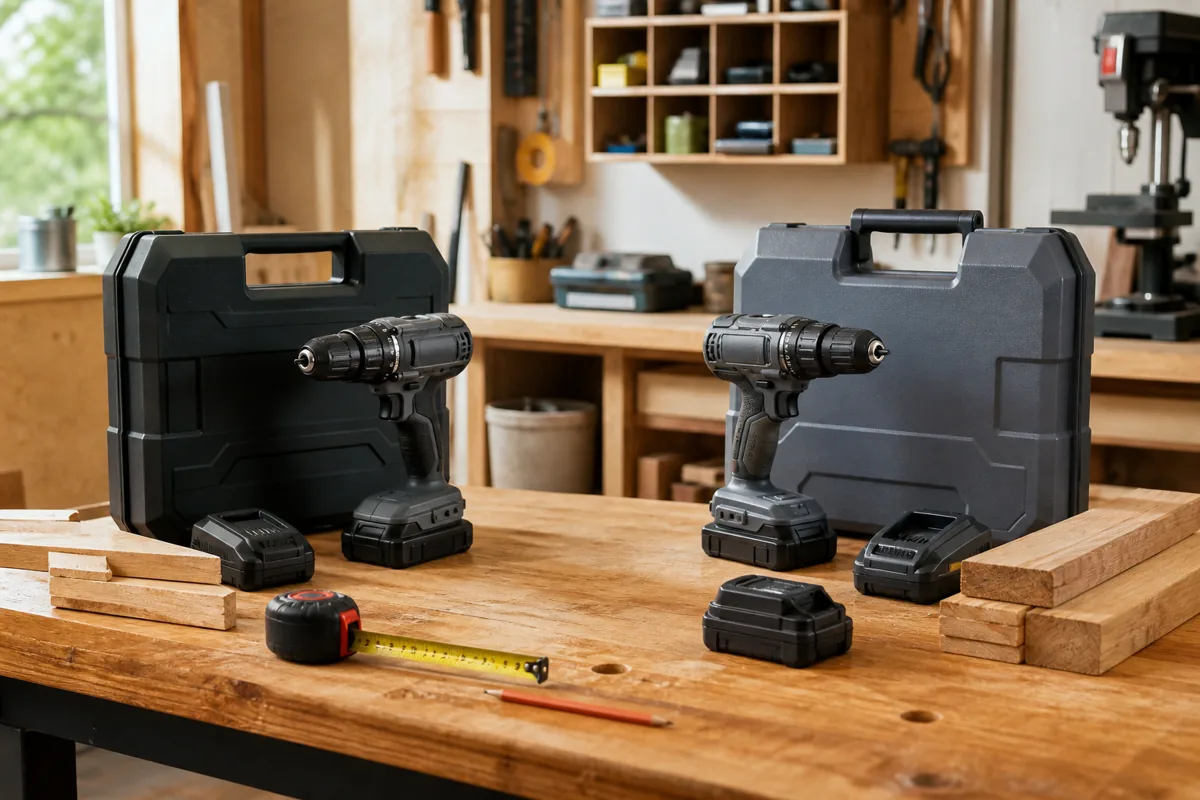
How To Choose The Best Cordless Tool Platform For Homeowners
Count the tools you will actually own in five years
Start with the obvious four: drill/driver, impact driver, circular saw, oscillating multi-tool. Then add the outdoor half of the list that nobody plans for at the register: string trimmer, blower, hedge trimmer, inflator, maybe a mower or pressure washer. A platform that covers the yard as well as the walls saves you from funding a second charger family. This is where the consumer brands quietly win.
Backward compatibility is the real warranty
Every major 18V and 20V line has kept the same battery foot for well over a decade, so newer high-output packs generally drop into older tools, and older packs still run newer brushless tools with less runtime and more heat. Ask the question in both directions before you commit, and confirm it for the specific series rather than assuming it applies brand-wide.
Availability beats spec sheets
Ryobi means Home Depot. Kobalt means Lowe’s. Craftsman is spread across Lowe’s, Ace and online. DeWalt, Milwaukee and Makita are the ones your independent hardware store is most likely to stock, which matters more than any published number when a battery dies mid-project on a Sunday.
Drill and Impact Driver Two-Tool Kits
Nearly every platform sells a drill plus impact driver bundle with two batteries and a charger, and it is almost always cheaper than assembling the same pieces one at a time. Once you have chosen an ecosystem, compare these kits by included battery capacity rather than by tool count.
The Pro-Leaning Platforms: DeWalt, Milwaukee, Makita
These three design for someone who picks up the tool daily, then sell a gentler version to homeowners. In practice that means better switches and gearboxes, deeper bare-tool catalogs, authorized service centers instead of throwaway replacement, and multi-year limited warranties on bare tools with a separate, usually shorter term on batteries. Terms change and some require registration, so read the box rather than an old forum post.
The costs are a higher price floor and batteries that are genuinely expensive to duplicate. Watch the yard gear question too, because outdoor equipment from these brands often sits on a higher-voltage line that may not accept your existing packs. DeWalt’s FlexVolt packs are the notable exception, since they are built to also run 20V MAX tools.
The Value Platforms: Ryobi, Craftsman, Kobalt
Ryobi’s whole argument is breadth. The brand advertises well over a hundred tools on one battery, and the long tail is real: inflators, fans, glue guns, mowers. Craftsman leans on familiarity and gets discounted hard in gift season. Kobalt is competent but thinner, and it mainly makes sense if Lowe’s is already your default store.
The honest limitation is duty cycle. These tools are engineered for intermittent use, so a circular saw that is perfectly fine for a few weekend cuts will heat up and bog down if you ask it to frame a deck in a week.
- ✔ One battery family often covers both house tools and yard gear
- ✔ Lowest cost per additional tool once you own the batteries
- ✔ Frequent bundle promos, including free tools with battery purchases
- ✔ Stocked at a single national chain, so replacements are predictable
- ✘ Thinner bare-tool selection and weaker resale value
- ✘ Repair usually means replacing the tool, not servicing it
- ✘ Store exclusivity ties you to one retailer
- ✘ Runtime and heat management fall behind under sustained load
Price Behavior: When Platforms Actually Get Cheap
Cordless tools follow a promotional calendar more than a market price. The steepest real discounts come from bundle mechanics rather than percent-off sales: a free tool with a battery two-pack, or a kit priced below the sum of its parts. That creates the recurring oddity where a kit with two batteries and a charger costs less than the bare tool plus one battery bought separately. Buy the kit and keep the spare packs.
The windows worth waiting for are late spring around Memorial Day and Father’s Day, then Black Friday through late December. Factory reconditioned and blemished stock sits below both, with a shorter warranty. What is never worth chasing is a small price gap between two platforms, because the cost of switching later dwarfs it.
18V and 20V Battery Multi-Packs
Batteries, not tools, decide what a platform costs you long term. Two mid-size packs and a fast charger can run as much as a mid-tier tool, which is the real reason switching ecosystems hurts. Stick with first-party packs or third parties that publish clear cell specs and offer a return window.
Our Verdict: Who Each Platform Suits
DeWalt 20V MAX. The safest all-round homeowner choice thanks to the widest availability outside the big boxes, a very deep mid-tier range and strong resale value.
Milwaukee M18. Worth the higher floor only if a remodel, a shop or paid side work justifies it.
Makita LXT. Choose it if feel matters more than headline power, which is why woodworkers cluster here.
Ryobi ONE+. The value pick when a Home Depot is convenient and you want one battery for house and yard.
Craftsman V20 and Kobalt 24V MAX. Fine for light, occasional jobs and gifting, with less room to grow.
Four and Five-Tool Combo Kits
Starting from zero, a four or five-tool kit is the cheapest way into any platform, and drill, impact driver, circular saw, recip saw and light cover most homeowner jobs. Judge these kits by battery capacity and whether the saws are brushless, not by how many items are in the box.
FAQ: Cordless Tool Platforms For Homeowners
Can I use adapters to mix batteries across brands? They exist and they fit, but they bypass the communication between pack and tool that manages heat and current, and they generally void warranties on both ends. Acceptable for a rarely used tool you already own, not something to build a plan around.
Is 18V or 20V MAX more powerful? Neither. They are the same cell count described differently, with 18V quoting the nominal voltage and 20V MAX quoting the peak reading of a fresh pack. Compare amp-hours, motor type and tool design instead.
Should I buy a pro platform if I only use tools a few times a year? Usually not for performance reasons, but sometimes for practical ones: easier local availability, repairability and better resale if you later change direction. If you rarely use tools and buy where consumer brands are stocked, the value platforms are the rational choice.
Pick the platform whose next five tools you would genuinely buy, then stop shopping and start building. Every option here will drill a hole and drive a screw. The differences show up in year three.
Check prices on Amazon →