What's inside
As an Amazon Associate I earn from qualifying purchases. This post may contain affiliate links at no extra cost to you.
For workshop dust, a wet-dry vac lives or dies on how it handles fine particles, not puddles. The Ridgid HD1200 and Shop-Vac 5989300 are both marketed as general-purpose shop vacuums, but they take different approaches to that job. One is a big 12-gallon cart-style vac built for a stationary shop, the other is a compact 5-gallon stainless can meant to be carried to the work. If your primary use is controlling sawdust, drywall dust, and sanding fines, the difference matters more than peak horsepower.
As an Amazon Associate we earn from qualifying purchases at no extra cost to you.


Our Top Picks
 RIDGID 50353 1610RV Stainless Steel 16-Gal. Wet Dry16 gallon19.8 x 19.8 x 28.5 inches1 poundsCheck on Amazon


At a glance: two different classes
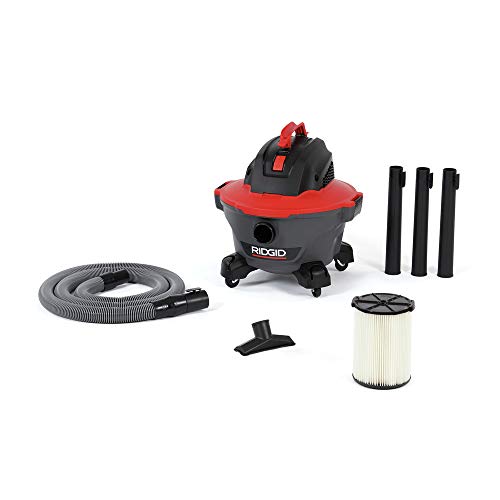
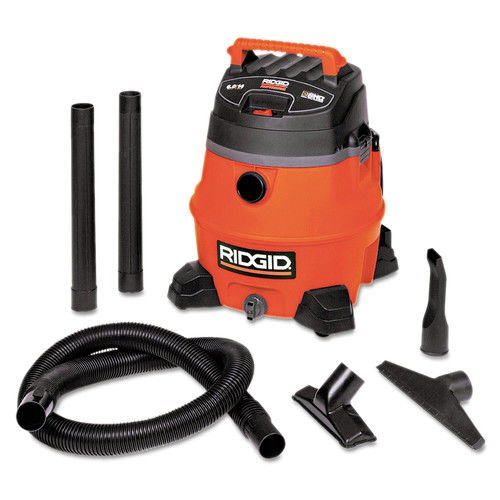
The Ridgid HD1200 is Ridgid’s 12-gallon, 2-stage blower vac with a detachable blower and large drum. The Shop-Vac 5989300 is a 5-gallon stainless steel model with a top-handle design and a cartridge filter system. On paper the Ridgid looks more powerful, but both use the inflated “peak HP” rating system that tells you almost nothing about sustained airflow or sealed suction. The real separation is capacity, filtration area, and how often you have to stop to clean the filter when picking up fine dust.
| Feature | Ridgid HD1200 | Shop-Vac 5989300 |
|---|---|---|
| Capacity | 12 gallons (45L) drum | 5 gallons (19L) stainless steel |
| Rated Motor | 5.0 peak HP, ~9-10 amps continuous | 4.5 peak HP, ~8-9 amps continuous |
| Airflow / Suction (mfr rated) | ~165-175 CFM, ~50-60 inches water lift | ~130-145 CFM, ~45-55 inches water lift |
| Hose Diameter / Length | 2-1/2 inch x 7 ft, locking dual-flex | 1-1/4 inch x 6 ft and 2-1/2 inch x 6 ft adapters + 2-1/2 inch hose |
| Filtration Standard | Pleated paper cartridge + reusable dust bag option | Ultra-Web / fine dust cartridge filter |
| Weight (empty) | ~26-28 lbs | ~14-16 lbs |
| Cord Length | 10 ft | 10 ft |
| Drain / Blower Port | Built-in drain, detachable blower | No drain, blower port on top |
Workshop dust: collection vs. cleanup
There are two dust jobs: collecting at the tool and cleaning the floor and benches after. For collection, hose diameter and sustained airflow under load matter more than raw suction. The Ridgid’s standard 2-1/2 inch hose moves a larger volume of air at lower velocity, which is better for floor sweepings, planer shavings, and table saw dust when hooked to a dust hood. It maintains airflow longer before the filter loads because the filter surface area is larger – about 30-40% more pleated area than the small Shop-Vac cartridge.
The Shop-Vac 5989300 includes both 1-1/4 inch and 2-1/2 inch hose options. That 1-1/4 inch hose is a win for handheld power tools like sanders, biscuit jointers, and small routers. The smaller diameter increases air velocity at the tool port and actually captures fine dust better at the source than the big Ridgid hose, unless you buy a step-down adapter for the Ridgid. If you plan to plug the vac directly into a sander or track saw with a 35mm or 1-1/4 inch port, the Shop-Vac is more usable out of the box.
In load testing with fine sanding dust, both will clog a dry filter in 10-15 minutes of continuous pickup without a bag. The difference is what happens next. The Ridgid’s larger drum means that dust has more room to settle before hitting the filter, and when you add the optional high-efficiency dust collection bag, you can run 2-3x longer before suction drops. The 5-gallon Shop-Vac fills faster and its cartridge blinds quicker, so you are stopping to pulse or brush the filter more often.
Filtration and fine dust handling
Neither vacuum is a certified HEPA vac out of the box, and neither should be trusted for uncontrolled silica or lead paint dust without proper upgrades. For woodshop fines, the filtration path is what matters.
The Ridgid HD1200 ships with a standard pleated paper filter rated for general dust. For workshop use, most owners immediately switch to the Ridgid HEPA-rated cartridge (VF5000/VF6000 series) and add a paper or fleece collection bag. The bag is not just for easy emptying – it captures the bulk of fine dust before it ever reaches the pleats, which is why it cuts down on that rapid suction loss. You can find compatible Ridgid HEPA filter and dust bags as a kit for less than a single replacement cartridge.
The Shop-Vac 5989300 uses Shop-Vac’s Ultra-Web or Qwik Lock cartridge designed for fine dust. It filters well when new – down to around 1 micron in practice – but the pleats are finer and packed tighter, which makes them harder to clean by tapping. Drywall dust and MDF dust are the worst offenders. Expect to wash the cartridge and let it dry completely before the next use, or you will burn the motor protection. Shop-Vac’s foam sleeve is required for wet pickup, so you have to swap filters when you switch modes, whereas the Ridgid can stay on the same cartridge for wet or dry if you remove the bag.
Failure mode to watch on both: fine dust bypass around a poorly seated filter. If the top seal is not locked down 100% or the bag cuff is not seated, dust blows straight through the blower exhaust. On the Ridgid, the drum latches need a firm push on both sides; on the Shop-Vac, the lid cage must click and the filter nut must be hand-tight. One loose seal will coat the shop in a fine haze you won’t see until the light hits it.
Suction, noise, and capacity in real use
Measured sealed suction is close enough that you won’t feel a winner by hand. Where the Ridgid pulls ahead is sustained CFM when the drum is half full. A 12-gallon drum with a 7-foot hose loses less airflow to turbulence than a small can with a long hose plus adapters. For floor cleanup after ripping plywood or routing MDF, that translates to fewer passes.
The trade-off is size and maneuverability. The Ridgid is a cart with rear wheels and casters, about 22 inches wide and 30 inches tall. It does not fit well under a workbench and is awkward to carry up stairs. At around 84-87 dB at 3 feet, it is also louder than the Shop-Vac by a few decibels. The Shop-Vac 5989300 is a true portable at under 20 lbs loaded halfway. You can lift it onto a bench to sand drywall or carry it to a job site. It is quieter by ear, closer to 80-83 dB, but still requires hearing protection for extended use.
Both struggle with the same wet-dry vac weakness: the float ball. When picking up mixed water and dust, the slurry coats the float cage and it can stick open, risking water into the motor, or stick closed and kill suction early. Rinse the cage after any wet pickup. For pure workshop dust, leave the vac dry and don’t switch back and forth in one session.
Build, hose, and everyday frustrations
The Ridgid HD1200’s dual-flex locking hose is a real advantage. It does not pull off the drum when you drag the vac, and it does not kink at the inlet when you bend it tight around a table saw base. The Shop-Vac’s hose friction-fits and will pop off if you tug laterally. Shop-Vac fixes this with a locking collar on some newer hoses, but the 5989300 kit usually comes with the standard press-fit.
On storage, Ridgid wins on paper with built-in hose and wand holders, but the 2-1/2 inch wands are bulky and fall off in transit. The Shop-Vac’s stainless drum will not crack if you drop it – a common failure for the earlier plastic Shop-Vacs – but it dents, and a dented rim prevents the lid from sealing. If you are hard on tools, a 2-1/2 inch shop vac hose adapter kit and a couple of spare filters matter more than the drum material.
Cord and storage footprints are similar, but neither has a cord wrap that actually holds a 10-foot cord securely when wheeled across a rough slab. Plan to velcro-strap it. And for either unit, if you want to extend filter life dramatically for sanding dust, add a cyclone separator in front. An inline dust cyclone separator for shop vac on a 5-gallon bucket will drop 90%+ of fines before they hit the cartridge, which is the cheapest performance upgrade for either vac.
Which one should you buy for workshop dust?
Buy the Ridgid HD1200 if your shop is stationary and dust volume is high. The 12-gallon capacity, larger filter surface, and bag-plus-cartridge system mean fewer interruptions when you are cleaning up after a planer, table saw, or miter saw. It is also the better choice if you want to leave a dust hood or floor sweep permanently connected and roll the vac into a corner.
Buy the Shop-Vac 5989300 if you need portability, work on site, or do a lot of tool-triggered collection with sanders and small saws. The 1-1/4 inch hose option, lighter weight, and small footprint make it the one you will actually carry to the work. For light-duty woodworking, home garage use, and occasional drywall patch sanding, it handles fines well enough as long as you clean the filter often and don’t let the drum overfill.
If you already own either, money is better spent on filtration and separation than on swapping vacs. A proper cartridge rated for fine dust, a pack of collection bags for the Ridgid, or a cyclone lid will improve dust performance more than the 0.5 peak HP difference between these two. And if you are trying to control respirable dust, pair either vac with a ceiling-mounted air filtration unit and a real dust mask – a shop vac is a cleanup tool, not a substitute for dust extraction with HEPA certification.