What's inside
As an Amazon Associate I earn from qualifying purchases. This post may contain affiliate links at no extra cost to you.
For shaping sheet metal by hand, the best ball-peen hammer is usually a 8-ounce hammer with a polished, smoothly rounded ball. It gives enough control to stretch a small area without the heavy dents and fatigue caused by a 16-ounce shop hammer.
That recommendation comes with an important limitation: a ball-peen hammer is a stretching tool, not a general-purpose body hammer. The round peen concentrates force into a small spot, which raises a low area or creates a controlled bulge. Used carelessly, it leaves deep dimples that are difficult to sand or fill. For broad curves and visible automotive panels, a dedicated body hammer and dolly are usually the better purchase.
As an Amazon Associate we earn from qualifying purchases at no extra cost to you.


Our Top Picks
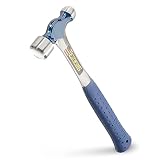
 Titan 63302 2-Piece Ball Pein Hammer Set2pc Set Ball Peen 8oz + 16oz2.4 x 3.9 x 12 inches0.5 poundsCheck on Amazon


What to Look For in a Sheet-Metal Ball-Peen Hammer
Start with weight. An 8-ounce head is the most useful middle ground for hand work on mild steel, aluminum, and copper sheet. A 4-ounce hammer offers excellent control on thin material, but it may lack the energy to move 18- or 20-gauge steel efficiently. A 12-ounce hammer works faster on heavier sheet, but each mistake is more severe. A 16-ounce model is generally a shop hammer rather than a precision shaping tool.
The ball should be round and polished, with no flat spots, pits, grinding marks, or sharp transition where the ball meets the head. Any defect can emboss itself into the work. A polished peen also slides more cleanly across the metal, reducing drag and tearing when you strike at a shallow angle.
Look for a forged steel head and a handle that fits tightly with no rattling. Hickory provides good shock absorption and is easy to replace. Fiberglass handles tolerate abuse and moisture better, but they transmit more vibration and are harder to repair if damaged.
For a first purchase, compare 8-ounce polished ball-peen hammers rather than choosing by brand alone. The finish on the peen matters more than a decorative handle or an unusually high hardness rating.
Ball-Peen Hammer Options Compared
| Type | Best use | Advantages | Drawbacks |
|---|---|---|---|
| 4 oz ball-peen | Thin aluminum, small details | Precise, low fatigue, fewer deep marks | Slow on thicker steel; easy to underwork the metal |
| 8 oz ball-peen | General hand shaping | Best balance of control and impact | Still creates visible marks if used directly on a finished surface |
| 12–16 oz ball-peen | Heavy-gauge steel and shop work | Moves metal quickly; useful for stretching | More hand shock, overcorrection, and deeper dents |
| Body hammer and dolly set | Automotive panels and broad curves | Better control of highs and lows; less marking | Costs more and takes practice to coordinate |
The Best Choice for Most Buyers
An 8-ounce hickory-handled ball-peen hammer with a polished ball is the strongest all-around choice. It is light enough for repeated, accurately placed blows and heavy enough to shape common mild-steel sheet without exhausting your forearm. A 10-ounce model is also reasonable if you regularly work with 16-gauge steel or need to stretch a panel over a tighter form.
Spend more for a better-finished head when the work will remain visible. A budget hammer is fine for brackets, repair patches, tabs, and parts that will be ground, filled, or painted. It is not automatically fine for an exterior panel. On visible metal, a rough peen can create dozens of tiny scratches or repeating dents that remain obvious after primer.
For basic fabrication, a forged 8-ounce ball-peen hammer with a hickory handle is the sensible category to buy. Avoid novelty sets that include several poorly finished hammers unless you actually need multiple sizes.
How to Shape Sheet Metal Without Ruining It
Support the sheet over a sandbag, hardwood form, or appropriate dolly. Striking metal on an unsupported workbench mostly creates noise and stretch in random places. Mark the area with a grid using a removable marker, then work from the center of the area outward. Use light, frequent blows rather than trying to move the whole shape with three hard strikes.
Keep the hammer face moving. A ball-peen hammer should not land squarely in the same spot over and over unless you deliberately want a concentrated dimple. For controlled stretching, make overlapping impacts with roughly 6 to 12 millimeters between strikes. Check the shape every few passes. Sheet metal can go from flat to overstretched quickly, especially aluminum.
Use test pieces first. On 20-gauge mild steel, an 8-ounce hammer may need 20 to 40 light blows to create a noticeable low-area correction, depending on the support underneath. A 16-ounce hammer can do it in half the time but may leave a depression several millimeters deep from one misplaced hit. Numbers vary with the alloy and form, so the test panel is cheaper than repairing the finished part.
Common Failure Modes
Deep crater marks: The hammer was too heavy, the blows were too concentrated, or the support was too hard. Switch to lighter impacts and a smoother dolly.
Oil-canning: The panel has been stretched too broadly. Stop hammering the low area and shrink or relieve the overstretched section instead. Continuing to pound it usually makes the panel looser.
Cracks around a dent: The metal may be work-hardened, overheated, or struck with a damaged peen. Annealing may help copper and some aluminum alloys, but do not assume every alloy can be safely heated.
Handle vibration: A loose head is unsafe and inaccurate. Replace the hammer or repair it properly; do not rely on glue or tape.
When a Different Hammer Is Better
If your goal is a smooth automotive fender, choose a body hammer and dolly set. If you are forming a flange, a cross-peen hammer can reach into a corner more effectively. For thin aluminum that scratches easily, a plastic or rawhide mallet is safer, though it moves metal more slowly.
A cheap 8-ounce ball-peen hammer remains the right answer for hidden brackets and general shop repairs. For visible sheet metal, buy the best-finished peen you can reasonably afford, keep the strikes light, and spend as much attention on the supporting form as on the hammer itself.