What's inside
As an Amazon Associate I earn from qualifying purchases. This post may contain affiliate links at no extra cost to you.
For making cabinet door profiles, a router table is usually the better first purchase. It costs less, uses the same router many woodworkers already own, and handles the common jobs: raised panels, roundovers, ogees, rabbets, and cope-and-stick joinery. A shaper becomes worthwhile when you need production speed, large cutters, repeatable setup, or heavier work in hardwood.
As an Amazon Associate we earn from qualifying purchases at no extra cost to you.


Our Top Picks



What Each Machine Does
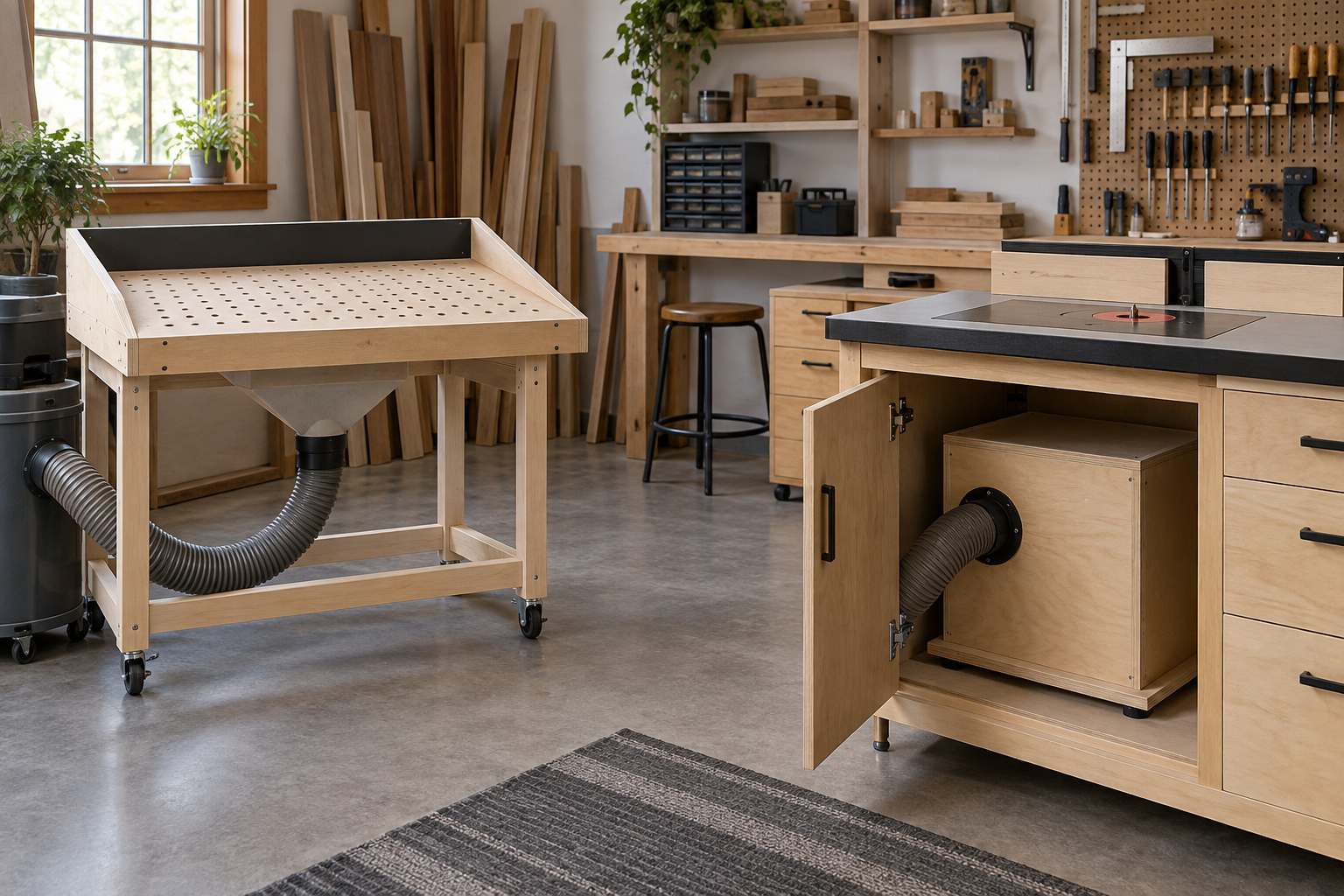
A router table mounts a handheld router upside down beneath a table. The bit spins at high speed—often 18,000 to 24,000 rpm—and the fence controls the cut. With a suitable lift and table, it can produce accurate door rails, stiles, and panels.
A shaper uses a dedicated vertical spindle driven by an induction motor. It normally runs at lower speeds, such as 7,000 to 10,000 rpm, and accepts larger-diameter cutters. The spindle usually has a 1/2-inch or 3/4-inch capacity, with some machines supporting interchangeable spindles and stacked profile knives.
Both machines can make the same basic cabinet-door profiles. The difference is how comfortably, safely, and repeatedly they do it.
Router Table vs. Shaper
| Factor | Router table | Shaper |
|---|---|---|
| Typical purchase cost | $250–$800 for a usable setup, excluding bits | $800–$2,500 or more, excluding cutters |
| Best cutter size | Small and medium router bits | Large profiles and stacked knives |
| Power for hardwood | Good with a 2-1/4 to 3-1/4 horsepower router, within limits | Better sustained torque and less strain |
| Setup speed | Fast for occasional work; height changes can be fiddly | Slower initial setup, but excellent repeatability |
| Dust collection | Variable; fence and table quality matter | Usually better enclosed collection |
| Best owner | DIYer, hobbyist, or small cabinet shop | Production shop or frequent hardwood work |
Where a Router Table Wins
The router table has a much lower entry cost. If you already own a quality 1/2-inch plunge or fixed-base router, you may only need a table, lift, fence, and bits. A router table with lift and fence gives you a practical setup without committing to a dedicated machine.
For one kitchen or bathroom project, the router table is generally fast enough. A 2-1/4 horsepower router can run common rail-and-stile sets and many raised-panel bits, provided you take multiple passes and do not force the stock. For a 3/4-inch raised panel, removing 1/8 inch in two or three passes is safer and produces a cleaner edge than trying to take the full profile at once.
Router bits are also easier to find and replace. A basic door set may cost roughly $50 to $150, while a custom shaper cutter can cost considerably more. Router bits are useful for other work, too, including edge treatments, hinge mortises, and template routing.
The drawbacks are real. Router tables can be noisy, height adjustment may require reaching under the table, and the small bearings in inexpensive bits do not tolerate abuse. Large raised-panel bits remove a lot of material. If the router bogs down, the cut can burn the panel or pull the workpiece forward.
Where a Shaper Wins
A shaper is built for continuous cutting. Its induction motor maintains torque better than a handheld router, especially when cutting wide profiles in maple, oak, or other dense stock. The heavier table and spindle also resist vibration, which helps produce a consistent profile across a long rail or stile.
The major advantage is cutter capacity. A shaper can use larger knives and stacked tooling that would be unsafe or impractical on a router table. A single setup can sometimes cut the cope, stick, or panel profile with a matched cutter arrangement. When making dozens of identical doors, that saved setup time matters more than the higher purchase price.
Shapers also offer better control over feed direction and speed selection. The lower spindle speed is appropriate for large-diameter tooling; running an oversized cutter at router speed can exceed its safe peripheral speed. Many shapers include power feeders, which make production work safer and more uniform by keeping the stock moving at a constant rate.
However, the machine itself is only part of the cost. You may need a power feeder, custom knives, spindle rings, safety guards, and dedicated floor space. A woodworking shaper also demands more attention to cutter balancing, spindle height, and guard setup. It is not automatically safer simply because it is larger.
Profiles and Cutter Choice
For traditional cope-and-stick doors, use a matched rail-and-stile set. The cope cutter shapes the rail ends, while the sticking cutter forms the inside edge of the rails and stiles. Test the set on scrap before cutting finished parts. A small height error can leave a visible step at the joint or make the panel sit too high.
Raised-panel work is where the machines separate most clearly. A router table handles a few doors well with a carbide-tipped bit, but the bit should be run at the manufacturer’s recommended speed. Large cutters often require reducing the router speed to its lowest setting. Never assume the router’s maximum speed is appropriate.
On either machine, keep the stock flat and use featherboards above the table and against the fence. Feed against the cutter’s rotation. On a router table, that normally means feeding from right to left. Take light passes, keep both hands behind the cutter, and support long rails with outfeed support.
Which Should You Buy?
Choose a router table if you make fewer than roughly 20 to 30 doors per year, already own a suitable router, or need a versatile machine for general woodworking. Spend money on a rigid table, accurate fence, reliable lift, and good cutters rather than buying the cheapest complete package. A 1/2-inch raised-panel and rail-and-stile bit set covers the most common cabinet-door work.
Choose a shaper when door production is a regular part of your business, when you routinely cut dense hardwood, or when you need custom profiles and repeatable setups. It makes financial sense after router-table limitations are costing more in labor, rejects, and cutter changes than the shaper costs in capital.
For most home shops, the router table is not a compromise; it is enough machine for the job. Buy the shaper when volume, cutter size, and production consistency—not simply the desire for a more substantial tool—justify it.