What's inside
As an Amazon Associate I earn from qualifying purchases. This post may contain affiliate links at no extra cost to you.
Our Top Picks
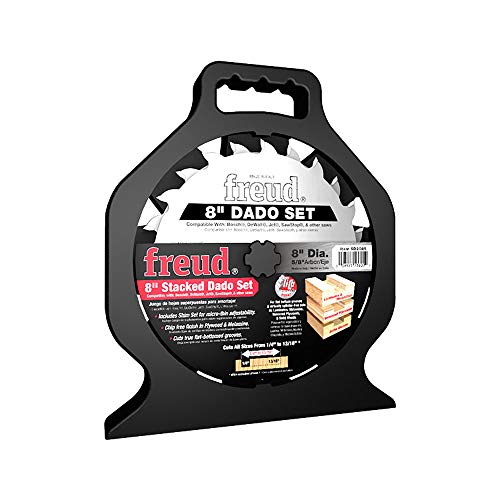 Freud Pro Dado Set with Premium Tico Hi-DensityOne Size2 x 9 x 11.8 inches5.69 poundsCheck on Amazon
 YONICO Router Bits Set Dado Straight Bit Undersize1/2" Shank4 x 3.75 x 2 Inches0.7 poundsCheck on Amazon


The best dado blade set for plywood
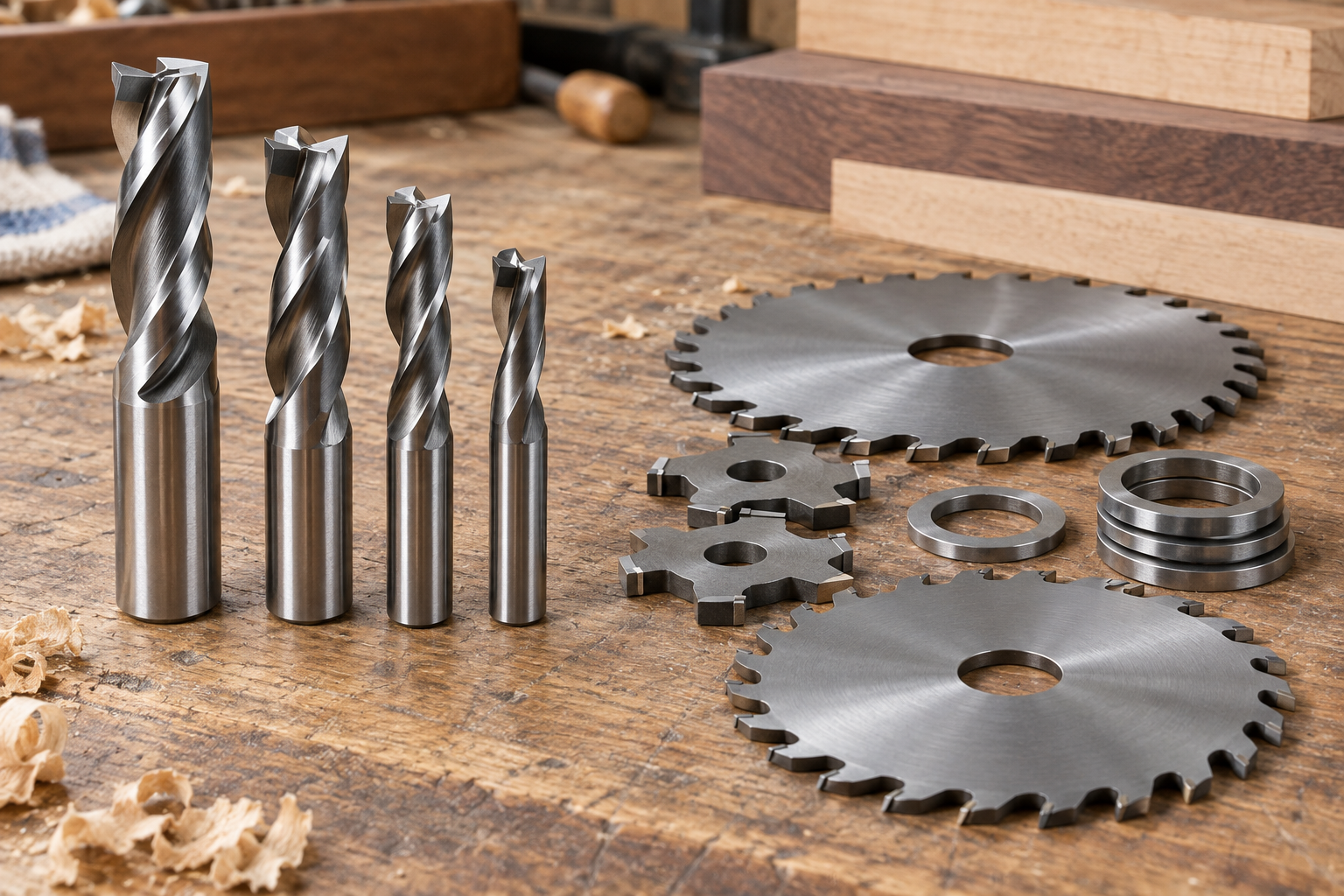
For flat-bottom grooves in plywood, the best choice is a high-quality stacked dado set with two outer blades, several carbide-tipped chippers, and shim washers. A stacked set gives you a cleaner, flatter groove than a wobble-style dado blade because the cutting edges stay parallel to the saw arbor.
For most table-saw work, an 8-inch set with a 5/8-inch arbor and a usable range from 1/4 to 13/16 inch is the practical sweet spot. It is large enough for cabinet joinery but does not demand as much power as a 10-inch set. A reliable 8-inch stacked dado blade set is a better buy than a cheap wobble blade if groove quality matters.
As an Amazon Associate we earn from qualifying purchases at no extra cost to you.


Why a stacked dado makes a flatter groove
A stacked set uses two outside blades to establish the groove walls and one or more chippers between them to remove the waste. Thin metal shims fine-tune the final width. The outside blades usually do most of the visible cutting, so their tooth geometry and carbide quality matter more than simply counting teeth.
A wobble dado tilts a single blade from side to side. It can cut quickly, but the bottom of the groove is slightly curved and the cut width changes with the blade angle. That may be acceptable for rough shelving or utility work, but it is a poor match for plywood joinery where a flat bottom supports a shelf, divider, or spline.
| Set type | Bottom quality | Best use | Main drawback |
|---|---|---|---|
| Stacked dado | Flat and clean when aligned correctly | Cabinet and furniture joinery | Costs more and needs setup |
| Wobble dado | Concave or slightly uneven | Rough construction work | Less precise groove width |
| Router bit | Very clean with a sharp bit | Short runs, stopped grooves, portable work | Slower for many parts and requires a guide or table |
What to look for when buying
Choose a set with carbide-tipped teeth, a stiff storage case, and enough chippers to cover common widths. Four-tooth chippers generally leave a smoother bottom than two-tooth chippers, although they require a saw with adequate power. Anti-kickback shoulders and clearly marked components are useful, especially when assembling a stack in a hurry.
Check the arbor hole before buying. Many portable and contractor table saws use a 5/8-inch arbor, but some compact saws have shorter arbors that cannot safely accept a full dado stack. The saw manual, not the blade packaging, determines whether a dado set is permitted. Some saws also require a special dado throat plate and may disable or restrict their riving knife, blade guard, or electronic brake.
A quality carbide 8-inch dado set for a 5/8-inch arbor should include shims thin enough to adjust a groove by a few thousandths of an inch. Avoid relying on random hardware-store washers. A shim that is not flat or does not fit the arbor correctly can make the stack run out of true.
Set the width for real plywood dimensions
Plywood thickness is often smaller than its label. A sheet sold as 3/4 inch may measure about 23/32 inch, while nominal 1/2-inch plywood is commonly about 15/32 inch. If you cut a nominal 3/4-inch groove without measuring the actual panel, the fit may be loose.
| Panel label | Common actual thickness | Typical groove target |
|---|---|---|
| 1/4 inch | About 6 mm | Measure the panel; often 1/4 inch |
| 1/2 inch | About 15/32 inch | 15/32 to 31/64 inch |
| 3/4 inch | About 23/32 inch | 23/32 inch for a snug fit |
Assemble the blade stack slightly narrower than the measured plywood, then test on scrap from the same sheet. Add shims until the panel slides in with firm hand pressure. A groove that is 1/64 inch too wide can create visible racking in a cabinet, while a groove that is too tight may split a plywood edge during assembly.
How to cut a flat-bottom groove
Install the outside blades with their teeth facing the correct direction and place chippers so their teeth do not line up directly with the outside blade teeth. The exact arrangement varies by set, so follow the supplied diagram. Tighten the arbor nut firmly, but do not stack incompatible spacers or omit the flange required by your saw.
Make a test cut in scrap plywood before cutting the workpiece. Measure both the groove width and its depth. For cabinet dados, a depth around one-third to one-half of the mating panel thickness is common. A 3/4-inch panel often sits in a groove approximately 1/4 inch deep, though the design and load determine the final dimension.
Use a featherboard or another suitable hold-down to keep the plywood against the fence. Feed steadily without forcing the saw. A slow, hesitant feed can burn the wood; an aggressive feed can overload a portable saw and leave a rough bottom. Support large sheets on both sides of the cut, and make sure the fence is locked before starting.
Common problems and sensible alternatives
If the groove bottom has ridges, first inspect the chippers for resin buildup, damaged carbide, or incorrect seating. If the groove is wider at the top than the bottom, the stack may be misassembled or a blade may not be fully seated against the flange. A groove that varies along its length usually points to inconsistent fence pressure, sheet movement, or a warped workpiece rather than a defective blade.
The cheaper option is fine when you only need occasional rough grooves and can tolerate a slightly curved bottom. For visible cabinet work, repeated production cuts, or plywood that must fit without gaps, spend more on a stacked set with accurate shims and quality carbide. For just one or two stopped grooves, a straight router bit for plywood grooves may be the better purchase, especially if your table saw cannot accept a dado stack.
Whichever method you choose, verify the saw’s maximum dado width and required throat plate first. Never install a set that leaves insufficient arbor-thread engagement, and never operate a dado stack with a guard or insert arrangement that the saw manufacturer does not approve.