What's inside
As an Amazon Associate I earn from qualifying purchases. This post may contain affiliate links at no extra cost to you.
Choosing between a rip blade and a combination blade matters more when you build hardwood furniture than it does for rough construction. The right blade affects cut speed, tear-out, burning, edge quality, and how much work you spend at the planer or sander. Neither type is universally better. The best choice depends on whether you are cutting with or across the grain, how often you change blades, and how clean the cut needs to be straight from the saw.
As an Amazon Associate we earn from qualifying purchases at no extra cost to you.


Our Top Picks
 DEWALT 10 in. 24 Tooth General Purpose Saw10" / 24 Teeth13.4 x 11.5 x 0.5 inches0.8 poundsCheck on Amazon


What the Blades Are Designed to Do
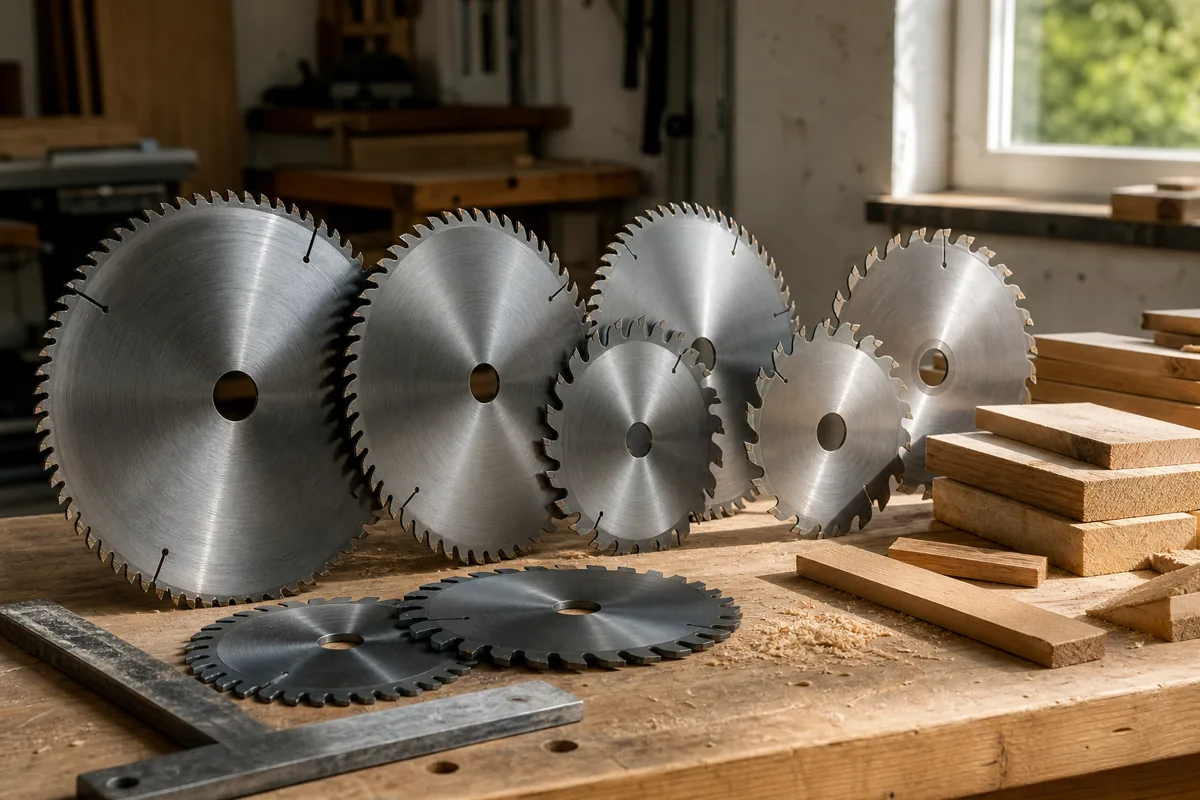
A rip blade is built to cut along the grain. Its teeth usually have a low count—commonly 20 to 30 teeth on a 10-inch table saw blade—with large gullets between them. Those gullets clear chips quickly, so the blade removes material efficiently without packing the kerf with sawdust.
A combination blade is intended to handle both ripping and crosscutting. A typical 10-inch combination blade has around 40 to 50 teeth, often arranged in repeating groups that include a raker tooth. It clears chips more slowly than a dedicated rip blade but leaves a cleaner crosscut than most low-tooth rip blades.
Tooth count is only part of the story. Tooth geometry, blade plate quality, carbide size, kerf width, hook angle, and how accurately the blade is ground all affect performance. A well-made 40-tooth combination blade can outperform a cheap 24-tooth rip blade in some cuts, even when the cheaper blade has the theoretically better tooth count.
Rip Blade vs. Combination Blade at a Glance
| Feature | Rip blade | Combination blade |
|---|---|---|
| Best cut direction | Along the grain | Along or across the grain |
| Typical 10-inch tooth count | 20–30 teeth | 40–50 teeth |
| Rip-cut speed | Fastest, with less resistance | Moderate |
| Crosscut surface | Usually rougher | Usually cleaner |
| Best use in furniture work | Breaking down thick stock and repeated rips | General-purpose milling and occasional crosscuts |
| Main failure mode | Cross-grain tear-out and chipped edges | Slower rips, burning, and more sawdust buildup |
When a Rip Blade Makes Sense
Use a rip blade when most of the work is sizing boards to width: cabinet sides, table legs, aprons, shelves, and rails. On thick hardwood, the larger gullets reduce resistance and let the motor maintain speed. That matters on dense woods such as hard maple, white oak, hickory, and jatoba.
A rip blade is especially useful for long cuts in stock thicker than about 1 inch, or when you have many identical pieces to cut. A clean, steady feed should produce a surface that needs only light jointing or planing. If the blade begins burning after a few inches, stop and investigate rather than pushing harder. The fence may be pinching the work, the blade may be dull, or the blade may be misaligned with the miter slots.
The trade-off is poor crosscut behavior. A low-tooth rip blade can leave pronounced tear-out on the back of a board, particularly in reversing or interlocked grain. It is not the blade to use for cutting finished drawer fronts, table ends, or visible cross-grain shoulders unless you use a scoring method, a sacrificial backing board, or leave extra material for trimming.
If you regularly process rough hardwood lumber, a 10-inch thin-kerf rip blade can be a practical addition. Thin kerf reduces waste and motor load, but it also requires a properly aligned saw and a stable blade. On a powerful cabinet saw, a full-kerf blade may track more confidently.
When a Combination Blade Is the Better Buy
A combination blade is the better default for a small shop that does not want to change blades several times during a project. It can rip boards to width, crosscut parts, and cut plywood or solid wood without creating a completely unsuitable surface in either direction.
For furniture projects involving short rails, narrow parts, and frequent changes between ripping and crosscutting, the time saved can outweigh the slower rip rate. A good combination blade also works well for rough crosscuts when the ends will later be trimmed on a miter saw, shooting board, router table, or hand plane.
Its weakness appears during extended ripping. The higher tooth count creates smaller gullets, and the blade can struggle to clear waste from deep cuts. Feed too slowly and the wood may burn; force it too quickly and the motor may bog down or the cut may wander. Cleaning pitch from the teeth often restores performance. If the blade remains slow and hot after cleaning, it may simply be dull.
For a one-blade setup, shop for a 10-inch 40-tooth combination blade with carbide teeth and a stable plate. This is generally a better furniture starting point than a bargain blade with a very high tooth count marketed as “fine finish.” Some 60-tooth blades are excellent for crosscutting but can be frustrating for ripping hardwood.
Cut Quality and Furniture Joinery
Blade choice should match the joint, not just the material. A rip cut for a table apron will often be cleaned up by a jointer or planer. A crosscut that forms the visible end of a rail needs better tear-out control. For exposed crosscuts, use a higher-tooth crosscut blade or a dedicated 10-inch fine crosscut blade rather than expecting a rip blade to leave a finished edge.
When cutting joinery such as tenons, loose-tenon stock, or box joints, consistency and flatness matter more than headline tooth count. A blade that is sharp, properly tensioned, and aligned will usually produce better results than an expensive blade installed on a saw with a warped throat plate or a fence that moves.
Which One Should You Buy?
Buy a combination blade if you are building occasional furniture, have one table saw, and want a competent general-purpose setup. It is the sensible cheaper option when most parts will be dimensioned elsewhere or cleaned up after sawing.
Buy a rip blade if you mill hardwood frequently, cut long rips in thick stock, or want faster, cooler cuts. The most efficient two-blade setup is a dedicated rip blade for sizing and a combination or crosscut blade for finished cross-grain work. Changing blades takes a few minutes, but it can save far more time than sanding tear-out or correcting burned edges.
Whichever blade you choose, verify that the saw’s riving knife or splitter matches the kerf, keep the fence parallel to the blade, and use a push stick once your hands approach the blade. A sharp combination blade used correctly is safer and more useful than a specialized rip blade forced through every operation.