What's inside
As an Amazon Associate I earn from qualifying purchases. This post may contain affiliate links at no extra cost to you.
For cabinet dados in plywood, a sharp, well-matched dado set matters more than an extra-wide cutting capacity. Plywood’s thin face veneers can chip or lift, and its actual thickness often differs from the nominal measurement. A stack set with flat-bottoming chippers gives you more control than a basic wobble blade, but it costs more and needs careful setup.
As an Amazon Associate we earn from qualifying purchases at no extra cost to you.


Our Top Picks


Quick picks
Best for most cabinet shops: a quality 8-inch stacked dado set with two outside blades and multiple chippers. It makes clean, adjustable-width grooves and is the most useful choice if you cut dados regularly.
Best on a tight budget: a compatible 8-inch wobble dado blade, if you only need occasional dados and can accept a slightly less-flat bottom. Check your saw’s manual first; many jobsite saws do not allow dado stacks at all.
Best first step for plywood: measure the sheet and test the fit on scrap before cutting the cabinet parts. A nominal 3/4-inch panel may measure closer to 23/32 inch, and a groove sized for a true 3/4 inch can leave a loose joint.
Dado set comparison
| Type | Bottom quality | Width adjustment | Best fit | Main trade-off |
|---|---|---|---|---|
| Stacked dado set | Flat, with minor marks between chippers possible | Fine increments by changing chippers and shims | Frequent cabinet work and close-fitting joints | Higher cost; setup takes care |
| Wobble dado blade | Angled or slightly ridged bottom | Continuous adjustment by tilt | Occasional, non-critical grooves | Less clean bottom; width can be harder to repeat |
| Router and straight bit | Clean with a sharp bit and guide | Multiple passes or adjustable guide | Small jobs, portable work, or saws that prohibit dado stacks | Slower for many identical grooves |
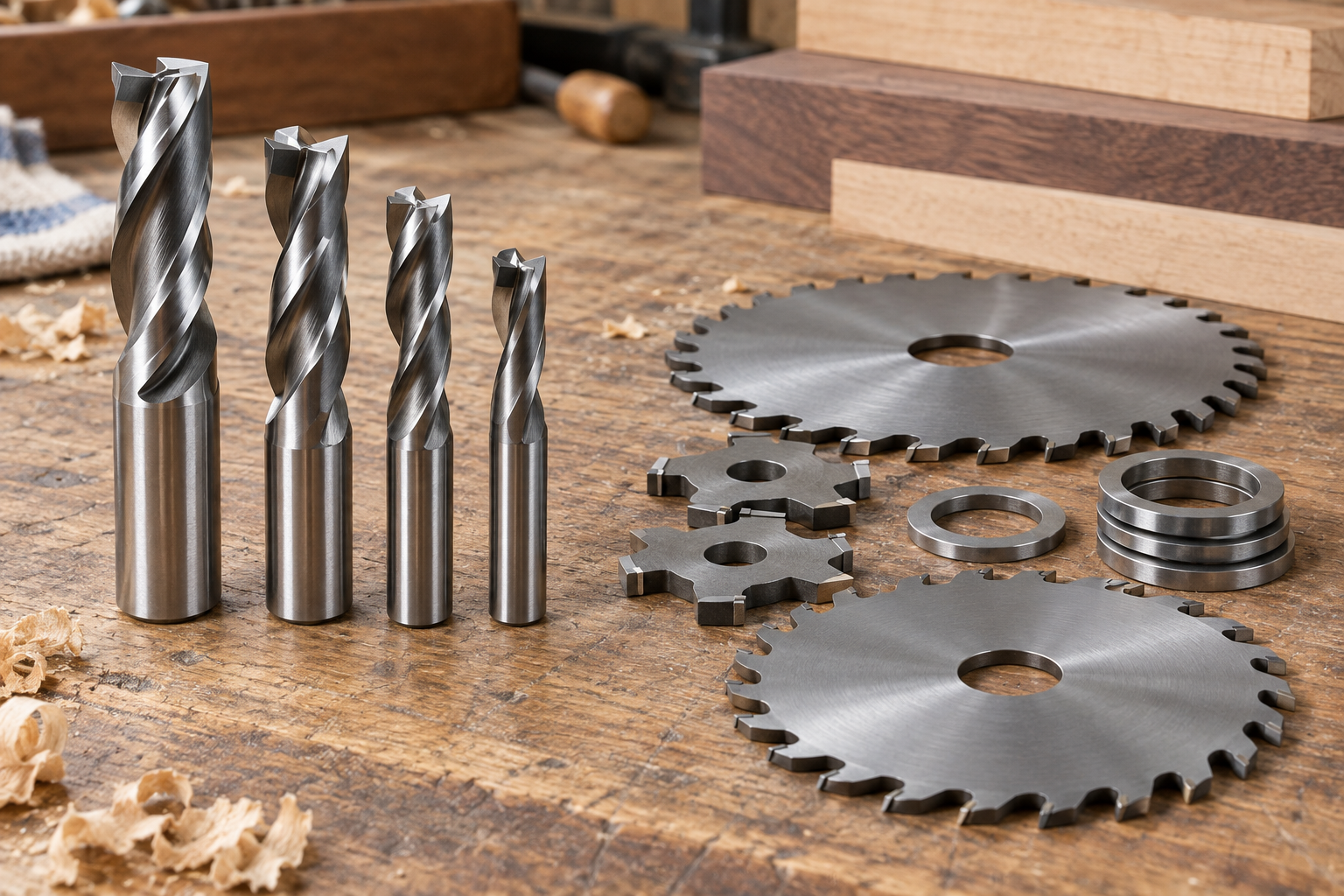
For a stacked set, compare 8-inch stacked dado blade sets by included chipper widths, arbor compatibility, and storage case—not just the maximum groove width. Many sets cut up to 13/16 inch, but that does not mean your saw can safely take the full stack.
Stacked versus wobble: what you gain
A stacked set uses two outer blades with chippers between them. Adding or removing chippers changes the cut width; shims fine-tune it. The result is a square-sided groove with a flat bottom, useful when a shelf or divider needs to seat fully. Small ridges can remain where chippers meet, especially with a poor setup, but a light pass or careful fitting usually addresses them.
A wobble blade tilts a single blade to make a wider cut. It is cheaper and takes little storage space, but its teeth sweep an angled path. That can leave a concave or ridged bottom rather than a truly flat groove. It is acceptable for a hidden groove that will be glued and does not need a precise shoulder, but it is a poor choice for a visible, tight-fitting cabinet joint. Look at wobble dado blades only if your needs and saw manual support that compromise.
What to check before buying
Arbor and saw approval: confirm the arbor diameter, required flange arrangement, and maximum stack width in the saw manual. Some compact and jobsite saws prohibit dado blades or require a separate throat plate. Never assume that a set fitting the arbor makes it safe to use.
Diameter: 8-inch sets are common and usually provide a practical cut depth for cabinet dados. A 6-inch set can suit a saw with limited capacity or clearance, but cuts less deeply. Match the set to the saw, not the other way around.
Chippers and shims: a useful set includes several chipper widths and thin shims. Those let you dial the kerf to the measured plywood thickness. Budget sets may have fewer adjustment options, which can mean a groove that is either tight enough to force the panel and damage its edge or loose enough to weaken the joint.
Tooth condition: carbide teeth should be free of chips, and the set should assemble without wobble or debris between plates. Dull teeth burn plywood and increase tear-out; a damaged tooth can leave a repeating groove mark. For a stack set, a carbide-tipped set with multiple chippers is a sensible baseline for repeated work. A less expensive set can be fine for a few shop projects if it is compatible, sharp, and produces a clean test cut.
Set up for plywood, not the label
Measure the actual sheet with calipers or a reliable thickness gauge in several places. Plywood can vary across a sheet, and nominal 1/2-inch stock is often thinner than 1/2 inch. Make a test groove in scrap from the same panel, starting slightly narrow. Add shims or adjust the stack until the offcut fits snugly by hand without hammering and without visible side-to-side movement.
Set the fence and make a shallow test cut before committing to a full-depth pass. If the groove is deeper than needed, the joint can weaken the panel; if it is too shallow, the shelf will stand proud. Use a zero-clearance insert approved for dado use, support long stock, and keep hands clear with push blocks or other suitable holding aids. Feed steadily—forcing the cut can burn the plywood, while a slow, hesitant feed can also leave scorch marks.
Common problems and when to choose another method
Chipped veneer usually points to a dull or dirty blade, poor support, or cutting direction and feed issues. A sacrificial backing board can help at the exit edge. Tear-out on both edges may call for a scoring pass or a router setup with a sharp bit. If the saw’s manual rules out dado stacks, use a router with a straight bit and edge guide rather than improvising an arbor or removing safety parts.
For one or two cabinet grooves, a router may be the better purchase if you already own one. For a batch of repeatable dados, a stacked set saves setup time and gives more consistent bottoms. Choose the cheaper wobble option only when its less-flat cut will not affect fit or appearance; otherwise, the stack set’s extra cost buys a real improvement.