What's inside
As an Amazon Associate I earn from qualifying purchases. This post may contain affiliate links at no extra cost to you.
For cutting heavy steel rod, a bolt cutter is the cheap, familiar option. A compact rebar cutter is the more specialized tool: usually a handheld hydraulic, battery-powered, or electric cutter designed to shear reinforcing bar cleanly and repeatedly. The right choice depends less on the rod’s diameter than on its grade, hardness, quantity, and how clean the cut needs to be.
As an Amazon Associate we earn from qualifying purchases at no extra cost to you.



Our Top Picks


Quick answer
Buy a heavy-duty bolt cutter if you have a few cuts to make in ordinary mild-steel rod, chain, padlocks, or wire rope and can accept a rough, pinched end. Choose a compact rebar cutter for repeated cuts, harder reinforcing bar, limited hand clearance, or work where a square, predictable cut matters.
A bolt cutter may cost a small fraction of a powered rebar cutter, but it demands more physical effort and has a greater chance of slipping, deforming the rod, or damaging its jaws when pushed beyond its rating.
What each tool is designed to do
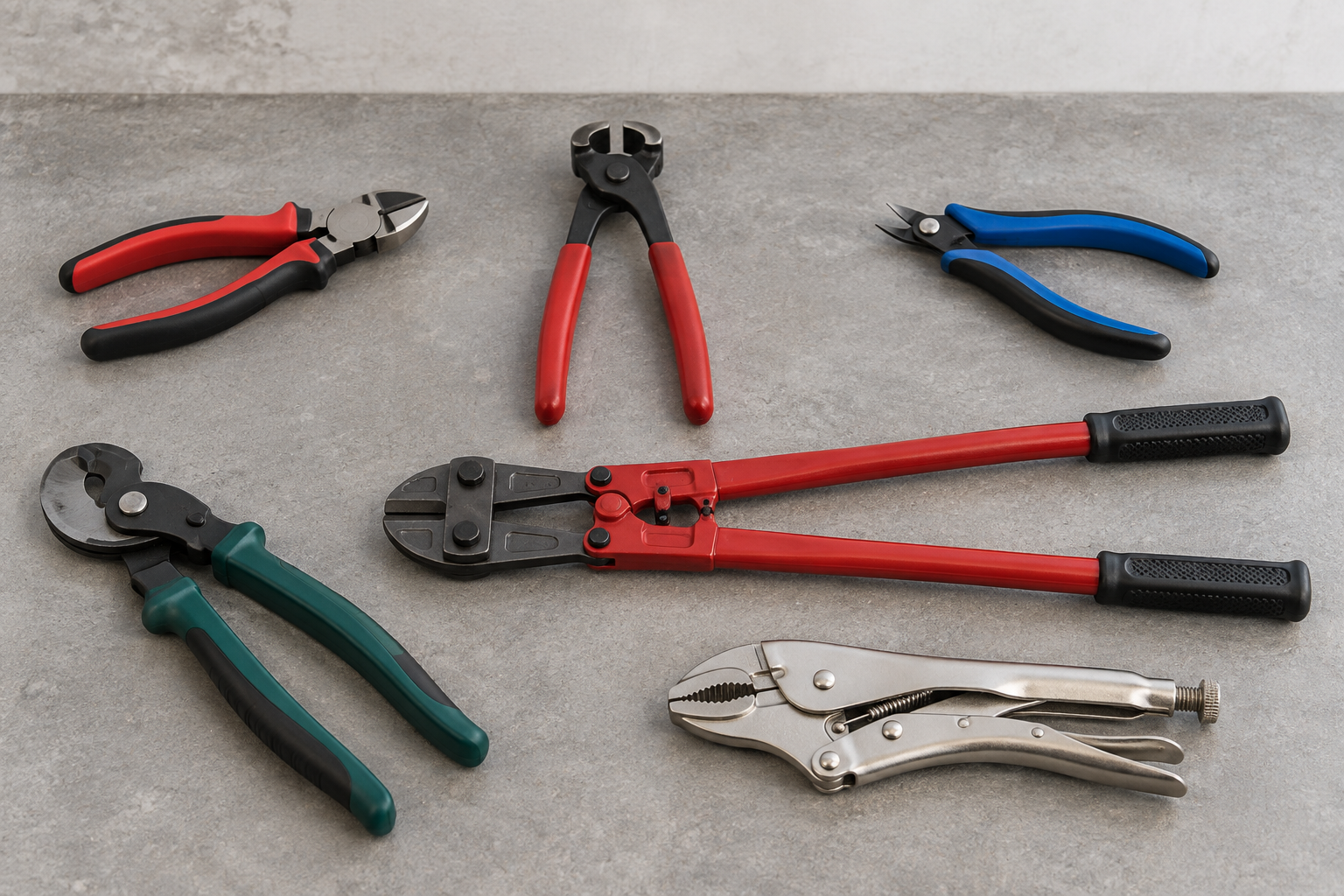
Bolt cutters use two beveled jaws and long handles to apply leverage. They cut by forcing the material between the jaws until it shears. A 24-inch cutter is manageable for many jobs; 30- and 36-inch versions provide more leverage but are heavier and harder to position accurately.
Compact rebar cutters use a dedicated shear head. Manual versions use compound or ratcheting leverage, while hydraulic and battery models drive the cutting blade with much greater force. The cutter head normally surrounds the rod more securely than bolt-cutter jaws, reducing sideways movement and producing a more consistent cut.
Do not assume every tool marketed as a “rebar cutter” handles every size of bar. A tool may be rated for 3/8-inch or 1/2-inch mild-steel rebar, while another reaches 5/8 inch. Ratings also change with steel grade. Stainless rod, hardened rod, spring steel, and high-tensile bar can exceed the tool’s capacity even when the diameter appears acceptable.
Bolt cutter vs. compact rebar cutter
| Factor | Bolt cutter | Compact rebar cutter |
|---|---|---|
| Best use | Occasional cuts in mild steel, chain, wire, and ordinary rod | Repeated cuts in reinforcing bar and heavy steel rod |
| Typical capacity | Often around 1/4 to 1/2 inch, depending heavily on steel hardness and tool quality | Commonly about 3/8 to 5/8 inch, but the manufacturer’s grade-specific rating controls |
| Cut quality | Pinched, angled, or slightly flattened end is common | More square and repeatable, especially with powered models |
| Physical effort | High near maximum capacity; may require two hands and good footing | Low with powered tools; moderate to high with manual ratcheting types |
| Speed for multiple cuts | Slow, with fatigue building quickly | Much faster and more consistent |
| Portability | Simple, light, and needs no battery or hose | Still portable, but powered versions add battery, charger, or hydraulic equipment |
| Typical cost | Lowest purchase price | Substantially more expensive |
When a bolt cutter is enough
A bolt cutter is sensible for a small repair or one-off project. Cutting six pieces of 3/8-inch mild-steel rebar for a concrete form does not usually justify an expensive powered tool. It is also useful when the rod is accessible and you can swing the handles without hitting nearby concrete, framing, or other workers.
Use the largest suitable cutter rather than a short cutter at its limit. Longer handles reduce the hand force required, but they do not make an underrated jaw safe for harder steel. Keep the rod fully seated near the jaw pivot, where the cutter produces its greatest mechanical advantage. Cutting near the tips makes the handles feel dramatically harder and can chip the edges.
The cheaper option stops making sense when the work involves dozens of cuts, overhead or awkward positioning, or rod that springs back after partial cutting. Fatigue leads to poor footing and slipping. A bolt cutter can also leave a sharp, crushed end that needs grinding before it is handled or inserted into a tight hole.
When a compact rebar cutter wins
A compact rebar cutter earns its cost on repetitive work. It is faster for cutting reinforcement during a pour, trimming protruding dowels, or preparing many identical lengths. The enclosed head helps hold the rod in place, and powered cutting avoids the full-body effort required to close long bolt-cutter handles.
It is particularly useful where there is only a few inches of clearance around the rod. A battery or hydraulic cutter can often be positioned with one hand, though the tool’s weight may still be significant. Some powered cutters leave a relatively clean, square end; others produce a short tapered slug. Check photographs and the manufacturer’s specifications if the cut face will remain visible.
For occasional DIY use, a powered unit is often poor value. Renting one, borrowing from a contractor, or hiring the cuts out can cost less than buying a tool that sits unused. Manual ratcheting rebar cutters occupy the middle ground: cheaper and quieter than powered models, but slower and still tiring over a large batch.
Capacity, steel grade, and failure modes
Diameter alone is not a safe capacity test. A tool rated for 1/2-inch mild-steel rebar may fail on 1/2-inch hardened rod. Bolt-cutter jaws can develop small chips, roll over, or become misaligned when used on material harder than their rating. A powered rebar cutter can stall, overload its hydraulic system, strip a drive component, or drain a battery quickly when pushed past capacity.
Never add a pipe over bolt-cutter handles. That improvised extension can bend the handles, snap a jaw, or throw the user off balance. If the tool will not cut with steady force, stop and choose a larger-rated cutter. Do not heat the rod to make cutting easier unless the material and surrounding work explicitly allow it; heating can change the steel and creates a burn and fire hazard.
Safe cutting practice
Wear safety glasses, gloves, long sleeves, and sturdy footwear. Secure loose rod before cutting and keep bystanders away from both ends. The offcut can fly, and a long bar can whip or rotate as the jaws close. Position the cutter so your hands are not in line with the cut and never place fingers inside a powered shear head.
After cutting, inspect the end. Remove burrs with a file or grinder if the rod will be handled, threaded through conduit, or placed where it could damage concrete forms. For a few accessible cuts in mild steel, a properly sized bolt cutter is the economical answer. For hard rod, tight spaces, or production-level quantities, the compact rebar cutter is the safer and more efficient purchase.