What's inside
As an Amazon Associate I earn from qualifying purchases. This post may contain affiliate links at no extra cost to you.
Hardened chain is one of the jobs where a bolt cutter’s advertised jaw capacity can be misleading. A cutter rated for 10 mm of mild steel may barely mark a hardened security chain, while a cheaper tool can bend its jaws or chip the cutting edges. For workshop use, the best choice is usually a large, compound-leverage cutter with jaws specifically intended for hardened wire—not a general-purpose pair bought by length alone.
As an Amazon Associate we earn from qualifying purchases at no extra cost to you.



Our Top Picks


Why hardened chain is difficult to cut
Chain used for gates, trailers, motorcycles, and security doors is often heat-treated after forming. The outer surface may be harder than ordinary hardware-store chain, and the links are usually thick enough to spread the cutter jaws apart. A bolt cutter must do two things at once: generate enough force to start a cut and keep its jaws aligned as the link resists.
There are several common failure modes. The jaws may simply bounce off the link without biting. They may leave a shallow indentation but not finish the cut. On cheaper tools, the cutting edges can roll, chip, or develop a permanent gap. Excessive force can also bend the handles or damage the pivot rivet. Do not extend the handles with pipe; that can turn a failed cut into a broken tool or a flying fragment.
The best bolt-cutter type for a workshop
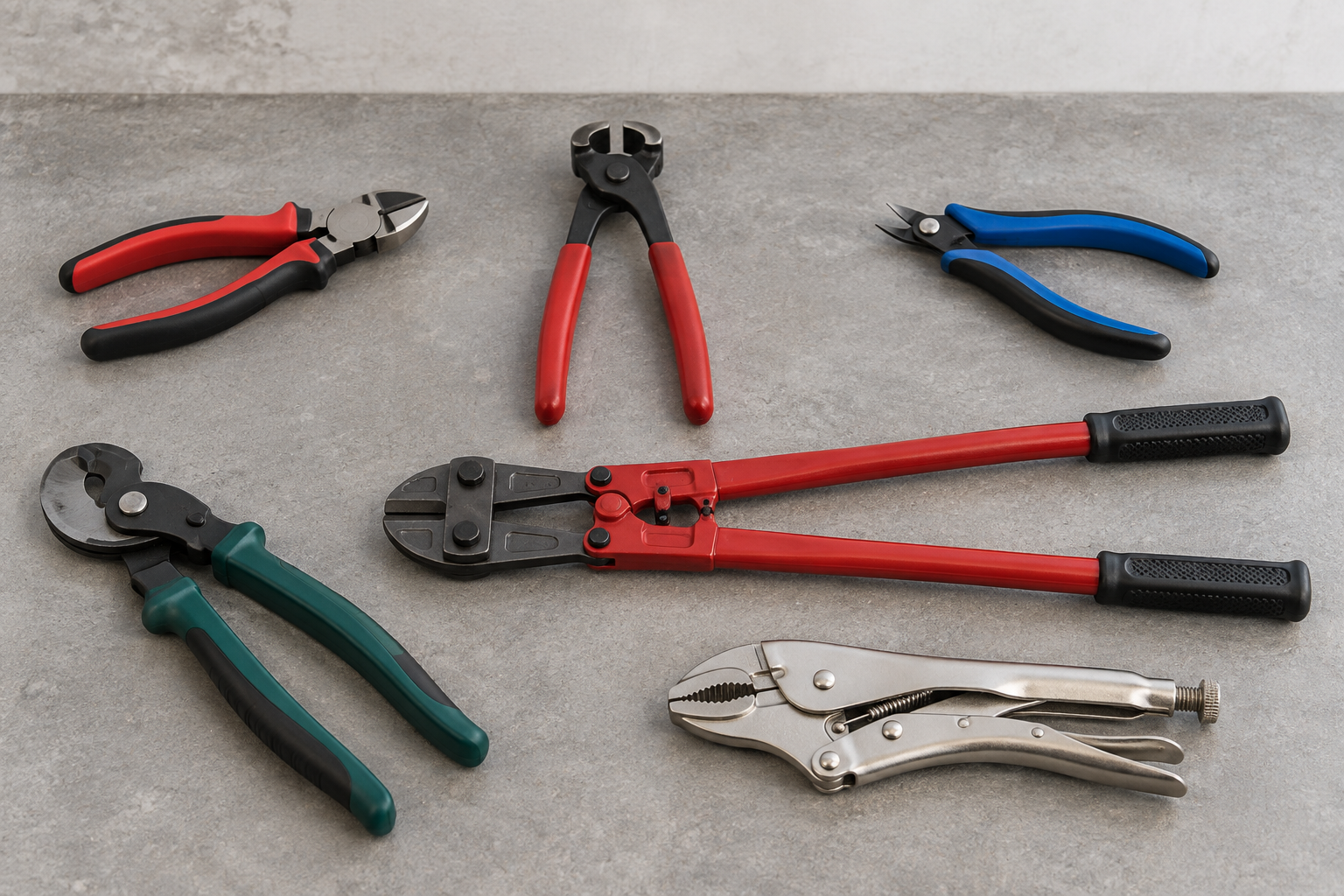
Look for 24-inch compound bolt cutters for hardened steel. This size is a practical starting point because it gives useful leverage without being as awkward as a 36-inch cutter around a vise or workbench. Compound-joint models use multiple pivots to multiply hand force, and many have replaceable jaws. Those are valuable features when you expect to cut more than one chain.
A 30- or 36-inch cutter can produce more force, but length is not a substitute for suitable jaws. Long handles are harder to position accurately and can encourage overloading. For occasional cutting of a medium chain, a good 24-inch tool is generally easier to control. For heavy industrial chain, no hand bolt cutter may be the right answer.
| Tool type | Best use | Typical limitation |
|---|---|---|
| 18-inch standard bolt cutter | Small mild-steel chain, bolts, and wire | Often underpowered for hardened links |
| 24-inch compound bolt cutter | Medium hardened chain and regular workshop work | Still limited by chain grade and diameter |
| 30- to 36-inch heavy-duty cutter | Thicker chain where access allows long handles | Heavy, expensive, and easy to overload |
| Angle grinder with abrasive or cut-off wheel | Very hard or thick chain | Noise, sparks, heat, and the need for careful restraint |
What to check before buying
Start with the chain diameter and grade. A 6 mm mild-steel chain is a different job from a 10 mm hardened security chain. Do not treat a manufacturer’s maximum capacity as a hardened-chain rating unless the specifications say what steel and hardness were used. A rating such as “cuts 9 mm soft steel” does not mean the tool will cut 9 mm hardened chain.
Choose jaws with a narrow, sharp cutting profile and a hardened cutting edge. Center-cut jaws are versatile, but a tool with a jaw profile designed for hardened wire may bite more reliably. Keep the jaws aligned with the link; cutting at an angle increases spreading force and can twist the head. Replaceable jaws are worth paying for if the cutter will see regular use.
Check the handle construction as well. Tubular steel handles are common and can be strong, but poorly made handles may flex noticeably before the chain yields. A comfortable grip matters less than a rigid head and properly fitted pivot. Avoid tools with visible jaw misalignment, rough pivots, or a large gap when the handles are closed.
For occasional work, a solid 24-inch high-leverage bolt cutter is often the sensible purchase. The cheaper option is fine when the chain is ordinary low-carbon chain, under roughly 6 mm, and you only need a few cuts. Spending more becomes justified when the chain is hardened, the cutter will be used repeatedly, or replacement jaws and parts are available.
How to cut the chain safely
Secure the chain before applying force. A bench vise with soft jaws is best for workshop work. Support the link close to the cutting point, but leave enough room for the cutter head to close fully. Keep your hands away from the jaws and wear safety glasses; hardened steel can chip, and the cut link can spring apart when tension is released.
Seat the link deep and squarely in the jaws. Make a controlled squeeze rather than a sudden jerk. If the handles stop moving and the link has only a dent, reset the tool instead of bouncing on it. A small change in position can help, but repeated partial cuts quickly damage the jaws.
Inspect the cutter after the first attempt. If the edge has rolled, chipped, or developed a visible gap, stop using it. The next step is usually an abrasive method, not a longer handle. A corded or cordless angle grinder with a metal cut-off wheel will handle chain that defeats hand cutters, provided the chain is clamped securely and sparks are kept away from fuel, wood dust, and other combustibles.
When bolt cutters are the wrong tool
If the chain is 10 mm or thicker, visibly hardened, welded security chain, or part of a load-bearing assembly, assume a bolt cutter may fail. A grinder is usually faster and more predictable, though it creates heat and sparks. For repeated work, a hydraulic cutter or portable band saw may be safer and less tiring. Never cut a loaded, suspended, or tensioned chain until the load has been fully supported.
For most home and small-shop jobs, buy the best 24-inch compound cutter you can verify is intended for hardened steel, then use it within its stated capacity. If the chain’s diameter or hardness is beyond that rating, skip the bargain cutter and move directly to an abrasive or hydraulic tool.