What's inside
As an Amazon Associate I earn from qualifying purchases. This post may contain affiliate links at no extra cost to you.
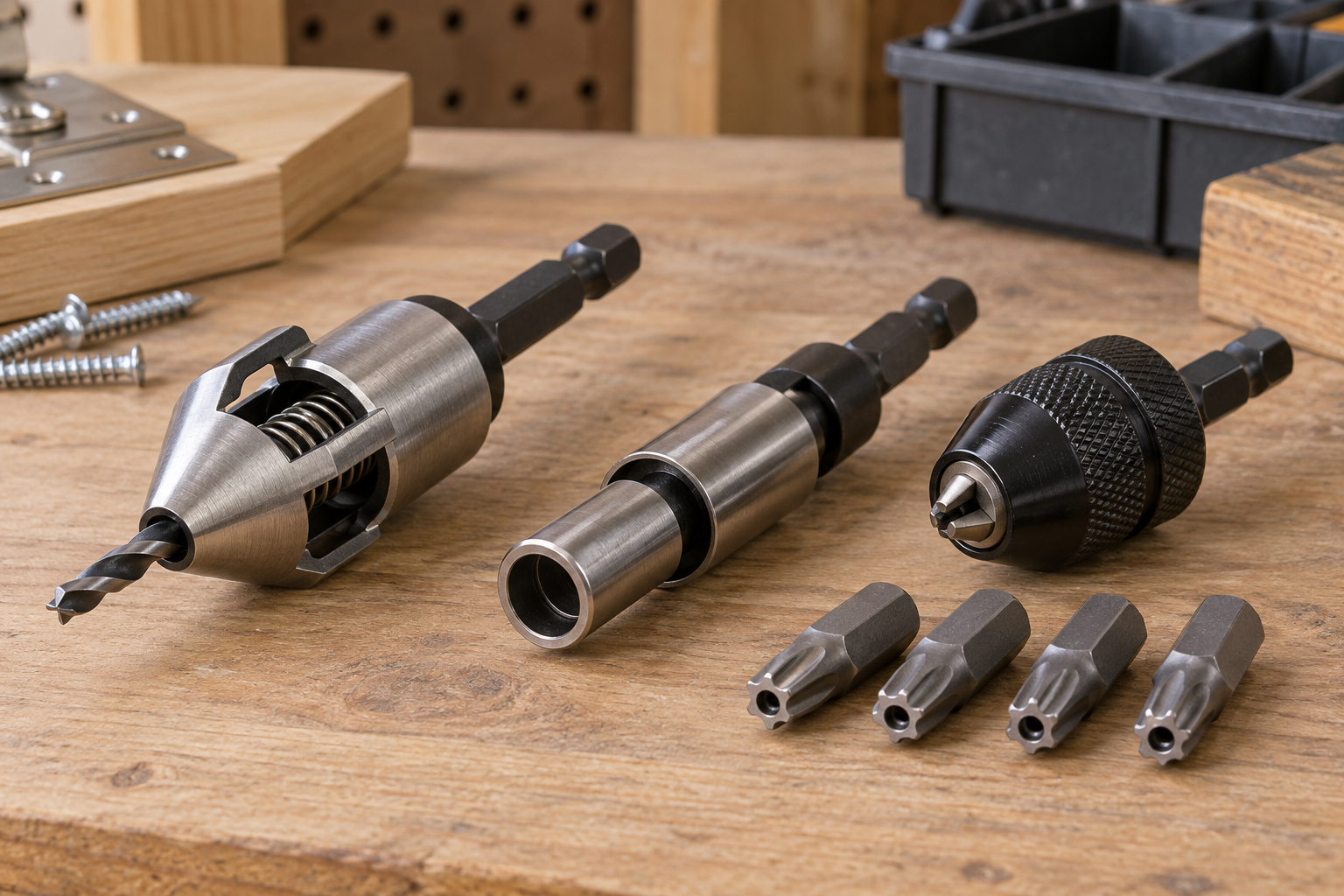
Vix bit size is not a guess based on the screw’s head. It refers to the diameter of the bit’s pilot drill, which has to fit the hinge’s countersink so the screw lands near the center of its hole. A bit that is too large can leave too little wood for the screw to grip; one that is too small may not center the screw properly or may leave a pilot hole that does little to prevent splitting.
Start with the hinge, not the screw
Self-centering bits are sized to match the countersunk screw holes in hardware. For hinge work, the most useful measurement is the diameter of the narrow opening at the bottom of the hinge’s countersink—not the screw-head diameter and not the widest part of the countersink.
Check the hinge packaging or manufacturer’s specifications for a recommended bit size. If that information is unavailable, measure the opening with calipers or compare it with the bit’s guide sleeve. The sleeve should enter the hinge hole smoothly with little side-to-side movement. Do not force it: a tight fit can bind, and a loose fit can allow the pilot hole to wander.
Common Vix bit pilot sizes include 5/64, 7/64, and 1/8 inch, but availability and the range of sizes depend on the set. Those numbers are not universal hinge-screw rules. Use the size that fits the hinge’s screw hole; two hinges with similar-looking screws can have different countersinks.
Match the bit to the hinge
Remove a hinge if necessary and test the bit in one screw hole before drilling. Hold the hinge flat against a scrap piece of the same material, or against the door or jamb if the hinge is already positioned. The sleeve should register in the countersink without rocking. Drill a shallow test pilot, then check that it sits centered in the hole.
If you are buying a bit for one job, a correctly sized single bit is often enough. For mixed hardware or future repairs, a self-centering drill bit set gives you more options, but a larger set is not automatically better. Check that it includes the size your hinge needs and that replacement bits are available if the small drill breaks.
| What you see | Likely issue | What to do |
|---|---|---|
| Sleeve rocks in the hinge hole | Guide is undersized for the countersink | Try a bit with a larger guide that still enters freely |
| Sleeve will not enter | Guide is too large, or the hole is dirty or damaged | Clean the hole and check another size; do not force it |
| Pilot hole appears off-center | Bit did not seat, hinge moved, or pressure was uneven | Re-seat the guide and clamp or hold the hinge firmly |
| Screw spins without tightening | Pilot may be too large, too deep, or in damaged wood | Use a smaller pilot where appropriate, or repair the stripped hole |
Adjust for the material and screw
A Vix bit centers the hole; it does not make every pilot hole the right diameter or depth for every wood. In softwood, a properly centered pilot is usually straightforward. In hardwood, a pilot that is too small can make the screw hard to drive and increase the chance of a split or snapped screw. For large or unusually long screws, verify the screw maker’s pilot-hole guidance rather than assuming the hinge bit alone is sufficient.
Depth matters too. Many Vix bits have a spring-loaded guide, but the drilling depth still depends on the bit and how far it is allowed to travel. Aim for a pilot slightly deeper than the screw’s embedded length, while avoiding drilling through the door or jamb. A piece of tape on the bit can act as a simple depth marker. On a thin door edge, check the available thickness before drilling.
For a stripped hole, changing Vix bit size is not a reliable repair. The screw needs sound wood to grip. Depending on the damage, a fitted wood plug, a suitable repair dowel, or a longer screw that still fits the hinge may be needed. Avoid blindly upsizing the screw: its head must sit in the hinge countersink, and a head that does not seat flush can interfere with the door.
Bit quality and drilling technique
A basic bit is fine for occasional hinge installation if its sleeve fits accurately and the drill is sharp. For repeated cabinet or door work, compare construction and replacement options before paying more. A single replacement self-centering hinge bit can be a better buy than a full set when you already know the required size.
Keep the drill square to the hinge and use moderate speed. Let the guide sleeve seat before the cutting tip starts to bite. Excessive pressure can compress the spring guide, shift the hinge, or push the bit off center. Clear chips if they pack into the sleeve, especially when drilling several holes in hardwood.
Vix bits are not interchangeable with ordinary twist bits for locating hinge screws. A plain bit may drill a pilot of the right diameter, but it lacks the sleeve that follows the countersink and centers the hole. Conversely, a Vix bit is not the best choice for every screw hole: if there is no countersunk guide surface, use a drill bit sized for the screw and material, and mark the center separately.
What to buy for your job
For a single door or a few hinges, measure the hinge and buy the matching size. If you work on different hinges, a set is more convenient, provided its listed sizes cover the hardware you encounter. A set with replaceable self-centering bits can make sense for regular use, since small cutting tips can wear or break. For occasional DIY work, a cheaper fixed bit is reasonable if the guide fits well and the bit drills cleanly.
Before driving all the screws, install one and check that its head sits flush and the hinge stays aligned. If the head tilts, the pilot is visibly off-center, or the screw binds early, stop and inspect the fit rather than forcing it. The right Vix size is the one that registers securely in the hinge’s countersink and leaves a pilot suited to the screw and wood—not simply the most common size in a kit.