What's inside
As an Amazon Associate I earn from qualifying purchases. This post may contain affiliate links at no extra cost to you.
Fiberglass can be cut with either a carbide-grit hole saw or a diamond-grit hole saw. For occasional holes in thin fiberglass, carbide is usually the cheaper, sensible choice. For repeated holes, thicker laminate, or work where a clean edge matters, diamond grit generally lasts longer and cuts more consistently. The right pick depends on the laminate, hole size and number of cuts—not simply the word “diamond” on the package.
As an Amazon Associate we earn from qualifying purchases at no extra cost to you.


Our Top Picks

What you are cutting
Fiberglass panels and boat hulls are composite materials: glass fibers held in resin, sometimes backed by foam, wood, or another core. A hole saw has to abrade through both the resin and the glass without catching fibers or overheating the surrounding material. The backing matters: a thin, solid panel is much easier to cut cleanly than a thick, cored section.
Check the workpiece before drilling. Look for wiring, plumbing, and structural members, and find out whether the panel is cored. On boats or vehicles, a hole through a cored panel can expose the core to water; the cut may need to be sealed according to the manufacturer’s instructions. If the material could contain hazardous fibers or coatings, identify it before cutting rather than assuming it is ordinary fiberglass.
How the bits differ
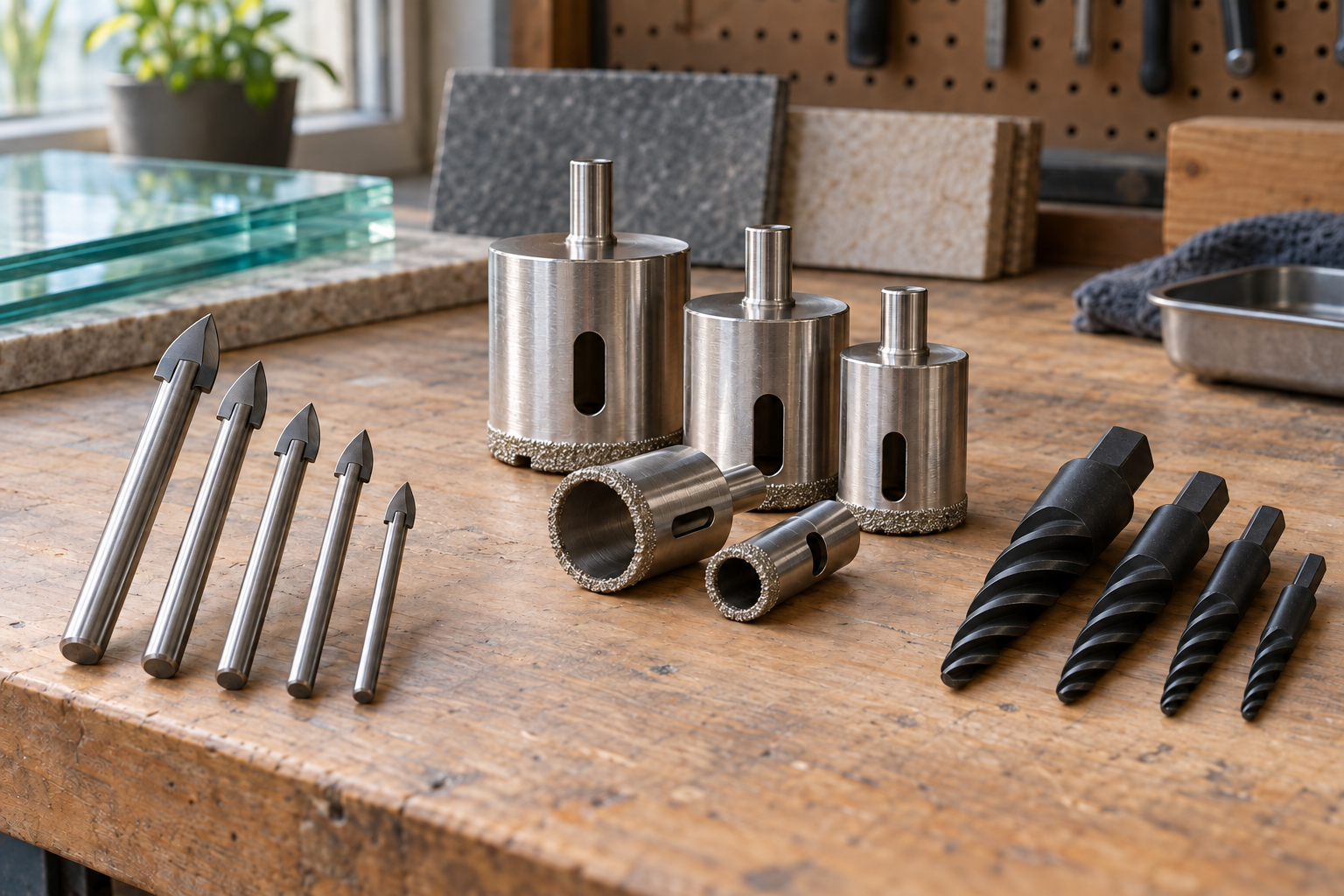
Carbide-grit hole saws use coarse abrasive particles bonded to the rim. They are often inexpensive and can cut fiberglass effectively, particularly for a few holes in thinner material. They do not have sharp teeth that slice fibers, so they are less prone to the grabbing and splintering associated with toothed saws. Their main limitation is wear: abrasive grit can dull, wear away, or load up with resin, and cutting performance can fall off noticeably.
Diamond-grit hole saws use diamond abrasive on the rim. They typically keep cutting longer in abrasive materials and are a better bet for repeated holes or thicker laminate. They usually cost more, and the price is wasted if you only need one or two holes in a thin panel. Diamond does not make the cut immune to heat, dust, or chipping; technique still matters.
Carbide vs. diamond at a glance
| Factor | Carbide-grit | Diamond-grit |
|---|---|---|
| Best fit | Occasional holes in thin or moderate fiberglass | Repeated cuts, thicker laminate, or a longer-lasting abrasive rim |
| Upfront cost | Usually lower | Usually higher |
| Wear | Can lose cutting speed or load with resin sooner | Generally better suited to sustained abrasive cutting |
| Cut quality | Good with backing and a steady feed; may leave more cleanup | Often consistent, but can still chip the exit face |
| Value | Strong for a small number of holes | Stronger when the bit will see repeated use |
Which one should you buy?
For one or a few holes in a thin fiberglass panel, start with a carbide-grit hole saw for fiberglass. It is the budget pick when the job is limited and the material is not unusually thick. Choose the exact diameter from the fitting or installation instructions, not by estimating from the outside of the part.
If you expect many holes, are cutting a thick laminate, or cannot afford a bit that slows partway through the job, consider a diamond-grit hole saw for fiberglass. Compare the bit’s stated material compatibility, diameter, and cutting depth. A more durable rim is not useful if the saw is too shallow for the panel or the arbor does not fit your drill.
Do not substitute a conventional toothed wood hole saw unless its manufacturer specifically approves it for the material. Teeth can snag glass fibers, chip the surface, or make the saw harder to control. For a single hole, the cheapest suitable abrasive bit may be all you need; for production work, compare cost per hole rather than purchase price alone.
How to make the cut cleanly
Use a variable-speed drill and follow the hole saw maker’s speed guidance. If no guidance is available, begin slowly and ease off if the rim gets hot, the drill labors, or resin starts smearing. There is no single safe RPM for every diameter: larger saws generally need slower speeds than smaller ones. Use a steady, light feed instead of forcing the bit, which can overheat the resin or damage the edge.
Secure the panel so it cannot vibrate, and support the back face with scrap plywood when possible. Mark the center and use a guide or pilot arrangement compatible with the hole saw; a loose saw can skate across the surface. On a thin panel, a backing board also helps reduce breakout as the abrasive rim exits. If the saw has no pilot bit, use a rigid template or other stable guide rather than trying to hold the rim in place by hand.
Pause periodically to clear dust and let the bit cool. Fiberglass dust is irritating and should not be breathed or allowed into the eyes: wear a well-fitting particulate respirator, eye protection, and gloves, and control dust with suitable extraction. Avoid using water unless the tool, workpiece, and setting are appropriate for wet cutting; water and an ordinary corded drill are a hazardous combination.
Stop if the cut begins to burn, the rim clogs, or the edge starts splintering. Check the bit and workpiece rather than increasing pressure. After the plug is removed, inspect both sides and lightly clean up the edge with an appropriate abrasive while keeping dust controls in place. For a cored panel, finish and seal the opening as required for that construction.
Common failure modes
A hole saw that stalls or polishes the surface may be clogged with resin, worn out, or turning too slowly for the maker’s guidance. Burning usually points to too much heat from speed, pressure, or poor dust clearance. Chipping on the exit side often means the panel lacked support or the feed was too aggressive near breakthrough. If a carbide rim stops cutting after several holes, replacing it may be more economical than pushing it harder; if you have a long run ahead, that is when diamond grit is more likely to earn its higher price.