What's inside
As an Amazon Associate I earn from qualifying purchases. This post may contain affiliate links at no extra cost to you.
Our Top Picks

Which Hole Saw Should You Buy?
For porcelain tile, a diamond grit hole saw is usually the better choice. It cuts faster, starts more cleanly, and is less likely to crack a hard tile when used with water and light pressure. A carbide grit hole saw costs less and can be perfectly adequate for one or two holes, especially in smaller sizes or softer ceramic tile.
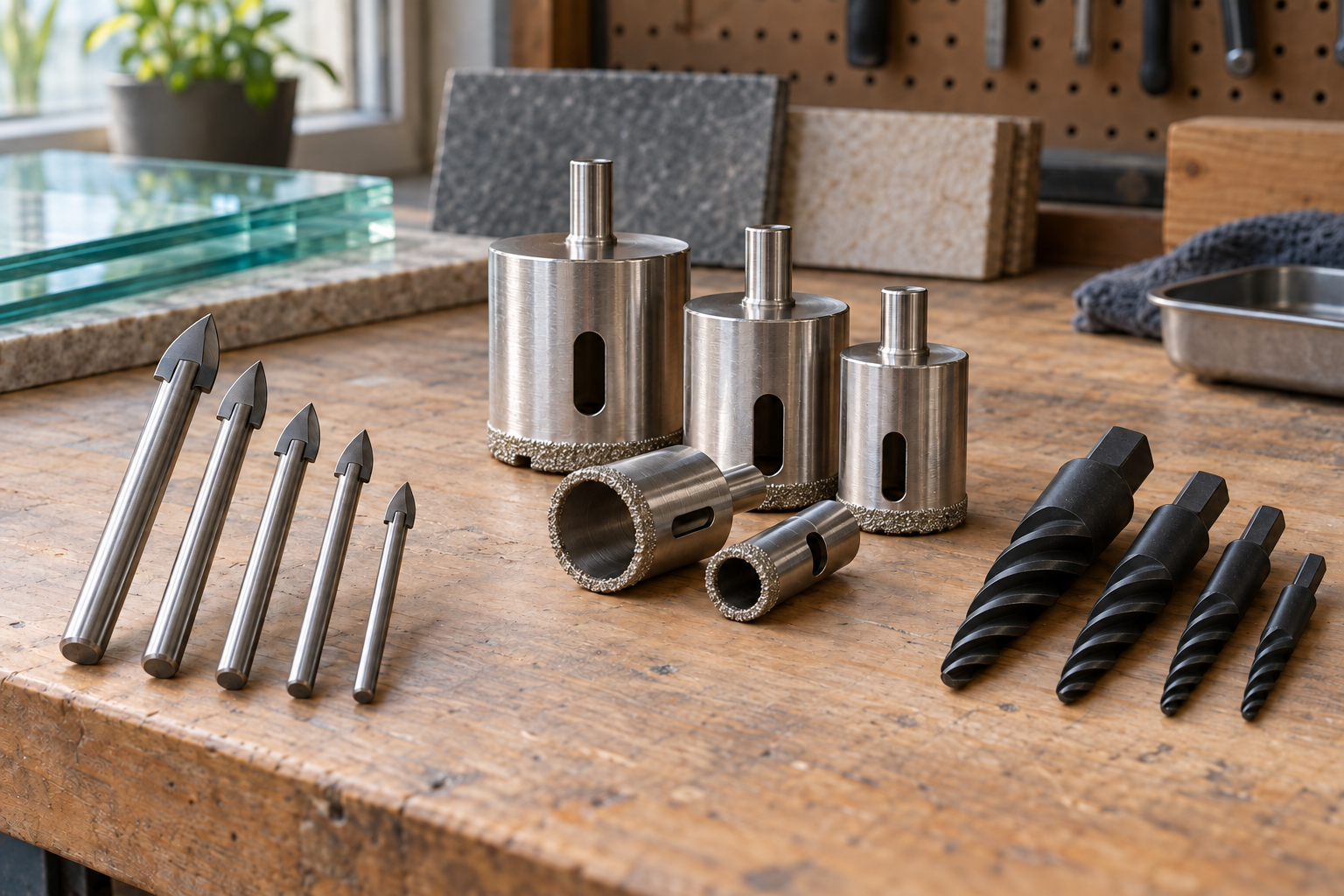
The important distinction is how each tool cuts. A diamond hole saw uses diamond particles bonded to the rim. A carbide grit hole saw uses coarse carbide abrasive bonded to its edge. Neither works like a wood hole saw with sharp teeth. Both grind through the tile, but diamond generally removes porcelain more efficiently and survives more holes.
As an Amazon Associate we earn from qualifying purchases at no extra cost to you.


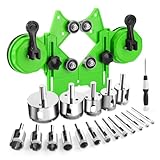
If you are buying for a bathroom renovation or expect to drill several holes, compare diamond grit hole saws for porcelain tile. For a single pipe, valve, or anchor hole, a carbide grit tile hole saw may be the more economical purchase.
Diamond vs. Carbide: Cutting Performance
| Feature | Diamond grit | Carbide grit |
|---|---|---|
| Best material | Porcelain, glass, granite, dense tile | Ceramic tile, softer porcelain, occasional holes |
| Typical cutting speed | About 30–90 seconds for a 1/4-inch porcelain tile | About 1–3 minutes for the same hole |
| Expected working life | Often dozens of holes when cooled properly | Usually fewer holes, depending heavily on pressure and tile hardness |
| Starting the hole | Smoother, but still needs a guide or angled start | More prone to skating and chipping |
| Cost | Higher | Lower |
| Primary failure | Diamond rim wears smooth or overheats | Grit loads up, breaks away, or cuts extremely slowly |
Actual cutting time varies with diameter and tile thickness. A 1/4-inch hole may take less than a minute with a fresh diamond tool, while a 2-inch hole can take several minutes. Carbide grit can work, but large diameters expose its weaknesses: more rim area is grinding at once, heat builds quickly, and the operator tends to push harder.
Diamond is not immune to failure. Running it dry, especially on a large hole, can overheat the bond and strip diamond from the rim. Excessive pressure can also glaze the cutting edge so it stops cutting effectively. Carbide grit usually fails by losing abrasive, becoming clogged with tile dust, or cracking under force.
When Carbide Grit Is Enough
Choose carbide grit when the job is small, occasional, and cost matters more than speed. It is a reasonable choice for a single hole through a ceramic backsplash or a moderately soft porcelain tile. It can also make sense if the hole will be hidden by a escutcheon plate and a slightly rough edge is acceptable.
Do not assume every tile labeled “ceramic” cuts easily. Some dense, vitrified tiles behave much like porcelain. If a carbide saw barely scratches the surface after 30–60 seconds of careful work, stop increasing pressure. The tool is probably a poor match, and pushing harder raises the chance of a cracked tile or damaged substrate.
A carbide hole saw is also less attractive for holes larger than about 1-1/2 inches. It may still work, but the slower cut and higher heat make diamond a better value. Spending less on the saw is not a saving if it destroys a $10 or $20 tile.
Why Diamond Is Better for Porcelain
Porcelain is dense, hard, and often reinforced by a tough fired surface. Diamond grit handles that surface with less pressure. The tool is especially useful for plumbing penetrations, shower fittings, toilet supply lines, and electrical boxes where the hole must be reasonably round and clean.
Electroplated diamond hole saws are common for tile work. They cut aggressively when new, but their diamond layer is finite. A brazed or higher-quality diamond tool can cost more and may offer better durability, but the specific bond and cooling method matter more than marketing claims.
For repeated work, a diamond tile hole saw set can be useful because plumbing and hardware jobs commonly need several sizes. Check that the set includes the diameter you need; an inexpensive set with the wrong sizes is not a bargain.
How to Drill Porcelain Tile Without Cracking It
Mark the hole with a pencil or masking tape, then use a guide. A purpose-made guide is the safest option. For a one-off hole, a scrap of plywood with a correctly sized opening can keep the saw from wandering during the first few seconds.
Use a variable-speed drill with the hammer function switched off. Start at roughly 300–600 rpm for most small diamond hole saws, then adjust based on the tool instructions. Hold the drill square to the tile and use light, steady pressure. The abrasive should cut; you should not have to lean your body weight into it.
Apply water continuously or frequently to the rim. A damp sponge, spray bottle, or small water reservoir can work, provided water cannot run into the drill. For overhead holes, use a guide and a controlled amount of water rather than flooding the area. Wear eye protection: wet slurry and small porcelain chips travel in unpredictable directions.
Once the hole is about 1/8 inch deep, the saw is less likely to skate. Pause every 10–20 seconds to rinse dust from the cut and cool the rim. If the tool begins squealing, smokes, or turns the water into a thick, hot slurry, stop immediately and let it cool.
Common Failure Modes
The most common mistake is drilling dry because the hole looks small. Even a 1/4-inch hole can overheat a diamond rim in seconds. The second is using hammer action. Impact loads can chip the glaze and create a crack that runs well beyond the hole.
Another mistake is drilling too close to an edge. Keep the hole at least two hole diameters from an unsupported tile edge when possible. A hole near a corner places extra stress on the tile, regardless of whether the saw is diamond or carbide. Make sure the tile is fully supported and firmly bonded before drilling.
After the hole is complete, clean out the slurry and inspect the edge. A small chip hidden under a trim plate is usually harmless. A long crack, loose tile, or exposed waterproofing membrane is not. For valuable or difficult-to-replace tile, diamond is the safer purchase because its lower cutting force gives you more margin for error.