What's inside
As an Amazon Associate I earn from qualifying purchases. This post may contain affiliate links at no extra cost to you.
Our Top Picks
 Table Saw Dust Collection Adapter2.5 In Hose Connection6.69 x 5.91 x 2.76 inches0.55 poundsCheck on Amazon
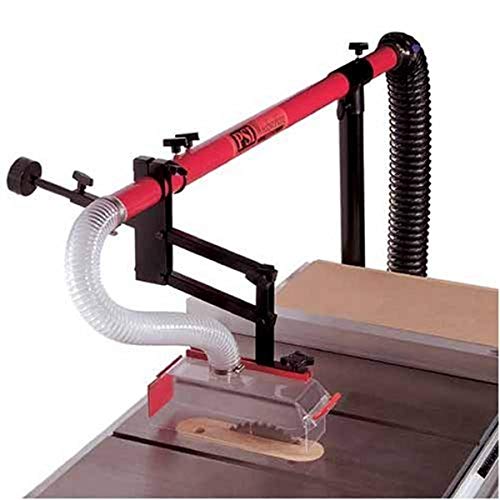 PSI Woodworking TSGUARD Table Saw Dust Collection Guard47.3 x 12.8 x 6.5 inches41.1 PoundsCheck on Amazon
Why Jobsite Saws Leak Dust by Design
A cabinet saw is a sealed box with a 4-inch port and 400+ CFM of airflow pulling dust down. A jobsite saw is an open plastic housing with a 2-1/2 inch port, a wide-open throat plate, and a motor hanging out the back. Even with a vacuum attached, most of the air takes the path of least resistance — in through the gaps and out around the blade — so fine dust never makes it to the port.
You will not get true dust collection from a jobsite saw without enclosing it and increasing airflow at the source. The realistic goal is to capture 70-85% of total dust and 90%+ of the heavy chips, while keeping respirable fine dust down with a mix of collection, filtration, and cleanup. Anything claiming 99% collection from a stock jobsite saw is not measuring what you breathe.
Start With the Port and Hose
Almost every jobsite saw ships with a 2-1/4 to 2-1/2 inch dust port that necks down inside to 1-7/8 inches. That restriction kills velocity right where you need it. Check three things before you buy anything:
First, remove the port and look inside. If there is a molded choke point, internal ribs, or a 90-degree elbow packed with sawdust, that is your first bottleneck. Second, measure actual hose fit. A standard 2-1/2 inch shop vac hose often fits loosely over the port and leaks. A 1-1/2 inch hose with a tapered rubber adapter actually seals better but drops CFM by 30-40%. Third, run the hose as short and straight as possible. Every 10 feet of corrugated 2-1/2 inch hose costs you roughly 15-20 CFM, and every tight 90-degree bend costs another 10 CFM.
The cheapest effective upgrade is a proper sealed adapter. A table saw dust collection adapter with a soft rubber boot and hose clamp will outperform any friction-fit plastic reducer that whistles and leaks. Wrap the joint with foil tape, not duct tape, if you still have gaps. You want all the vacuum’s air coming from the blade area, not from a leak at the port.
Pick the Right Vacuum, Not the Biggest One
You do not need a 600 CFM dust collector for a jobsite saw. You need high static pressure to pull through a small port and hose. That means a shop vacuum, not a low-pressure dust collector.
For a 2-1/2 inch port, a 6 to 9 gallon vac rated at 150-180 CFM at the tool end (not the marketing peak) is the sweet spot. Peak HP ratings are meaningless. Look for sealed suction (water lift) above 60 inches and a 2-1/2 inch hose as standard. A 12-16 gallon vac moves more air on paper but is louder, heavier to haul, and often has the same motor.
Filtration matters more than horsepower. A standard paper filter will pass most 0.5-5 micron dust straight back into the air and clog in 20 minutes of ripping MDF. Use a HEPA cartridge plus a fleece bag. The bag captures 95% of bulk dust before it hits the cartridge, so suction stays consistent three to four times longer. A HEPA shop vac with a bag is the single biggest upgrade for indoor or garage work. Without it, you are just relocating fine dust.
If you cut a lot of sheet goods, add a cyclone separator in line before the vac. It drops about 10-15 CFM but keeps the filter clean for days instead of hours and prevents the vac from losing suction mid-cut. For occasional trim work, the cyclone is overkill — bags are cheaper and more portable.
Seal the Housing Without Cooking the Motor
The open back and bottom of a jobsite saw are where 50% of your dust escapes. Closing them up forces air to enter around the blade and exit through the port, which is exactly what you want. But you cannot fully seal a direct-drive jobsite saw — the universal motor needs cooling air.
Use magnetic sheets, foam board, or 1/4-inch plywood to block the large rear opening and the gaps under the table. Leave a 2×4 inch intake slot near the motor fan inlet and never cover the motor vents themselves. Tape over the smaller cracks around the height and bevel mechanisms with foil tape. On most DeWalt, Bosch, and Ridgid jobsite saws, this 30-minute mod improves capture at the port from about 40% to 65% with the same vac, measured by weight of dust collected vs. dust on the floor.
Failure mode to watch: if the motor housing gets too hot to touch after 10 minutes of continuous ripping, you have restricted cooling too much. Open the slot by another inch. You want negative pressure inside the cabinet, not a hot box.
Control Dust at the Blade
Under-table collection alone never catches dust thrown off the top of the blade, especially on through-cuts. That top dust is also the finest and most hazardous.
Three options help, in order of effectiveness:
A blade guard with a dust port works if you actually use it. Most stock guards are bulky and get removed. Aftermarket low-profile guards with a 1-1/2 inch port connected to the same vac via a Y-fitting can pick up 20-30% more top dust without blocking sight lines. The trade-off is you need a second hose that snags on workpieces.
A zero-clearance throat plate reduces the gap around the blade where dust is flung down and then blasted back up by the blade’s air pump effect. It helps most on narrow rips. Keep the stock plate for beveled cuts.
An overarm dust shroud or floating dust hood is the best top collection but is awkward on a portable saw. For a small shop where the saw stays put, a overarm dust collection arm is worth it. For true jobsite portability, skip it and rely on a respirator for the remaining airborne dust.
Comparison: What Actually Works on a Jobsite Saw
| Setup | Typical Cost | Airflow at Port | Total Dust Captured | Best For |
|---|---|---|---|---|
| Stock dust bag only | $0 (included) | 0 CFM | 15-25% | Outdoor cuts where you do not care |
| Shop vac (2-1/2″ hose) to stock port | $80-$150 | 90-130 CFM | 35-50% | Minimal upgrade, mostly chips |
| Shop vac + sealed adapter + housing sealed + HEPA + bag | $130-$220 | 110-150 CFM | 65-80% | Garage/small shop, best value |
| Shop vac + cyclone + housing sealed + overhead guard port | $250-$400 | 100-140 CFM | 75-88% | Daily MDF/plywood, indoor work |
Numbers are based on weighing dust collected in the vac vs. dust swept from the floor and table after 20 linear feet of ripping 3/4-inch plywood. Fine airborne dust is not included in those weights — you will still need filtration for that.
Don’t Skip Air Filtration and Cleanup
Even an 80% system at the saw leaves 20% in the air, and that 20% is the respirable fraction that hangs for 30+ minutes. In a garage, that means you are breathing it long after the cut.
If you work indoors, run a ceiling-mounted air filtration unit or a simple box fan with a MERV 13 filter on low while you cut and for 20 minutes after. It will not replace collection, but it scrubs the fines that collection misses. Wear a P100 half-face respirator for MDF, plywood, and any extended ripping session. A disposable N95 is adequate for a few quick crosscuts outside, but it leaks too much for all-day use.
Finally, clean with the vac, not compressed air. Blowing off the saw with an air compressor just re-aerosolizes everything you just collected. Vacuum the table, fence, and floor, then damp mop if you work in a finished space.
When the Cheaper Option Is Fine
You do not need to spend $400 to make a jobsite saw tolerable. If you only use the saw outside or in an open driveway for framing and deck work, a $30 sealed adapter and the shop vac you already own is enough. The housing seal mod costs almost nothing and is reversible.
Spend more only if you cut sheet goods indoors, have neighbors or family sharing the air, or do finish work where dust ruins the finish. In that case, the HEPA + bag + housing seal combination pays for itself in filter life and cleanup time within a month. The cyclone and overarm guard are productivity upgrades for daily users, not requirements for everyone.