Key takeaways
- XGT is faster and stronger. LXT is cheaper, lighter and has far more tools. Here is exactly when the 40V jump is worth it — and when it is a waste of money.
What's inside
- What XGT actually changed
- Where the extra voltage actually shows up
- Why LXT is still the right buy for most people
- How to weigh the criteria against each other
- What separates a good pick from a bad one at each price band
- Can you run both?
- Common mistakes, and how to avoid them
- Decision rules that hold up
- FAQ
- The short answer
- What XGT actually changed
- Where the extra voltage actually shows up
- Why LXT is still the right buy for most people
- How to weigh the criteria against each other
- What separates a good pick from a bad one at each price band
- Can you run both?
- Common mistakes, and how to avoid them
- Decision rules that hold up
- FAQ
- The short answer
As an Amazon Associate I earn from qualifying purchases. This post may contain affiliate links at no extra cost to you.
Makita now sells two cordless platforms, and they do not share batteries. That single fact causes more buyer confusion than anything else in the brand. Here is the plain version.
LXT is the 18V system Makita has spent years filling out, and it is one of the widest cordless ranges anybody sells. XGT is the 40V MAX system, built from a blank sheet for tools that pull hard current for long stretches. XGT wins on paper because it was designed to. The only question that matters is whether your work reaches the point where you can feel it.
As an Amazon Associate we earn from qualifying purchases at no extra cost to you. Product prices and availability are accurate as of the date shown and are subject to change.


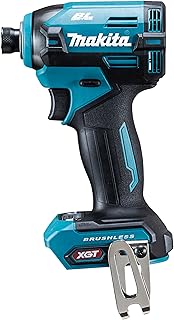


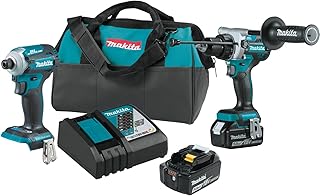


Be clear about what you are actually choosing, too. You are not picking a drill, you are picking a battery family, a charger family and an upgrade path. A tool you regret costs you the tool. A platform you regret costs you every pack and charger you bought to feed it.
| Spec | LXT 18V | XGT 40V MAX |
|---|---|---|
| Battery fits the other system | No | No |
| Tool range | 275+ tools | Growing, still smaller |
| Best for | General building, woodworking, home use | Heavy demand, large tools, all-day trade use |
| Charge speed | Fast | Faster (rapid optimum) |
| Battery cost | Lower | Notably higher |
| Weight | Lighter | Heavier packs |
| Communication electronics | Basic | Full tool-to-battery data |
What XGT actually changed
XGT is not just “LXT with more volts”. Makita redesigned the terminal, the electronics and the thermal management so the tools can pull sustained high current without cooking the pack. The batteries and tools talk to each other, so protection is smarter under load.
The result: XGT tools hold power better on long, hard cuts. A 40V rotary hammer or a large circular saw is where you feel it. On a drill driving screws into pine, you will feel nothing at all.
The reason is worth knowing, because it explains the whole platform: higher voltage means less current for the same power, and current is what makes heat in terminals, wiring and windings. Heat is what degrades cells and kills motors, so the 40V advantage arrives as endurance rather than as a burst of speed. The data connection matters for the same reason — instead of a blunt cut-off when something gets hot, tool and pack manage the limit together, which means fewer nuisance shutdowns on a tool being worked hard.
One clarification, because it comes up constantly: MAX is peak charged voltage, not the nominal voltage the pack runs at, which is lower. That is a labelling convention rather than a trick, but the real gap between the platforms is narrower than “18 versus 40” sounds.
Where the extra voltage actually shows up
The difference is not spread evenly across the catalogue. It concentrates in tools with a long duty cycle: tools that sit near full load for seconds or minutes at a time instead of in short bursts. Rotary hammers and larger SDS-class drilling, big circular saws and cut-off tools, metal cutting, mixing, and outdoor power equipment that runs continuously — chainsaws, blowers, mowers.
Where it shows up as nothing: drills, impact drivers, oscillating tools, brad and finish nailers, sanders, trim routers, jigsaws in wood, lights and small vacuums. Those tools live well below the limit of an 18V pack, so the platform feeding them does not change the outcome. Buying 40V for a drill buys a heavier tool and a more expensive battery to do the same job.
The honest test is about your week, not the spec sheet: how often do you hold a tool at full load for more than a few seconds? If the answer is rarely, most of the XGT argument stops applying to you.
Why LXT is still the right buy for most people
The LXT catalogue is enormous and mature. Batteries are cheap, available everywhere, and light enough for overhead work. Almost every job a homeowner, woodworker or general remodeler does is comfortably inside LXT’s ability.
If you already own three or four LXT packs, the cost of switching is not the tool price — it is re-buying your entire battery inventory.
Maturity buys things that are easy to overlook. The odd tool you need in year three already exists, usually as a bare tool you can add without another charger. Kits bundle batteries at a discount and accessories have been through several generations of refinement. Weight is the other quiet advantage: lighter packs are not a luxury when you are working at shoulder height, they are why you can still do it late in the day.
How to weigh the criteria against each other
Four things decide this, and they do not carry equal weight.
Existing inventory comes first and usually settles it alone. Packs and chargers are most of what you have spent on a platform over the years, so if you own a working LXT fleet, the default is LXT and the burden of proof sits with XGT.
Duty cycle comes second. Not which tools you own, but how hard and how long you run them. A framer and a cabinetmaker can own the same tool list and land on different platforms.
Your heaviest tool comes third. Buy for your worst case, not your average. If the one tool you truly need only exists at 40V, or only exists there in the size you need, that single tool can carry the platform.
Pack count comes last and scales badly. Two packs is a tool purchase; six is a platform purchase. Apply the battery price gap to the number of packs you will realistically run, not to one.
What separates a good pick from a bad one at each price band
Entry level
Most bad purchases happen here and they all look alike: a brushed tool bundled with two small packs and a slow charger. Cheapest sticker, worst start — the packs are too small to stay useful and the charger becomes the bottleneck as soon as you own more than two. A good entry pick is a brushless kit with two mid-capacity packs and the faster charger, even at a higher price. You are buying batteries; the tools are almost incidental.
Middle
Once you have packs and a charger, the maths inverts and bare tools become the cheapest way to grow. Buy the specific tool you keep working around, plus one more pack if yours are always in rotation. The bad pick is another kit, which is how people end up with four chargers and a drawer of compact batteries they never reach for.
Top
This is XGT’s band, under two conditions: you are starting from zero, or your work has outgrown 18V in a way you can name. The good pick is a short, deliberate XGT set built around the heavy tools, with enough packs and rapid charging to keep them fed all day. The bad pick is a wide XGT collection duplicating light tools you already own in LXT — heavier, dearer, no gain you can measure.
Makita LXT 18V kits and bare tools
Cheapest path into Makita and by far the widest tool selection. Buy a kit with two 5Ah packs and expand with bare tools from there.
Makita XGT 40V MAX tools
Worth it when your work is genuinely heavy: large SDS drilling, big cutting, sustained outdoor power equipment. Not worth it for drilling and driving.
Can you run both?
Plenty of trades do — LXT for drills, drivers and small tools; XGT for the two or three brutal tools that need it. Makita sells adapters for some scenarios but do not plan a kit around them. If you go dual, accept two chargers and two pack families as a permanent cost.
Dual setups fail through scope creep. XGT starts as two tools, then a 40V driver arrives in a bundle, and now you carry both pack families to a job that needed one. Keep a written list of the tools that earn XGT and buy everything else in LXT. Draw that line once and it works; leave it fuzzy and you fund two platforms to get one platform’s capability.
Common mistakes, and how to avoid them
- Reading voltage as a performance rating. Judge the tool class and the load it sees, not the number printed on the pack.
- Buying the tool and forgetting the platform. Before any purchase, name your next three tools and check which system has them.
- Planning around adapters. They solve specific situations, not architecture. If your kit only works with an adapter in the loop, the kit is wrong.
- Collecting compact packs. They are cheap, light and run out fast. Two mid-capacity packs beat four small ones for almost everyone.
- Buying XGT for one occasional heavy job. Corded or rented does that job once a year for a fraction of a platform entry.
Decision rules that hold up
Read these as tests rather than preferences. One clear match is usually enough to decide.
- ✔ Buy LXT if you are a homeowner, hobby woodworker or light-trade user
- ✔ Buy LXT if you already own LXT batteries
- ✔ Buy LXT if you want the most tools per dollar
- ✘ Buy XGT if you run heavy tools for hours, daily
- ✘ Buy XGT if you need large SDS-Max class drilling or big saws
- ✘ Buy XGT if you are starting from zero and your work is genuinely demanding
FAQ
Will Makita kill LXT? There is no sign of it. Makita continues to release LXT tools and the installed base is huge.
Is XGT faster to charge? Yes, meaningfully, with the rapid chargers — useful when you run two packs on rotation all day.
Do XGT tools last longer? Under heavy sustained load, they run cooler, and heat is what kills tools. Under light use, no measurable difference.
I only need one heavy tool. Do I have to switch? No. Treat it as a self-contained island: one XGT tool with its own packs and charger, LXT covering everything else. If the tool is genuinely occasional, corded or rented is cheaper still.
The short answer
Most people should buy LXT and stop reading. XGT earns its price only when your tools work as hard as you do — every day, under load, for hours.
If you are unsure, the uncertainty is the answer. Buyers who need XGT can name the tool and the job that forced the decision. Everyone else is paying for a bigger number.
Compare XGT and LXT prices →