What's inside
As an Amazon Associate I earn from qualifying purchases. This post may contain affiliate links at no extra cost to you.
Our Top Picks
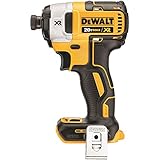
 DEWALT DCF850B 20V Cordless Brushless Compact 1/4'' Impact6.5 x 3 x 9 Inches2.18 poundsCheck on Amazon
 Makita DF012DSE 7.2V Lithium-Ion Cordless 1/4" Hex Driver-Drill14.38"L x 10.75"W x 4.13"H4.3 x 14.4 x 10.1 inches0.9 poundsCheck on Amazon

DeWalt DCF887 vs DCF850: Which Impact Driver Is Better for Tight Corners?
For tight corners, the DeWalt DCF850 is the better impact driver. Its compact 3.4-inch length puts the bit noticeably closer to the battery, which makes it easier to work between studs, inside cabinets, and beside joists. The older DCF887 is still a capable driver and is often the better bargain, but its longer nose becomes a real limitation when clearance is measured in inches.
Both models use DeWalt’s 20V MAX battery system, accept standard 1/4-inch hex bits, and provide three speed settings. Neither is a right-angle impact driver. The DCF850 is simply a short conventional driver, while the DCF887 has a more traditional, longer body.
As an Amazon Associate we earn from qualifying purchases at no extra cost to you.


Key specifications compared
| Feature | DeWalt DCF887 | DeWalt DCF850 |
|---|---|---|
| Tool length | About 5.3 inches | About 3.4 inches |
| Maximum torque | 1,825 in-lb | 1,825 in-lb |
| Maximum speed | 3,800 rpm | 3,250 rpm |
| Impact rate | Up to 3,600 impacts per minute | Up to 3,800 impacts per minute |
| Speed settings | Three | Three |
| Bare-tool weight | About 2.0 lb | About 2.1 lb |
Published specifications can vary slightly by package and measurement method. More importantly, maximum torque is not a direct measure of how fast either driver installs a particular screw. It is a peak rating, and battery condition, fastener size, material, and bit quality all affect real performance.
Why the DCF850 works better in tight corners
The DCF850’s short head is its main advantage. Removing roughly 2 inches from the front of the tool can be the difference between driving a screw straight and having to angle the tool. That matters when fastening cabinet hardware, installing blocking near a wall, attaching metal brackets, or driving screws through a narrow gap between framing members.
A shorter tool also reduces the chance of hitting the surrounding workpiece with the motor housing. On a cabinet interior, for example, the DCF887 may contact the side panel before the bit is fully seated. That forces you to tilt the driver, which can strip a Phillips recess, damage a trim surface, or make a long screw wander off line.
The DCF850 is not magically small in every direction. The battery still extends below the grip, and a large 5.0Ah pack can make the setup awkward in a shallow cabinet. For the best access, use a compact battery such as a 1.5Ah or 2.0Ah pack. The trade-off is shorter runtime and less reserve for heavy fastening.
Power, speed, and control
On paper, the two drivers have the same maximum torque. In normal construction work, both handle cabinet screws, deck screws, structural screws, and many lag screws when used with the correct pilot hole and bit. The DCF850’s slightly lower top rpm is not a practical disadvantage for most driving jobs. Its higher impact rate can help it finish stubborn fasteners, although impact frequency does not replace proper technique.
Both drivers have useful three-speed controls. The lower settings are preferable for small screws, hinges, electrical boxes, and finish work because they reduce the chance of snapping a screw or burying the head below the surface. Full speed is appropriate for longer construction screws, but you should still ease off the trigger as the head approaches the material.
For delicate work, neither impact driver is as controllable as a drill/driver with a clutch. An impact mechanism can keep turning after the screw seats, and the sudden torque can split soft wood. If you install a lot of hinges, drawer slides, or small hardware, pairing either impact driver with a cordless drill with a clutch is a better setup than trying to make the impact driver do everything.
Common failure modes in cramped work
The most common mistake with the DCF887 in a tight space is using an extension or wobble adapter to gain clearance. That can solve a physical access problem, but it adds flex between the driver and fastener. The bit may cam out, the extension can twist, and a screw driven at an angle can damage the hole. A short bit holder or compact impact-rated bit is usually safer.
Another problem is using a long bit in the DCF850 and assuming the short housing still guarantees access. The bit length becomes the new limiting dimension. A 6-inch bit in a 3.4-inch driver can still hit an adjacent panel before the screw reaches the hole.
Use impact-rated bits with either tool. Standard drill bits and inexpensive driver bits can fracture under repeated impact loading, leaving sharp pieces in the chuck or fastener recess. Keep the driver in line with the screw, especially when working at reduced clearance where there is little room to correct a slipping bit.
Which impact driver should you buy?
Buy the DCF850 if tight access is a regular part of your work. It is the clear choice for cabinet installation, framing in crowded corners, appliance work, automotive brackets, and any job where the extra 2 inches of the DCF887 forces you to work at an angle. A kit with a compact battery makes the size advantage more useful.
Choose the DCF887 if you mostly work in open spaces and find it substantially cheaper. It has enough power for typical home improvement and construction fastening, and its longer body is not a problem on deck boards, wall framing, shelving, or exterior repairs. If you already own compatible batteries, the savings can be significant. Look for a DCF887 impact driver as a bare tool when price matters.
The DCF850 is the better replacement for an older driver when access is the priority, not because it delivers dramatically more power. If the DCF887 is already in your toolbox and your work rarely involves cramped corners, upgrading may not improve your results enough to justify the cost. Spend the difference on good impact-rated bits, compact batteries, and a quality impact-rated bit set instead.
The practical verdict
For tight corners, the DCF850 wins because its shorter body keeps the bit aligned when space is limited. The DCF887 remains the sensible low-cost option for general fastening and open work areas. Choose based on access rather than the headline torque number: both have ample power, but only the DCF850 consistently gives you more room to position the tool.