What's inside
As an Amazon Associate I earn from qualifying purchases. This post may contain affiliate links at no extra cost to you.
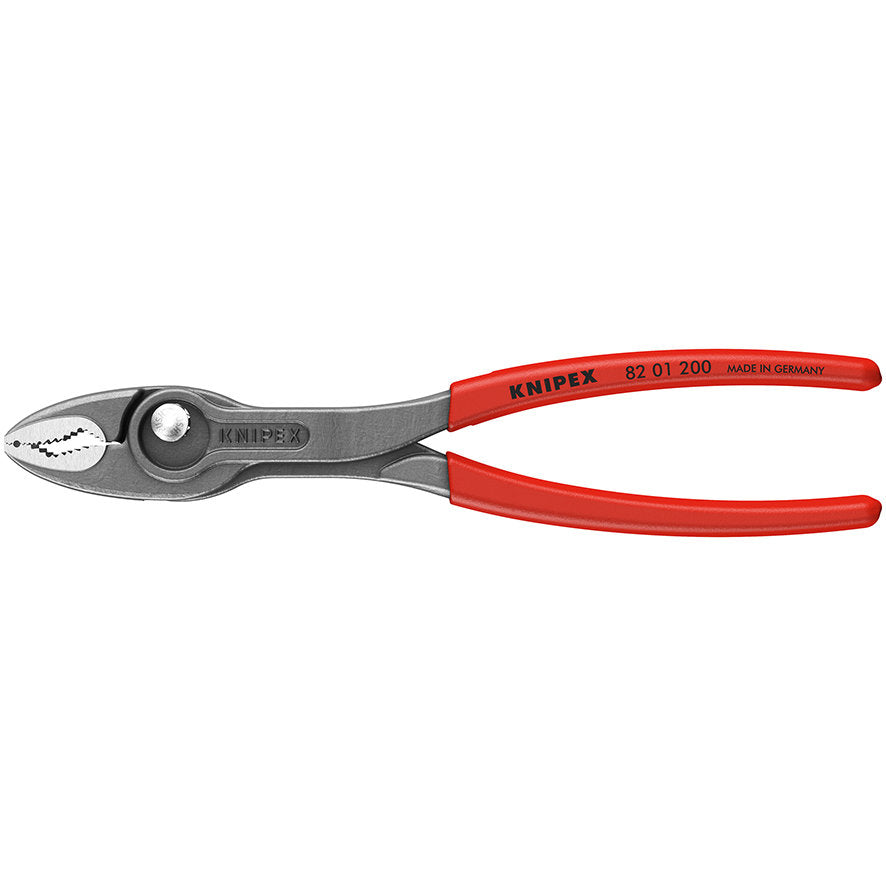
The Knipex TwinGrip and Irwin Vise-Grip Fast Release can both remove damaged screws, but they grip in different ways. The TwinGrip uses serrated jaws designed to bite a screw head from the front or sides. The Irwin is a locking plier: you adjust the jaw opening, clamp down, and use the locked grip to turn the fastener.
That difference matters more than brand preference. For a stripped screw head that still stands proud of the surface, either may work. For a nearly flush head, the TwinGrip’s front-gripping teeth give it an advantage. For a larger fastener or a job where sustained clamping force matters, a locking plier can be the better fit—provided there’s enough head to grab.
As an Amazon Associate we earn from qualifying purchases at no extra cost to you.


Our Top Picks

How the two tools grip
The TwinGrip’s jaws combine front and side gripping surfaces. You can approach a damaged screw from the side, as with ordinary pliers, or press the front teeth onto a head that has little side clearance. That gives it more options when the screw is recessed or close to a wall. It is still a plier, not an extractor: the jaws need to bite into the metal, and the screw must be able to turn once they do.
The Fast Release works by locking its jaws around the fastener. Set the adjustment screw, squeeze the handles until the mechanism locks, then turn the tool. The lock helps maintain pressure without requiring you to keep squeezing as hard. Its release lever is convenient when you need to remove the tool quickly, but the tool’s bulk can make it awkward in a tight recess.
At a glance
| Factor | Knipex TwinGrip | Irwin Vise-Grip Fast Release |
|---|---|---|
| Grip method | Front and side serrated jaws | Adjustable jaws that lock onto the fastener |
| Best access | Useful when side access is limited or the head is nearly flush | Best when there is room to position and open the jaws |
| Holding pressure | Maintained by hand | Locking mechanism maintains the clamp |
| Common limitation | May slip on hard, smooth, or badly rounded heads | Needs enough material to clamp securely; can be bulky |
| Good fit for | Small-to-medium damaged fasteners and mixed access angles | Protruding fasteners where a firm locked grip is useful |
Which removes damaged screws more reliably?
On a screw with a rounded drive but a head that protrudes a few millimeters, both can succeed. The TwinGrip is often easier to position precisely, especially on small screws. Its front teeth can catch the head without needing a broad, flat section on each side. The Irwin can apply a strong, stable clamp, but a thin screw head may be difficult to hold without crushing or deforming it.
When the head is nearly flush, the TwinGrip has the clearer advantage. A locking plier needs room for its jaws to surround the head; if the jaws can only catch the edge, they may slip or chew away the remaining metal. The TwinGrip’s front bite can help where ordinary locking pliers cannot get a useful angle. If the head is fully flush or below the surface, neither tool is a dependable answer. A left-hand drill bit or a screw extractor may be the better next step.
For larger screws, lag screws, or protruding studs, the Irwin’s locked grip can be useful. You can set it to the fastener and turn with both hands available between adjustments. But locking pressure is not a substitute for a sound bite. If the jaws are clamped onto a rounded surface without purchase, more force may only round it further.
How to improve your odds
First, clear debris and paint from around the head. If you can, expose enough of the screw to grip at least two opposite sides. Set the tool so it bites close to the base of the head, not just the outermost lip. Turn slowly and keep the jaws aligned with the screw; twisting sideways makes slipping more likely. If it moves, continue with steady pressure rather than jerking the handle.
For a TwinGrip, try the front teeth when there is little side access, then switch to a side grip if the head protrudes enough. For the Irwin, adjust the jaws so they lock firmly without needing excessive force on the handles. Check the screw’s direction before turning: most standard screws loosen counterclockwise, but some fasteners use reverse threads.
Stop if the head starts to deform further, the tool repeatedly slips, or the screw will not move under controlled pressure. A little penetrating oil may help on a corroded fastener; allow time for it to work. Avoid leaning harder on a slipping grip. Eye protection is sensible, particularly if the screw or tool jaws are damaged, since metal fragments can break loose.
What should you buy?
Choose the TwinGrip if damaged screws are a recurring problem, especially in tight spots or where the head is almost flush. It gives you more ways to approach the fastener, though it cannot rescue a head that has no material left to bite. See Knipex TwinGrip pliers.
Choose the Irwin Fast Release if you already use locking pliers, expect to grip protruding fasteners, or value a clamp that stays set while you reposition your hands. For occasional home repairs, a locking plier is a reasonable lower-cost choice if access is open and the screw head is substantial. Compare Irwin Vise-Grip Fast Release locking pliers.
Neither is a universal screw extractor. For flush or recessed screws, a dedicated damaged screw extractor set may be more appropriate, particularly if you can drill a centered pilot hole. The practical choice is the tool that can reach the head and hold it without destroying what remains: TwinGrip for awkward access and thin heads, Fast Release for accessible fasteners that benefit from a locked clamp.