What's inside
As an Amazon Associate I earn from qualifying purchases. This post may contain affiliate links at no extra cost to you.
Stainless steel fasteners are strong, corrosion-resistant, and unusually good at ruining their own heads. A driver bit can cam out of a Phillips or Torx recess, polish the edges of a socket, or twist the head off entirely. The problem is usually a combination of poor bit fit, excessive speed, inadequate pilot holes, and friction between the fastener and the workpiece.
Preventing damage starts before the screw enters the material. Use the right bit, control the driver, and treat stainless hardware as a material that needs lubrication and clearance rather than brute force.
Why stainless screw heads fail
Most damaged heads result from cam-out. The driver bit climbs out of the recess when the bit is not held square, the recess is shallow, or the driving torque exceeds the grip between bit and screw. Phillips-head screws are particularly vulnerable because their design intentionally allows the bit to release under high torque.
Stainless fasteners also create more friction than many plated steel screws. Austenitic grades such as 304 and 316 can gall: the threads rub, heat, and transfer material between surfaces. As resistance rises, the driver keeps applying torque while the bit slips or the screw head twists off.
A screw can fail even when the head looks undamaged. If the pilot hole is too small, the screw may bind before it is seated. If the material is hard or thick, the fastener may require more torque than the head or bit can safely transmit.
Choose the right drive bit
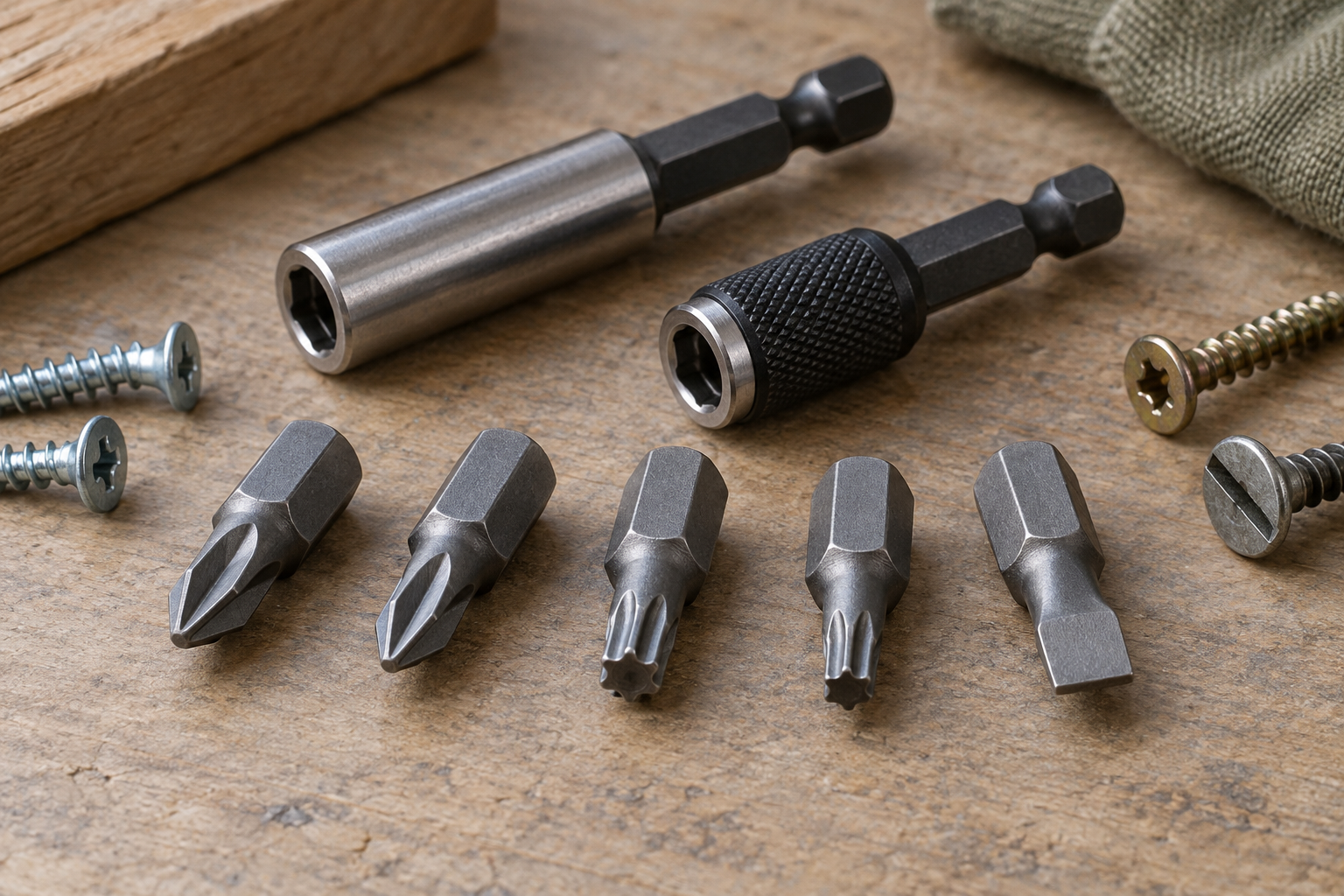
Use a bit that exactly matches the drive style and size. A Phillips PH2 bit is not a substitute for a Pozidriv PZ2 bit, even though they look similar. A Torx bit that is one size too small may enter the recess but will round the lobes under load.
For regular work, a quality set of hardened bits is worth buying. Look for bits with accurate geometry rather than simply the highest hardness. Extremely hard bits resist wear but can be brittle; a bit that chips in a stainless recess is no improvement.
These impact-rated driver bit sets are useful if you drive many fasteners with an impact driver. For occasional repairs, a cheaper standard bit set is fine when you use a drill driver at moderate torque. Replace bits when their tips look polished, rounded, or twisted.
| Drive type | Resistance to cam-out | Best use | Main caution |
|---|---|---|---|
| Phillips | Low | Light-duty assembly and general repairs | Needs firm, straight pressure; easy to strip |
| Pozidriv | Moderate | Wood and sheet-metal work with matching screws | PH and PZ bits are not interchangeable |
| Torx | High | High-torque stainless fastening | Wrong size still damages the recess quickly |
| Hex socket | High when fully engaged | Bolts and hex-head screws | Shallow sockets can round under impact |
Prepare the hole and material
Drill a pilot hole appropriate to the screw and the material. In wood, the pilot hole should generally match the screw’s minor diameter in hardwood and can be smaller in softwood. For metal, drill a clearance hole through the top piece and a correctly sized pilot or tapping hole in the lower piece. A clearance hole prevents the upper material from forcing the screw to cut threads where it should only pass through.
For stainless screws going into metal, deburr the hole after drilling. A sharp burr can hold the screw off-center and increase resistance. When drilling stainless itself, use a sharp cobalt or high-quality high-speed-steel bit, firm pressure, and a slow-to-moderate speed. Do not let the bit rub without cutting; work-hardening can make the surface harder than it was originally.
When a screw must be removed later, a clearance hole and anti-seize compound are often more valuable than a higher-powered driver. Check compatibility before using anti-seize near painted surfaces, electrical contacts, or potable-water systems.
Control speed, torque, and pressure
Start the screw at low speed with the driver held exactly in line. Keep one hand pushing the tool toward the fastener and the other controlling the trigger. Once the threads are established, increase speed only if the bit remains fully seated.
Use the clutch on a drill driver. Begin with a low setting and increase it gradually until the screw seats without stalling. The exact number on the clutch is not a calibrated torque value, but it provides repeatable control. Stop when the head is flush or when the washer contacts the surface. Continuing to drive after seating only raises the chance of stripping or snapping the fastener.
An impact driver can install stainless screws quickly, but its repeated hammer blows make failure less predictable. Use the lowest practical speed, feather the trigger, and finish seating with a hand screwdriver or drill driver. An magnetic impact bit holder helps with access, but it does not correct a poorly fitting bit or let you apply excessive torque safely.
Lubricate threads and prevent galling
For stainless-on-stainless work, apply a small amount of suitable thread lubricant or anti-seize to the threads. Copper-free products are often preferred where galvanic corrosion or electrical contact is a concern. Do not coat the drive recess; lubricant there can make the bit slip.
Lubrication reduces friction and heat, but it also means the screw may reach the same seating force at a lower driver setting. Start conservatively after applying it. If the fastener begins to bind, stop rather than repeatedly reversing and driving it. Back the screw out, inspect the threads, clear the hole, and restart.
Know when a hand tool is safer
A hand screwdriver gives the best feedback when installing a small number of screws or working with expensive stainless trim. It is slower, but you can feel rising resistance before the head strips. A ratcheting screwdriver with a correctly sized bit is often the cheapest effective upgrade for delicate work.
For larger jobs, combine speed and control: use a variable-speed drill driver with an adjustable clutch, set the screw depth carefully, and keep a hand tool nearby for final tightening. Buy an impact driver when you regularly drive long fasteners or work in dense material, not simply because it is more powerful.
Recover a damaged screw head
Stop as soon as the recess starts to deform. Try a new, correct-size bit first, then apply strong inward pressure at low speed. For a slightly damaged Phillips head, a Pozidriv bit sometimes grips, but this is a recovery tactic, not a proper substitute.
If the head is already rounded, locking pliers may grip an exposed head. Otherwise use a screw extractor or drill the head off, remove the part being held, and grip the remaining shank with pliers. Extractors work best with a centered pilot hole and low speed. Do not keep attacking a ruined recess with a higher torque setting; that usually turns a removable screw into a broken fastener.