What's inside
As an Amazon Associate I earn from qualifying purchases. This post may contain affiliate links at no extra cost to you.
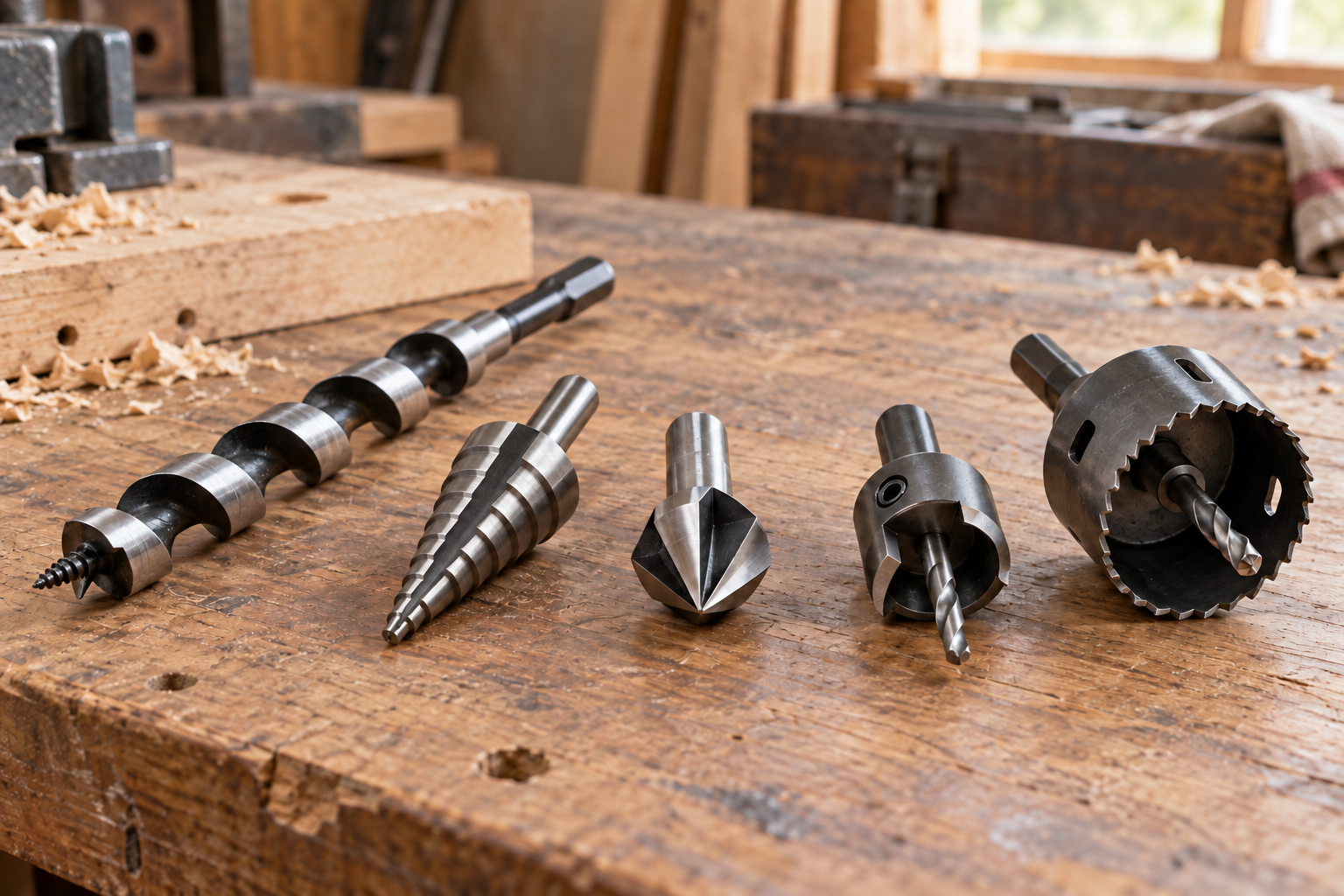
A countersink bit and a counterbore bit both make room for a screw head, but they cut different shapes. For a typical flat-head wood screw, a countersink is usually the right choice: it creates a cone that matches the underside of the screw head. A counterbore makes a flat-bottomed, cylindrical recess, which is meant for a round or pan head—or for hiding a screw below the wood surface with a plug.
As an Amazon Associate we earn from qualifying purchases at no extra cost to you.


Our Top Picks
 DEWALT Countersink Drill Bit Set for Wood1/4, 3/8, 1/2, 5/8, 3/4 Inch5.2 x 4.6 x 1 inchesCheck on Amazon


The shape is the difference
A countersink cuts a cone into the top of a hole. The cone lets a flat-head screw sit flush with the board. Many common wood screws have an approximately 82-degree head angle, while some screws use other angles, so match the bit to the screw when the fit matters. If the angles do not match, the screw may bear only at the rim, sit proud, or crush the wood around the hole.
A counterbore cuts a wider, straight-sided hole with a flat bottom. The pilot hole continues through the center for the screw shank. The larger recess accommodates a cylindrical screw head or leaves space for a wood plug. A flat-head screw generally does not seat properly in this shape: it can bottom out before its head is supported.
Which bit for flush screws?
For a flat-head screw that should finish level with the surface, use a countersink bit. Drill the pilot hole first, then cut a shallow cone. Test the screw in scrap from the same material and stop when its head is level. The goal is to fit the head, not to bury as much of it as possible.
For a round-head screw, a counterbore provides a flat seat. It is also the better option when you want the screw head below the surface and covered by a plug. That takes more steps: bore the recess, drill the pilot hole, drive the screw, then glue and trim the plug. If you only need a flat-head screw flush, that extra work and larger hole are unnecessary.
| Feature | Countersink bit | Counterbore bit |
|---|---|---|
| Cut shape | Conical recess | Cylindrical recess with a flat bottom |
| Best fit | Flat-head screws | Round-head screws or plugged screw holes |
| Typical finish | Head flush with the surface | Head recessed, often below a plug |
| Material removed | Usually less for a flush seat | More; the recess must fit the head diameter and depth |
| Common mistake | Cutting too deep or using the wrong angle | Making the recess too wide, deep, or close to an edge |
Buying the right bit
If your work is mainly flat-head wood screws, a basic countersink bit for wood is the economical choice. For a few repairs, an inexpensive bit is often fine. A more adjustable or multi-size set is useful when you frequently switch screw sizes or want repeatable results across a batch of holes.
Choose a counterbore bit for wood plugs when the job calls for a flat-bottom recess, a round-head fastener, or a concealed screw. Check the cutter diameter against the screw head and the plug size before buying. A recess just a little too small will not seat the head; one too large leaves a conspicuous patch and can weaken a narrow board.
Some combination bits drill a pilot hole and cut a countersink in one pass. They save time on repeated work, but the pilot size and countersink geometry are tied to the bit. Confirm they suit your screw and wood thickness. Separate drill and countersink tools give more control over pilot depth and are easier to adapt to different fasteners.
Depth, material, and common failures
Wood species and screw size affect how forgiving the cut is. Soft pine compresses easily, so a screw can sink below the surface if you drive it hard. Dense hardwood is less forgiving: a shallow or poorly matched countersink may leave the head proud, while forcing the screw can split the board. In either case, drill a pilot hole sized for the screw’s core and follow the screw maker’s guidance for the material.
Make the recess in small increments. A countersink that is too deep removes useful surface wood and can leave a wide, fragile crater; one that is too shallow leaves the screw head standing above the surface. With a counterbore near an edge, the flat-sided cut can break through the side of the board. Keep enough material around the recess, especially on narrow trim, and test the depth on scrap before drilling finished work.
Keep the bit aligned with the pilot hole. If it wanders, the screw may sit crooked or the recess may look uneven. Clamp the work when practical, and use a drill stop or tape mark if you need consistent depth across many holes. Clear chips from the cut; packed debris can make a bit run hot and leave a rough seat.
The practical choice
For flush flat-head wood screws, buy or use a countersink bit that matches the screw head. It is simpler, removes less wood, and produces the intended seat. Choose a counterbore only when the screw head is cylindrical or when you specifically want a deeper recess for a plug. If you already own a countersink and are making a small household repair, there is little reason to buy a counterbore just to make ordinary flat-head screws flush.