Best Reciprocating Saw Blade for Flush-Cutting Door Jambs
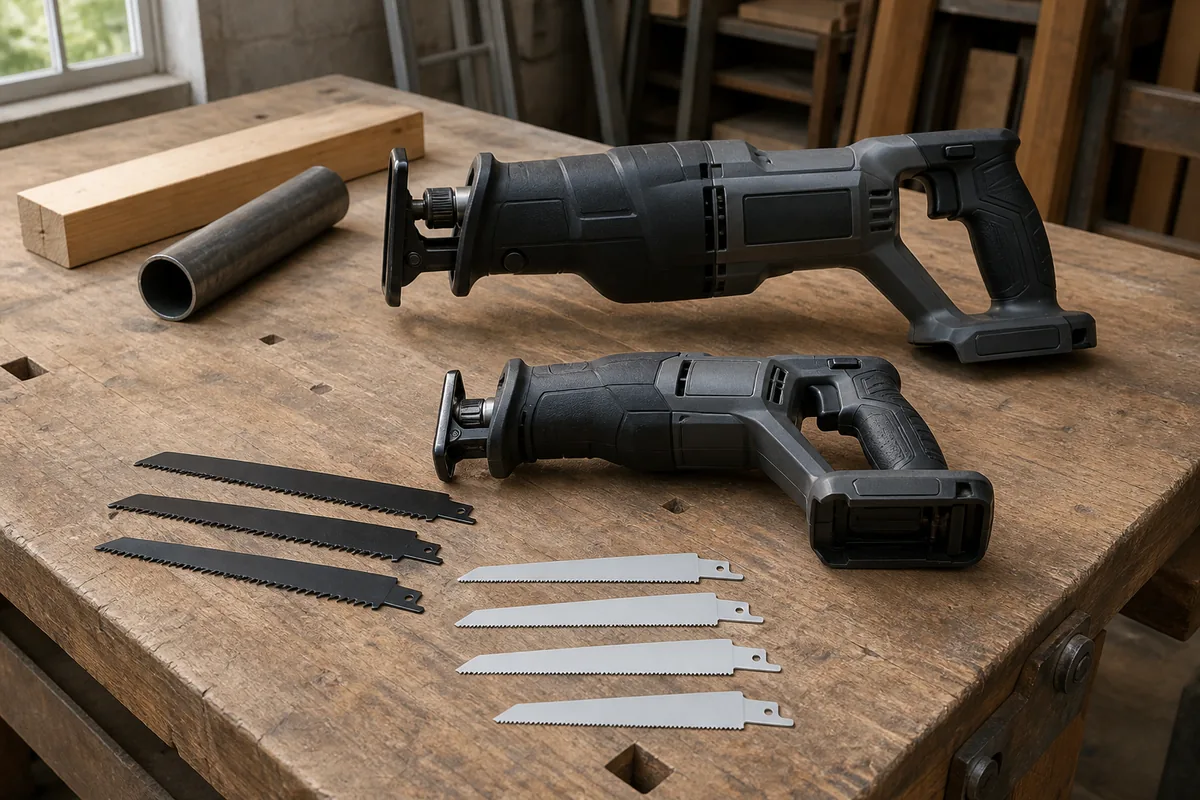
Editorial illustration: reciprocating saws with an assortment of straight blades.

Flush-cutting a door jamb is a small job, but the wrong reciprocating saw blade can turn it into a damaged floor, chewed-up trim, or a blade that binds halfway through the cut. The best choice is usually a short, flexible demolition blade with fine-tooth or medium-tooth geometry—not the longest, most aggressive blade in the package. … Read more
Milwaukee M18 Fuel vs DeWalt DCS389: Which Reciprocating Saw Cuts Cast Iron Pipe More Cleanly?

Editorial illustration: reciprocating saws with an assortment of straight blades.

The short answer For cutting cast iron pipe with a reciprocating saw, the DeWalt DCS389 usually has the advantage. Its 60V FlexVolt power system and long 1-1/8-inch stroke remove material faster, especially on thick soil pipe and hub sections. The Milwaukee M18 Fuel is easier to handle, quieter in a confined space, and good enough … Read more

Makita XRJ08 vs Milwaukee 2719-20: Comparing Compact Recip Saws for Overhead Demolition

Editorial illustration: reciprocating saws with an assortment of straight blades.

Quick answer The Makita XRJ08 and Milwaukee 2719-20 are both compact, one-handed reciprocating saws built for pruning, pipe work and cuts where a full-size recip saw is awkward. Neither is a substitute for a two-handed saw in heavy demolition. For overhead work, the better choice is usually the platform you already own: bare-tool cost matters … Read more

How to Choose an Annular Cutter for a Magnetic Drill Press

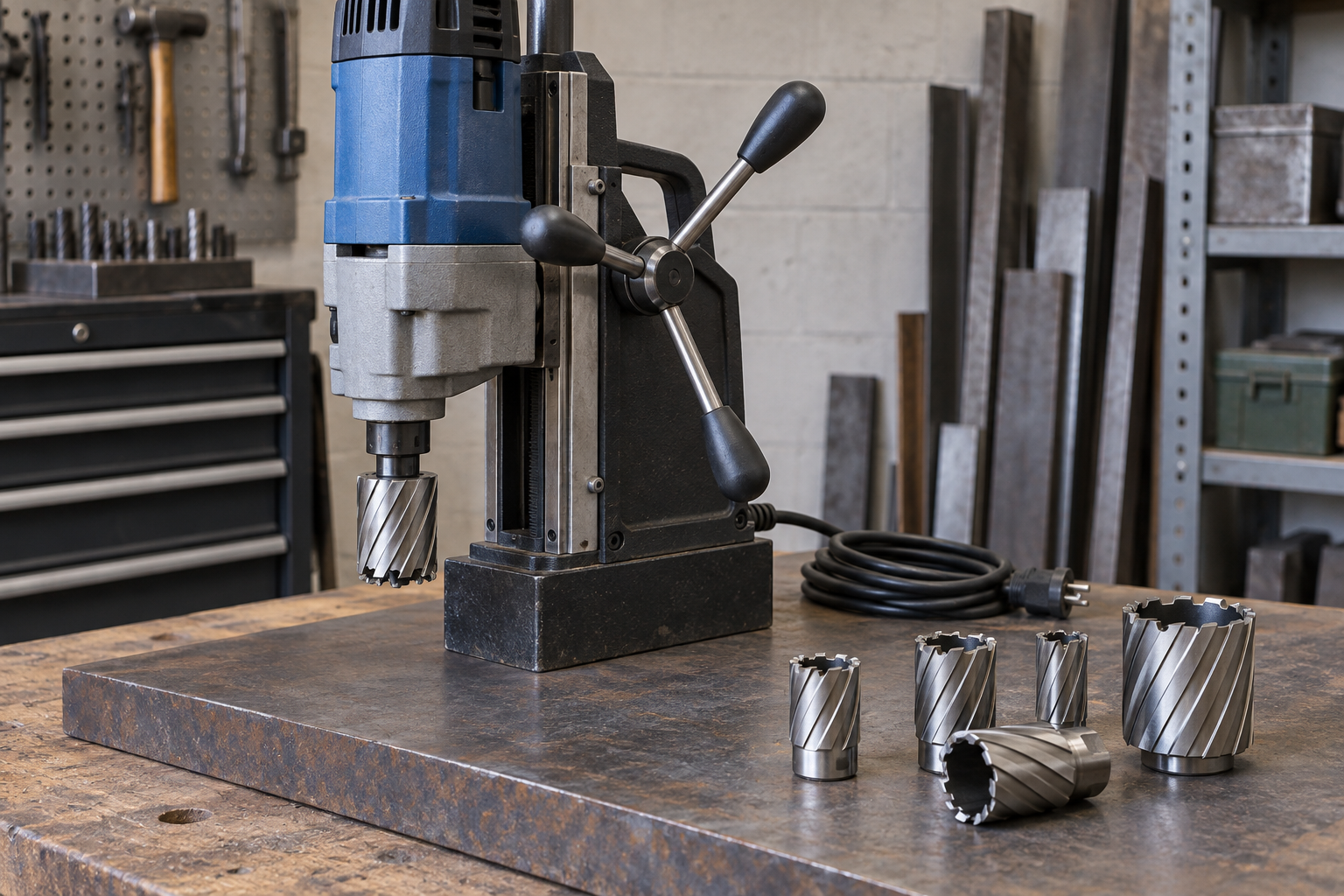
AI-generated editorial illustration of magnetic drill and annular cutters

An annular cutter removes a ring of metal instead of grinding out the entire hole. That makes it much faster than a twist drill for larger holes, especially when paired with a magnetic drill press. The right cutter depends on the hole diameter, material, required depth, drill interface, and how well you can control heat … Read more

Hammer Drill vs Rotary Hammer: Which Tool Is Better for Drilling Masonry Anchors?

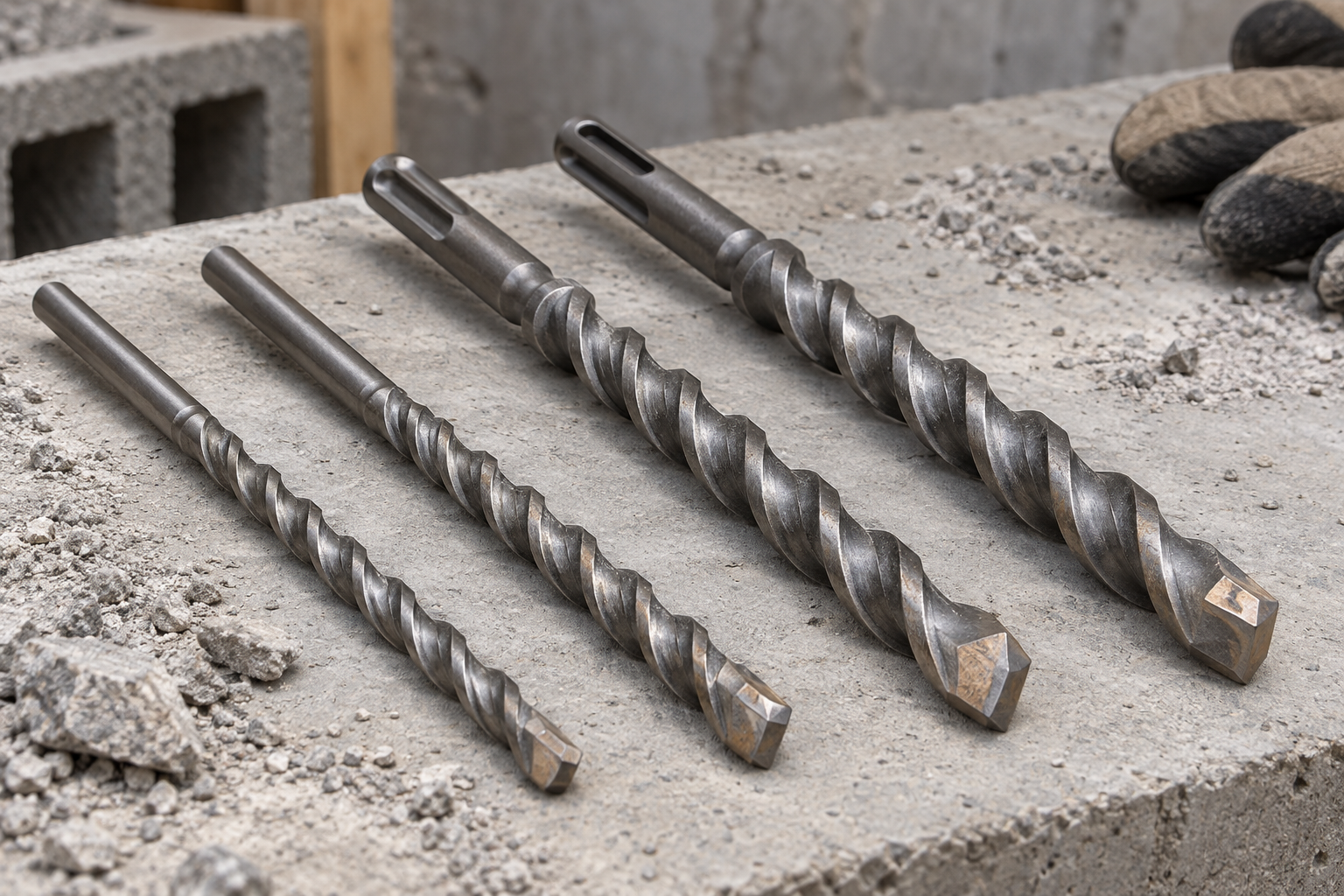
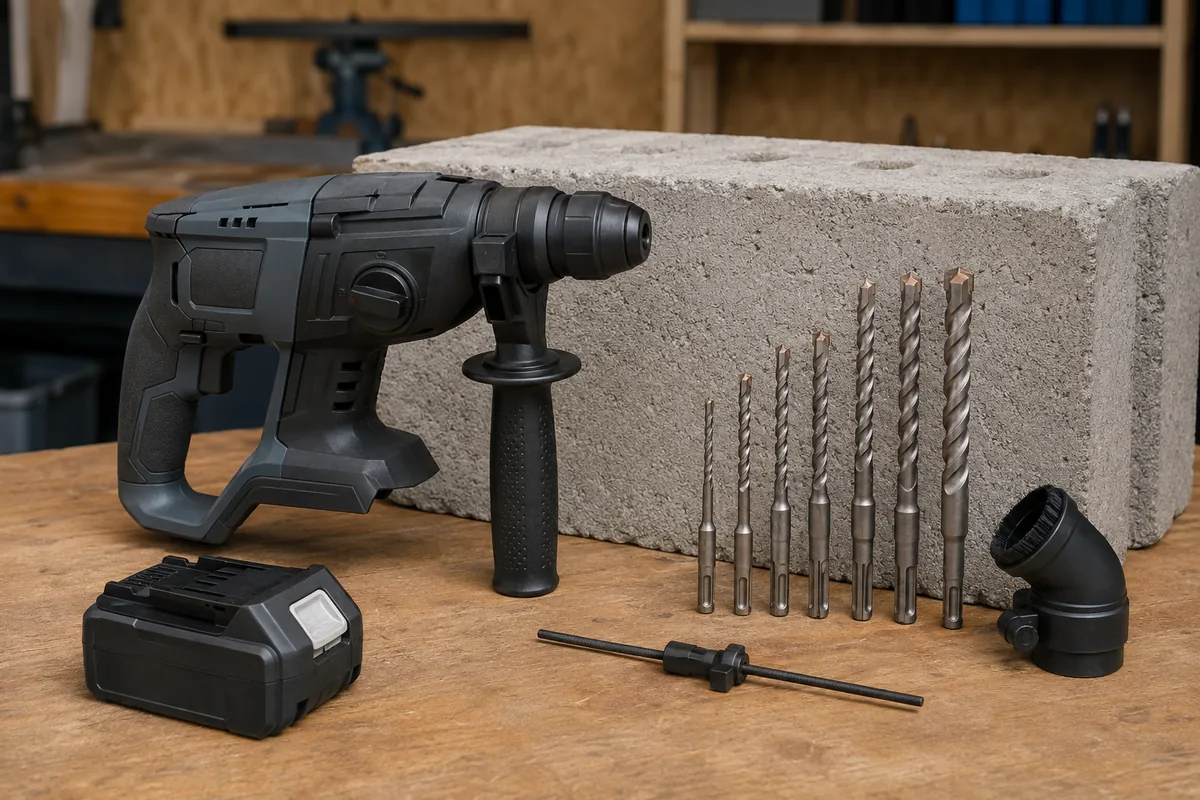
Editorial illustration: sDS-style rotary hammer with auxiliary handle and masonry drill bits.

For most small masonry anchors, a hammer drill is the sensible first choice. It costs less, weighs less, and handles the holes used for shelves, conduit straps, light fixtures, and small wall-mounted cabinets. A rotary hammer is the better tool when you need larger holes, many holes, deeper holes, or faster progress in hard concrete. … Read more

Bosch 11255VSR vs DeWalt D25263K: Which SDS-Plus Rotary Hammer Drills Faster in Concrete?

Editorial illustration: sDS-style rotary hammer with auxiliary handle and masonry drill bits.

Quick verdict The DeWalt D25263K is the faster concrete drill for most jobs. Its higher no-load speed, higher impact rate, and larger 1-1/8-inch SDS-Plus capacity give it an edge when drilling anchor holes repeatedly or using larger bits. The Bosch 11255VSR is still a capable 1-inch rotary hammer, and it is the better value when … Read more

SDS-Plus vs SDS-Max Rotary Hammer: Which System Suits Rebar-Free Concrete Work?

Editorial illustration: sDS-style rotary hammer with auxiliary handle and masonry drill bits.

The short answer For drilling ordinary holes and doing modest chipping in rebar-free concrete, an SDS-Plus rotary hammer is usually the better fit. It costs less, weighs less and accepts the bits most homeowners and general contractors need. SDS-Max earns its keep when the work calls for larger holes, heavier chisels or long stretches of … Read more

Order backlinks