What's inside
As an Amazon Associate I earn from qualifying purchases. This post may contain affiliate links at no extra cost to you.
Fresh glue squeeze-out looks easy to remove, but the wrong tool can turn a clean glue line into a gouge, a torn edge, or a patch that shows through finish. A cabinet scraper and a block plane both remove dried glue, but they do it in different ways. The scraper is the safer general-purpose choice for thin films and broad surfaces. The block plane is faster when glue has formed a hard bead or ridge, especially on accessible end grain and solid-wood joints.
As an Amazon Associate we earn from qualifying purchases at no extra cost to you.


Our Top Picks


Quick answer
Buy a cabinet scraper if you want the lowest-risk tool for removing glue from panels, face frames, and veneered parts. It removes a controlled shaving without cutting deeply into the surrounding wood.
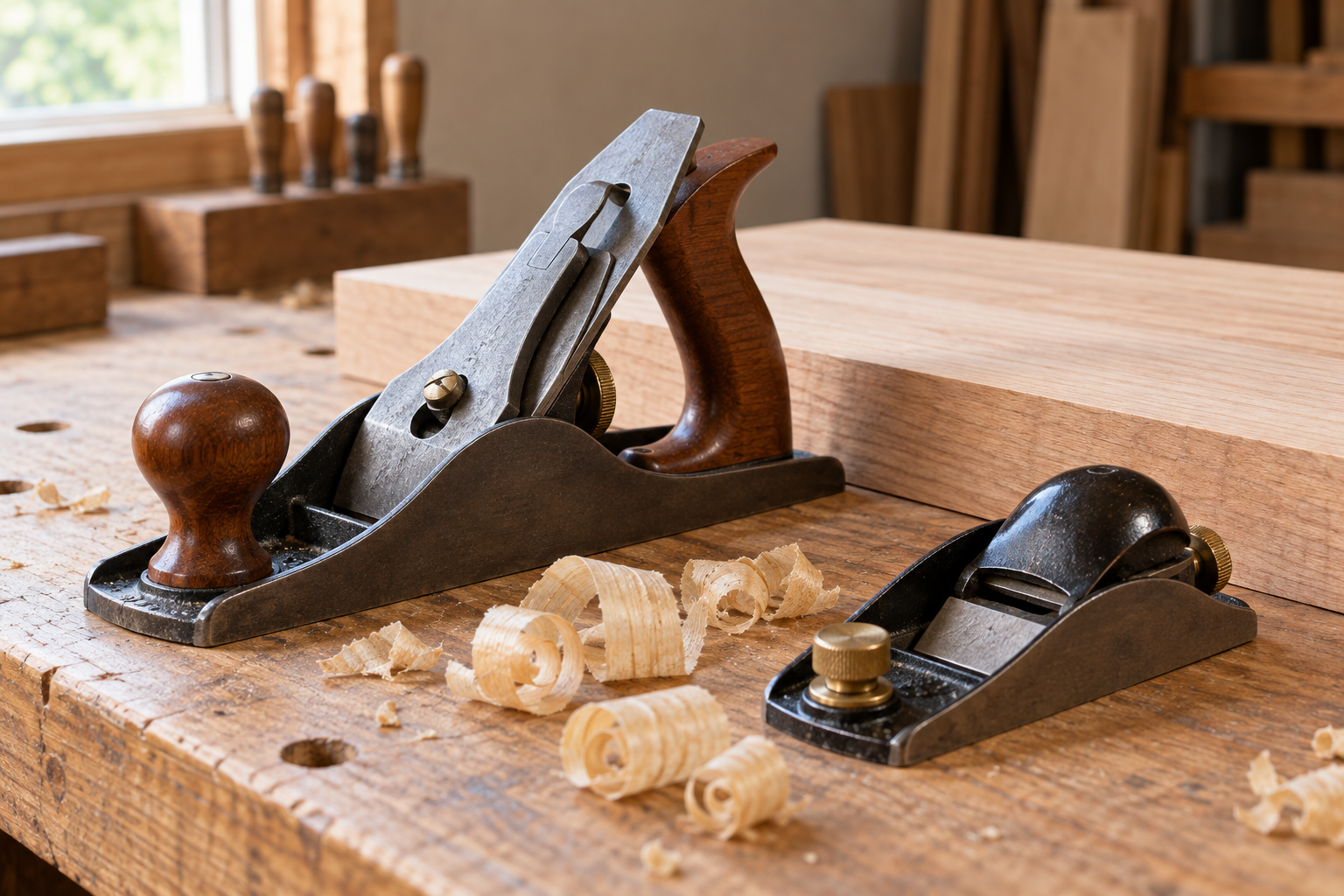
Choose a low-angle block plane when the squeeze-out is thick, fully hardened, and standing proud of the surface. It can remove a 1/32-inch ridge in a few passes, while a scraper may require repeated sharpening and more physical effort. The trade-off is that a plane can easily dig in at a cross-grain glue joint or remove more wood than intended.
How the tools remove glue
A cabinet scraper is a thin, springy piece of steel with a small burr turned along its edge. Held at roughly 60 to 80 degrees, that burr acts like a tiny cutting hook. It takes very thin shavings, often only a few thousandths of an inch. You can hear the scraper produce a consistent whispering sound when it is cutting correctly.
A block plane uses a supported blade set at a lower angle, commonly around 12 to 25 degrees depending on the plane design and bevel orientation. It removes a thicker shaving and registers against the wood surface. That makes it efficient on ridges, but the sole also bridges the high spot. If the glue bead is narrow or irregular, the plane may catch one corner and gouge the wood.
| Factor | Cabinet scraper | Block plane |
|---|---|---|
| Best target | Thin films, smears, and broad glue residue | Thick, hardened beads and ridges |
| Typical cut | A few thousandths of an inch | Adjustable; commonly 0.002 to 0.010 inch for cleanup |
| Risk to surrounding wood | Low when the burr is sharp and the tool is held flat | Higher, especially across end grain or changing grain direction |
| Learning curve | Requires learning to file and turn a burr | Requires blade sharpening and careful depth adjustment |
| Typical price | Low | Moderate to high, depending on construction and condition |
When the cabinet scraper is the better choice
Use a scraper for squeeze-out on cabinet sides, tabletops, doors, and other surfaces where a plane could leave a visible low spot. It is particularly useful after the glue has dried into a thin translucent skin. A sharp scraper can remove that skin without disturbing the surrounding finish-ready surface.
Scrapers also work well near shoulders and inside corners. A block plane needs room for its sole and may run into an adjoining part. A scraper can be used with one corner, or with a narrow profile scraper, to clean close to a joint without cutting into the fibers beside it.
The main failure mode is a scraper that is dull or poorly prepared. Instead of making shavings, it skates, chatters, or leaves shiny burnished streaks. Pressing harder does not solve that problem. The edge needs to be filed square, polished, and given a small burr with a burnisher. For occasional DIY work, a simple card scraper and burnisher set is usually enough.
When the block plane wins
A block plane is faster when the glue has dried into a bead more than about 1/16 inch high. Rather than flexing a scraper over the ridge, set the plane for a fine cut and take short passes directly over the hardened glue. Once the bead is nearly level, switch to lighter passes or use a scraper to finish.
The plane is also useful on the ends of solid-wood parts, such as the protruding end of a dowel or a thick glue ridge on an exposed edge. A sharp blade cuts quickly and leaves a surface that may need little sanding. A low-angle design is generally more forgiving on end grain than a standard bench-plane geometry, but it is not immune to tear-out.
Do not use the plane aggressively on plywood veneer, thin edging, or a joint running across the grain. A plane can lift veneer at the edge of the squeeze-out, and its blade may follow the softer glue line into the wood. If you see the blade taking a continuous shaving that includes clean wood, retract it immediately.
The safest workflow
First, remove large beads while the glue is rubbery, if possible. A plastic putty knife or sharp chisel held nearly flat can lift the bulk without scraping across the surface. Avoid wiping wet glue with a soaked rag; water can spread PVA glue into the pores and create a larger cleanup area.
For hardened residue, mark the surrounding surface with a light pencil line. Use a plane only on the high spots, taking shallow cuts. Keep the plane moving and support the workpiece close to the joint. If the grain changes direction, stop planing and switch to the scraper.
Hold the scraper with both hands, bowing it slightly so the center contacts first. Work with the grain when possible, then make a final light pass parallel to the joint. A sharp scraper should produce curled shavings, not dust. After scraping, inspect the joint under raking light before sanding. Sanding glue residue can polish it smooth while leaving a finish-rejecting film in place.
What should you buy?
For a homeowner or occasional furniture builder, the cheaper option is fine: one quality cabinet scraper costs less than a decent plane and handles most glue squeeze-out. Add a burnisher and learn to prepare the edge. That setup is small, inexpensive, and hard to misuse.
Buy a block plane if you regularly build solid-wood furniture, trim protruding joinery, or need to remove substantial ridges quickly. Look for a plane with a rigid sole, a blade that is easy to adjust, and enough mass to stay stable. Whichever tool you choose, sharpness matters more than brand. A dull plane is dangerous and a dull scraper is simply frustrating.
For most glue cleanup, the practical combination is a plane for the first 90 percent of a thick bead and a scraper for the final surface. If you only want one tool, choose the cabinet scraper unless your projects routinely leave heavy, hardened squeeze-out.