
What's inside
As an Amazon Associate I earn from qualifying purchases. This post may contain affiliate links at no extra cost to you.
Our Top Picks


Short answer: pick by sanding motion
For a large, mostly flat panel, the Bosch GEX33-6N is the more straightforward choice if you want a dedicated 6-inch random-orbit sander for removing finish and refining a surface. The Makita BO6050J is the more versatile machine: it can run in random-orbit mode for finishing and in forced-rotation mode for faster stock removal. That extra mode is useful, but it takes more care near edges and on delicate veneer.
Neither sander makes a poor technique disappear. On a broad tabletop or cabinet side, keep the pad flat, overlap passes, and avoid dwelling in one spot. If you mainly need fine finishing, the cheaper or simpler random-orbit option is often enough. If one tool must also tackle stubborn material, the Makita’s forced-rotation setting has a practical advantage.
As an Amazon Associate we earn from qualifying purchases at no extra cost to you.

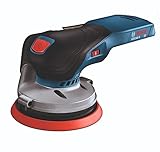
The differences that matter on panels
| Feature | Bosch GEX33-6N | Makita BO6050J |
|---|---|---|
| Pad size | 6 inches | 6 inches |
| Motion | Random orbit | Random orbit and forced rotation |
| Orbit diameter | 3/16 inch | 5/32 inch |
| Speed control | Variable speed | Variable speed |
| Dust collection | Dust box and vacuum connection | Dust box and vacuum connection |
| Best fit | General panel sanding and finish prep | One machine for finishing and more aggressive sanding |
Both use common 6-inch abrasive discs, so you are not locked into an unusual size. Check that discs match the pad’s hole pattern if you rely on vacuum extraction. The Bosch’s larger orbit gives it a modest edge in material removal in normal random-orbit use; the Makita’s smaller orbit can be easier to manage for controlled finishing. Actual results depend heavily on abrasive grit, pressure, wood species, and dust removal.
Where the Bosch makes more sense
The GEX33-6N is a good fit when the job is mostly flattening and smoothing wide, accessible surfaces. Its random-orbit action is familiar and less demanding than forced rotation. With a sharp, quality abrasive and a connected shop vacuum, it can remove old finish, level minor surface roughness, and prepare panels for coating without asking you to switch modes.
Its 6-inch pad covers ground faster than a 5-inch sander, which matters on a full sheet or a large tabletop. But a bigger pad is not automatically better in tight spaces: it cannot get close to inside corners, and its edge can round over a panel if you tilt it. Use a smaller detail sander or a sanding block for corners and narrow edges rather than forcing the Bosch into them.
Choose the Bosch if you want a dedicated random-orbit tool and have no regular need for aggressive sanding. For a home shop that sands furniture parts, doors, and cabinet panels, that is a sensible division of labor. Pair it with a range of 6-inch sanding discs rather than trying to make one grit do every job.
Where the Makita earns its extra flexibility
The BO6050J switches between random-orbit sanding and forced rotation. In random-orbit mode, it behaves as a finishing sander. In forced rotation, the pad is driven more directly, so it can cut faster on stubborn coatings or when leveling rougher material. That can save time on a large panel, especially if you are removing a finish before refinishing.
That speed comes with a risk: forced rotation is more likely to leave visible swirls, dig in, or catch at an edge if you pause, tilt the tool, or use too much pressure. Start with random orbit on a test area. If you use forced rotation, keep the pad moving and flat, reduce pressure, and switch back to random orbit for the final sanding passes. On thin veneer, painted surfaces, or delicate work, the aggressive mode can remove material faster than you intended.
The Makita is the better buy if you often move between heavy removal and finish sanding and want both motions in one tool. It is less compelling if you will leave it in random-orbit mode forever. In that case, compare price, handling, and dust setup against the Bosch rather than paying extra for a feature you will not use.
Dust control and technique decide the finish
Large panels show sanding defects clearly, especially under raking light. Use a vacuum when possible: dust left beneath the disc can scratch the surface, clog the abrasive, and reduce cutting speed. A sander’s dust box is convenient for short jobs, but it fills quickly during stock removal and usually cannot match a properly connected extractor. If your work area needs it, look for a vacuum setup for sander dust collection.
Begin with the least aggressive grit that will do the job. For rough stock or old finish, that may mean starting around 80 grit; for an already smooth panel, starting at 120 or 150 grit may be safer. Move through the grits without skipping too far, and vacuum or wipe the panel between steps. Do not use heavy pressure to speed up either machine: it can slow the pad, load the disc, and leave uneven patches. Replace a disc when it stops cutting cleanly, not after it has burned or polished a spot into the surface.
Which one should you buy?
Choose the Bosch GEX33-6N for predictable random-orbit sanding across large panels, especially if your work is mainly surface preparation and finish sanding. Choose the Makita BO6050J if faster removal is a recurring need and you are comfortable controlling its forced-rotation mode. For occasional DIY panel work, the Bosch’s simpler role is often enough; the Makita is worth considering when the extra mode will replace a separate, more aggressive sanding step.
Before buying either, consider the complete setup: spare discs, vacuum compatibility, and a smaller tool for corners. A large panel may take only minutes to sand, but a missed swirl or rounded edge can mean reworking the whole surface. The better sander is the one whose motion suits the material and whose speed you can control consistently.