What's inside
As an Amazon Associate I earn from qualifying purchases. This post may contain affiliate links at no extra cost to you.
Our Top Picks
 Swanson 12-Inch Combo Square with Stainless Steel Rule12 Inch5 x 5.75 x 0.75 inches0.77 poundsCheck on Amazon
 Klein Tools 935CSEL Combination Square Ruler for ElectriciansOne Size12 x 5.16 x 0.75 inches0.62 PoundsCheck on Amazon
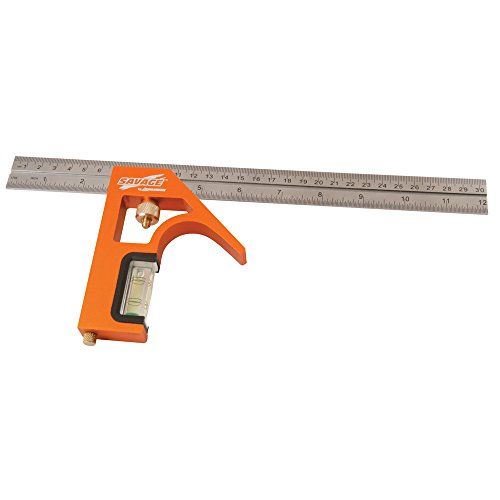 Swanson SVC133 12-Inch Savage Combination Square12 Inch9 x 4.14 x 0.78 inches0.64 PoundsCheck on Amazon


What a combination square can—and cannot—check
A combination square is a useful, low-cost way to check whether a table saw blade is at 90 degrees to the table. It is not a reliable tool for measuring the blade’s alignment with the miter slot. Those are different adjustments: blade tilt sets the angle to the table; alignment sets whether the blade runs parallel to the slot and fence.
For a basic 90-degree check, lower the blade, unplug the saw, and raise it enough to expose a clean section of plate. Avoid the teeth, which are wider than the blade plate and can give a false reading. Put the square’s stock flat on the table and bring the rule against the plate. A visible gap at the top or bottom means the blade is not square, assuming the square and table are clean and flat.
As an Amazon Associate we earn from qualifying purchases at no extra cost to you.


A square can also help set a 45-degree bevel, though its short rule and the blade’s geometry make that check less convenient. For blade-to-slot alignment, use a dial indicator, a purpose-built alignment gauge, or a careful measurement from the same tooth at the front and rear of the blade. Do not buy a premium combination square expecting it to replace an alignment gauge.
What matters in a square
The important feature is accuracy, not a long list of markings. The stock must register firmly against the table, the rule must sit flat against the blade plate, and the head must hold the rule without rocking or slipping. A poorly finished stock, burrs around the rule slot, or a loose locking nut can turn a square check into guesswork.
For this job, a 6-inch rule is usually easier to handle around a saw blade than a 12-inch rule. The longer rule can be more useful for general shop layout, but it is easier to bump and may be awkward near the arbor or throat plate. A readable, etched or stamped scale is helpful; graduations are secondary to a straight rule and a dependable 90-degree relationship between rule and stock.
Before trusting any square, check it against itself. Draw a line along the rule against a straight edge, flip the square over, and draw a second line from the same starting point. If the lines diverge, the square is out of square. This simple test does not verify every aspect of the tool, but it catches a common failure before you adjust the saw to match a bad reference.
Which type makes sense?
| Type | Best use | Trade-off |
|---|---|---|
| Budget combination square | Occasional blade-to-table checks and general layout | More variation in rule fit, finish, and locking feel; verify before use |
| Quality machinist-style combination square | Frequent setup work where repeatable readings matter | Costs more; does not improve a dirty or uneven saw table |
| Dedicated small engineer’s square | Quick 90-degree checks in tight spaces | Less versatile; no sliding rule or combination-square functions |
A 6-inch combination square is enough for most occasional checks. A cheap one is fine if it passes the flip test, its rule locks securely, and you confirm the reading from more than one blade position. Pay more if you use it often, need repeatable setup work, or have already found that budget squares in your shop do not hold their adjustment.
How to check the blade
First disconnect power. Brush sawdust from the table and the square’s stock, then check the table around the blade opening for pitch, burrs, or debris. Set the bevel adjustment to 0 degrees and lock it. Do not force the square against the blade: light contact is enough, and pressure can flex the rule or move the blade.
Place the stock on the table and the rule against the flat plate, clear of the teeth. Check near the front of the blade, then rotate the blade by hand and check a clean section near the rear. If the gap changes as the blade rotates, the blade may have runout or a damaged plate. If the same gap remains, adjust the saw’s 0-degree stop according to its manual, then recheck. Make small changes; a quarter turn on an adjustment screw can shift the result noticeably on some saws.
Do not use the square to judge alignment by measuring to a miter slot at two points unless you have a reliable way to reference the same tooth. A tooth can be set outward slightly, and measuring different teeth can create an apparent error. For a basic alignment check, mark one tooth, measure its distance to the slot at the front, rotate that tooth to the rear, and compare. A difference of a few thousandths of an inch may matter for precision work, but the acceptable tolerance depends on the saw and the work. Follow the manufacturer’s procedure rather than adjusting the trunnions based on an uncertain measurement.
What to buy for your shop
If your main task is checking the 90-degree stop a few times a year, buy a basic square with a solid stock and test it on arrival. There is little reason to pay for a finely graduated rule if all you need is a dependable right angle. If the tool will also serve for machine setup and layout, a better-finished precision 6-inch combination square is a sensible upgrade, provided its rule locks without shifting.
For blade-to-slot work, spend the money on the right category of tool instead. A table-saw alignment gauge with a dial indicator makes small differences easier to read and repeat. It costs more than a square and takes longer to set up, but it measures the relationship the square cannot. Keep the square for blade tilt, check it periodically, and treat both tools as references that need clean contact surfaces—not as guarantees that the saw is aligned.