What's inside
As an Amazon Associate I earn from qualifying purchases. This post may contain affiliate links at no extra cost to you.
The best brake bleeders for one-person brake jobs are pressure bleeders for frequent, controlled work; vacuum bleeders for lower-cost versatility; and gravity bleeders for simple, slow fluid changes when you can wait and keep the reservoir topped up. The right choice depends less on the tool’s headline capacity than on how its hose reaches your bleeder screws, how much fluid its tank holds, and whether you can operate it without help.
As an Amazon Associate we earn from qualifying purchases at no extra cost to you.

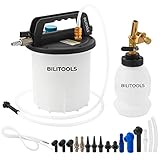

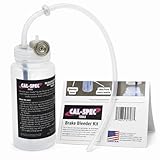
Our Top Picks

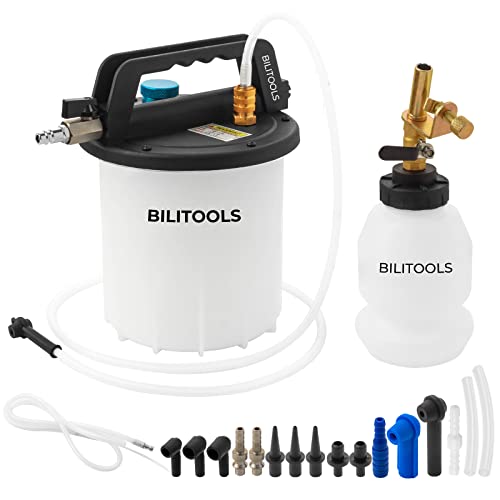

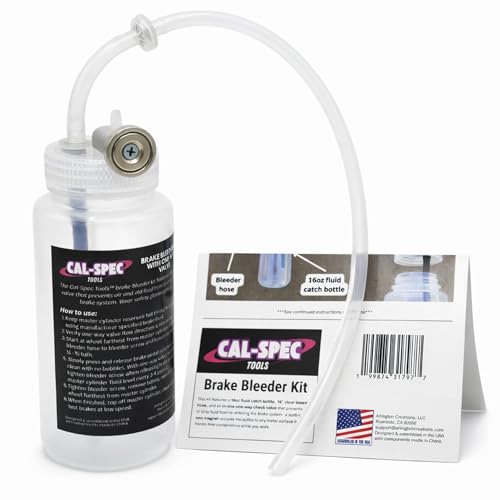
At a glance: three ways to bleed brakes solo
Capacity and hose length vary by model, so the figures below are practical ranges for common home-shop tools, not guarantees for every product. Check the specific manufacturer’s specifications before buying.
| Type | Typical hose length | Typical reservoir or catch capacity | Solo-work advantage | Best fit |
|---|---|---|---|---|
| Vacuum pump bleeder | About 2–6 ft from pump to bleeder connection | About 4–16 oz in a small catch cup; some kits use a larger bottle | Pulls fluid at the wheel without someone pressing the pedal | Occasional jobs, tight budgets, and mechanics who want a tool useful for other vacuum tasks |
| Pressure bleeder | About 3–6 ft from tank to master-cylinder adapter | About 1–3 qt in the supply tank | Maintains pressure at the master cylinder while you open each bleeder screw | Regular brake work and a predictable full-system bleed |
| Gravity bleeder | About 1–3 ft at the wheel, often with a short drain tube | About 4–16 oz in a catch bottle | Needs no pump or pressure tank; fluid moves as it drains | Simple maintenance when time is available and the system is easy to access |
Which type should you choose?
Choose a pressure bleeder for repeatable, full-system jobs
A pressure bleeder feeds fluid through a sealed adapter at the master-cylinder reservoir. Once the tank is pressurized within the vehicle and tool manufacturers’ limits, you can work at each wheel without repeatedly switching between the pedal and the bleeder screw. A supply tank around 1–3 quarts is often enough for a typical passenger-car bleed, with some fluid left to reduce the chance of running the tank dry.
The main buying hurdle is fit. The cap or adapter must seal correctly on your reservoir; a mismatched adapter can leak or fail to hold pressure. Hose reach matters too: measure from the reservoir area to the farthest wheel with the vehicle positioned as it will be during the job. Pressure units cost more and need cleanup, but they are usually the most convenient option when you bleed multiple vehicles or replace hydraulic components regularly.
Choose a vacuum bleeder for lower-cost flexibility
A hand-operated or shop-air vacuum bleeder draws fluid through a hose attached to the wheel’s bleeder screw. It can make a one-person bleed practical without access to a pressure tank. A hand pump is portable and does not require a compressor; an air-powered unit can be quicker if you already have suitable shop air.
Vacuum bleeding has a common false-alarm problem: air can enter around the bleeder-screw threads, making bubbles appear in the collection hose even when air is not coming through the brake line. Use a snug, correctly sized hose and interpret the bubbles cautiously. Some technicians apply a small amount of compatible thread sealant to the screw threads, keeping it away from the hydraulic passage and sealing surfaces. If the pedal remains soft or the result is uncertain, use the vehicle’s specified bleeding procedure rather than assuming the bubbles tell the whole story.
Check whether the kit’s catch cup is large enough for a wheel or whether you will need to stop and empty it. A long hose helps with access, but a hose that kinks, slips, or leaves the container unstable is not an upgrade.
Choose gravity bleeding for simplicity, not speed
With a clear hose and catch bottle attached, gravity bleeding lets fluid drain through an opened bleeder screw while you keep the master-cylinder reservoir filled. It is inexpensive and has few parts to wear out, but flow may be slow or stop altogether if the bleeder is clogged, the hose routing traps air, or the system design requires a different procedure.
Gravity bleeding is most appealing when you have time to monitor the reservoir and the vehicle’s service instructions allow it. It is a poor choice if you need a fast turnaround, cannot keep the reservoir in view, or are dealing with a system that requires scan-tool activation or a prescribed pressure procedure.
Match the bleeder to your situation
| Your situation | Best starting choice | Why |
|---|---|---|
| One car, occasional fluid change, tight budget | Hand vacuum bleeder | Low equipment cost and no compressor required; confirm the catch cup and hose reach suit your car. |
| Several vehicles or regular brake work | Pressure bleeder | A larger supply tank and steady pressure reduce interruptions during a complete bleed. |
| Very occasional use, ample time, simple system | Gravity bleeder | Few moving parts and minimal setup, provided the vehicle procedure permits it. |
| Limited storage or no shop compressor | Hand vacuum bleeder | Compact and self-contained; a pressure unit may still be worthwhile if you have room to store and clean it. |
| Reservoir adapter is hard to match | Vacuum or gravity bleeder | These avoid pressurizing the reservoir, though vehicle-specific bleeding requirements still take priority. |
What matters more than the biggest tank
- Adapter compatibility: For pressure units, verify the adapter matches the reservoir opening and can make a reliable seal. A universal-looking cap is not automatically a correct fit.
- Usable hose length: Measure the actual route, not a straight line. Extra length helps reach the far wheels but can add clutter and make a vacuum hose easier to kink.
- Fluid capacity: A pressure tank supplies fresh fluid; a vacuum or gravity bottle catches used fluid. Those capacities serve different purposes. Do not confuse a small catch cup with enough capacity for a full job.
- Pressure control: A gauge and a controllable regulator are useful on a pressure bleeder. Follow the tool and vehicle instructions rather than choosing a pressure setting by guesswork.
- Replacement parts: Look for available seals, caps, tubing, and adapters. These small consumables can determine whether an inexpensive tool remains useful after its first few jobs.
Solo setup: avoid the mistakes that waste time
- Check the vehicle procedure first. Identify the specified fluid, wheel sequence, and whether the system needs a scan tool or a special bleeding routine. Some modern ABS systems cannot be fully bled by simply opening the wheel screws.
- Protect painted surfaces. Brake fluid can damage paint. Keep absorbent material nearby, catch drips promptly, and use only clean fluid from a sealed container of the specified type.
- Secure the hose and bottle. Push the correct-size hose firmly over the bleeder nipple and position the catch container so it cannot tip or pull the hose off. A clear hose helps you observe flow.
- Keep the reservoir from running dry. For vacuum or gravity methods, check it frequently; for pressure bleeding, monitor the supply tank. If air enters the master cylinder, the job may become more difficult and require additional steps.
- Finish with a pedal and leak check. Tighten the bleeders to the vehicle’s specified torque, reinstall caps, check fluid level, and verify a firm pedal before moving the vehicle. If the pedal stays soft or fluid leaks, do not drive it until the problem is resolved.
Ownership and cleanup
Brake fluid absorbs moisture, so keep fresh fluid sealed and do not return used fluid to its container. Empty and clean catch bottles after each job according to the tool maker’s instructions. On vacuum kits, tubing and small seals tend to loosen, discolor, or become brittle first; replace them if they no longer grip or seal. On pressure units, inspect the reservoir cap gasket, adapter seals, hose, and pressure fittings before every use. Store the tool dry and avoid leaving brake fluid sitting in its tank or lines.
For most home users doing occasional work, a hand vacuum bleeder is a sensible first purchase. If you expect to bleed brakes repeatedly and can obtain the right reservoir adapter, a pressure bleeder is the better one-person workflow. Gravity bleeding remains a low-cost option for patient owners, but it is not a universal substitute for the procedure specified for the vehicle.