What's inside
As an Amazon Associate I earn from qualifying purchases. This post may contain affiliate links at no extra cost to you.
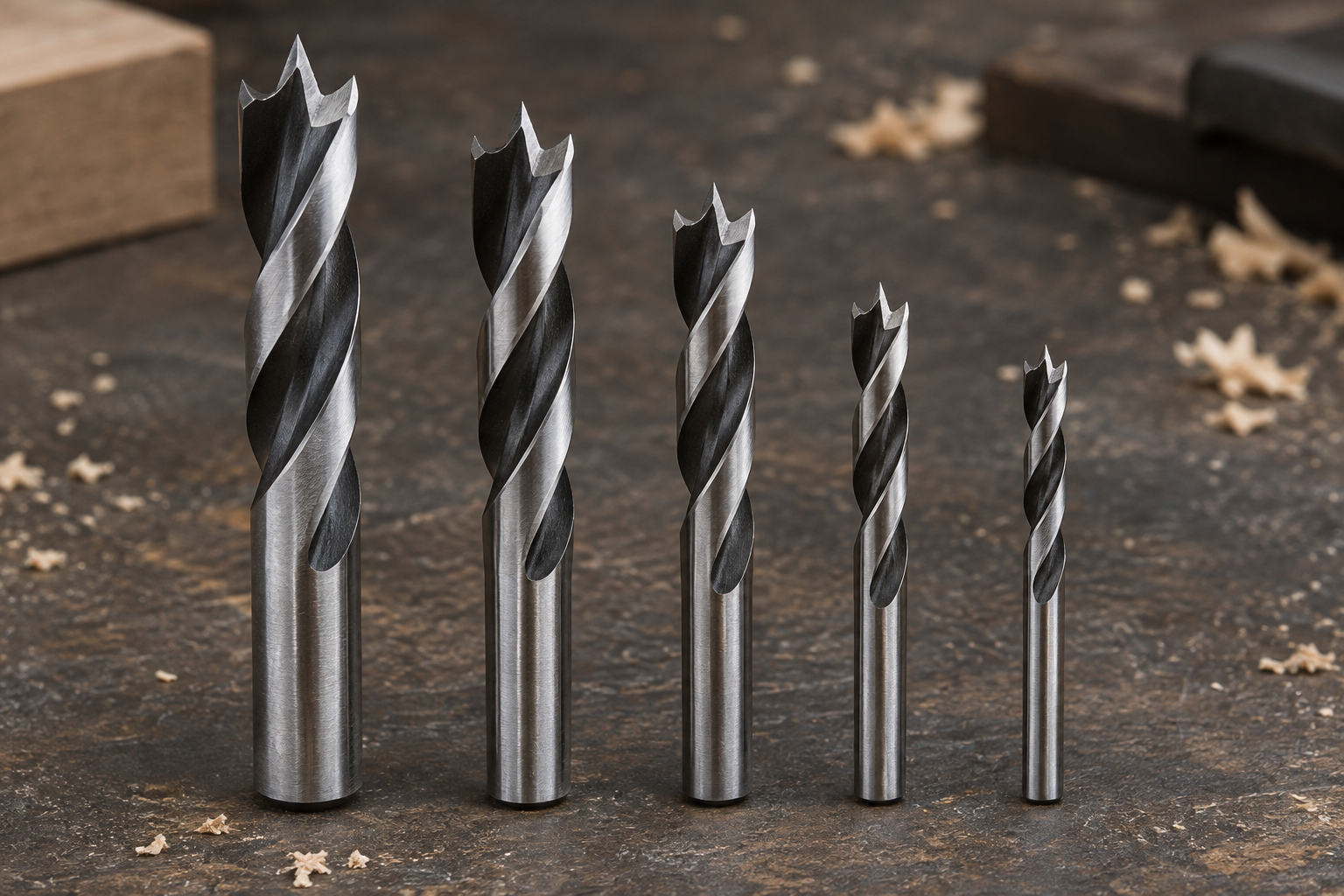
Accurate dowel holes depend on more than a sharp bit. The drill has to stay square, the bit must cut cleanly in hard wood, and the hole needs to match the dowel without excessive looseness. A brad-point set is a good choice for that work because its center spur helps locate the hole and its outer spurs score the edges before the cutting lips remove material.
For most home workshops, the best buy is a well-made set of common fractional sizes, backed by a drill guide or drill press. A premium set is worthwhile if you drill hardwood often or need repeatable, clean holes. If you make only a few dowel joints a year, a cheaper set can work—provided you test it on scrap and use a guide.
As an Amazon Associate we earn from qualifying purchases at no extra cost to you.


Our Top Picks
 Milescraft DrillMate Portable Drill Guide Adjustable Precision DrillingEACH16.63 x 7.13 x 2 inches0 PoundsCheck on Amazon


What matters in a brad-point set
Look first at the sizes you actually need. Typical dowels are 1/4, 3/8, and 1/2 inch, but the right bit is determined by the dowel and joint, not by a standard rule. Measure the dowel: nominal sizes can vary, and a snug fit in one brand of dowel may be loose with another. Test the bit and dowel together in scrap of the same species before drilling the workpiece.
Brad-point bits are designed for wood, not metal or masonry. The center spur registers on a mark, while the outer spurs help limit splintering at the rim. In hardwood, sharp cutting edges matter more than an impressive-looking set case. Dull or poorly ground bits can burn, wander, or leave a ragged hole, especially in dense woods such as hard maple and beech.
Most common sets use high-speed steel (HSS). That is enough for ordinary woodworking and occasional dowel holes. High-performance HSS variants, such as cobalt-containing or powder-metal steels, may hold an edge longer under frequent use, but they are not a cure for poor alignment, excessive feed pressure, or a bit clogged with chips. For a typical shop, accurate grinding and useful size selection are better reasons to pay more than a specialty steel label.
Set types compared
| Option | Best for | Trade-off |
|---|---|---|
| Economy HSS set | Occasional projects and standard dowel sizes | May need more frequent sharpening; inspect for runout and uneven spurs |
| Quality woodworking set | Regular hardwood work and cleaner hole edges | Costs more; premium steel may not matter for infrequent use |
| Individual bits | Replacing a worn size or buying only what a project needs | Can cost more per bit and may not be stored as neatly |
| Long brad-point bits | Deep holes or access through thick stock | More exposed length can flex and magnify alignment errors |
A compact fractional set is usually more useful than a large assortment of sizes you rarely use. If your dowel sizes are fixed, consider buying those bits individually and putting the savings toward a drill guide or depth stop. A fractional brad-point bit set is a sensible starting point when you need several standard sizes.
Which set should you buy?
Choose a quality woodworking set if you make furniture, cabinet parts, or repeated joints in hardwood. Look for clearly marked sizes, a sturdy holder, and cleanly formed cutting edges. A fitted case is useful because brad points are easy to damage when loose bits knock against one another. Avoid judging a set by the number of pieces alone; a set with many tiny sizes is no advantage if it omits the diameters your dowels require.
If you drill only occasionally, an economy HSS set is often fine. Check the bits before use: roll each shank on a flat surface to spot obvious bends, and inspect the cutting tips for chips or uneven spurs. Then drill a test hole in scrap. If the bit burns, chatters, or leaves a visibly oversized hole, stop and check the bit, chuck, and setup rather than forcing it through the project.
Buy a separate replacement bit when one size wears out, rather than replacing an otherwise useful set. For deep holes, a long bit can reach where a standard bit cannot, but the extra length makes it easier to drift off course. Use the shortest bit that reaches the required depth. Search for individual fractional brad-point bits if you need to replace just one diameter.
How to drill accurate dowel holes
Mark the center carefully, then clamp the work. A brad point helps the bit start at the mark, but it does not keep a handheld drill perpendicular. For a single joint, a portable drill guide can reduce tilt. For a batch of matching holes, use a drill press and a fence or stop. A portable drill guide is a practical middle ground if you do not own a drill press.
Set the depth with a stop collar or a piece of tape on the bit. Leave room for glue and trapped air at the bottom of a blind hole; drilling exactly to the dowel’s full length can prevent the joint from closing. For example, a 1-inch dowel inserted halfway into each piece needs a hole slightly deeper than 1/2 inch on each side. Make a test fit before gluing.
Use steady pressure and withdraw the bit periodically to clear chips, especially in deep hardwood holes. Packed chips create heat and can make the bit bind. If the hole burns, reduce pressure, clear the flutes, and check sharpness. If the bit wanders, improve the guide and clamping rather than pushing harder. A brad-point bit can make a clean entry, but it cannot correct a drill that is tilted or a workpiece that moves.
The practical pick
For most buyers, choose a well-ground HSS fractional set that covers the dowel sizes you use, then pair it with a drill guide or drill press. Pay extra for a better set when you drill hardwood regularly and value edge life and consistent cutting. Save money when the work is occasional, but test the bit on scrap, keep it sharp, and control the drill. Those steps usually make a bigger difference to dowel accuracy than buying the largest or most expensive set.