What's inside
As an Amazon Associate I earn from qualifying purchases. This post may contain affiliate links at no extra cost to you.
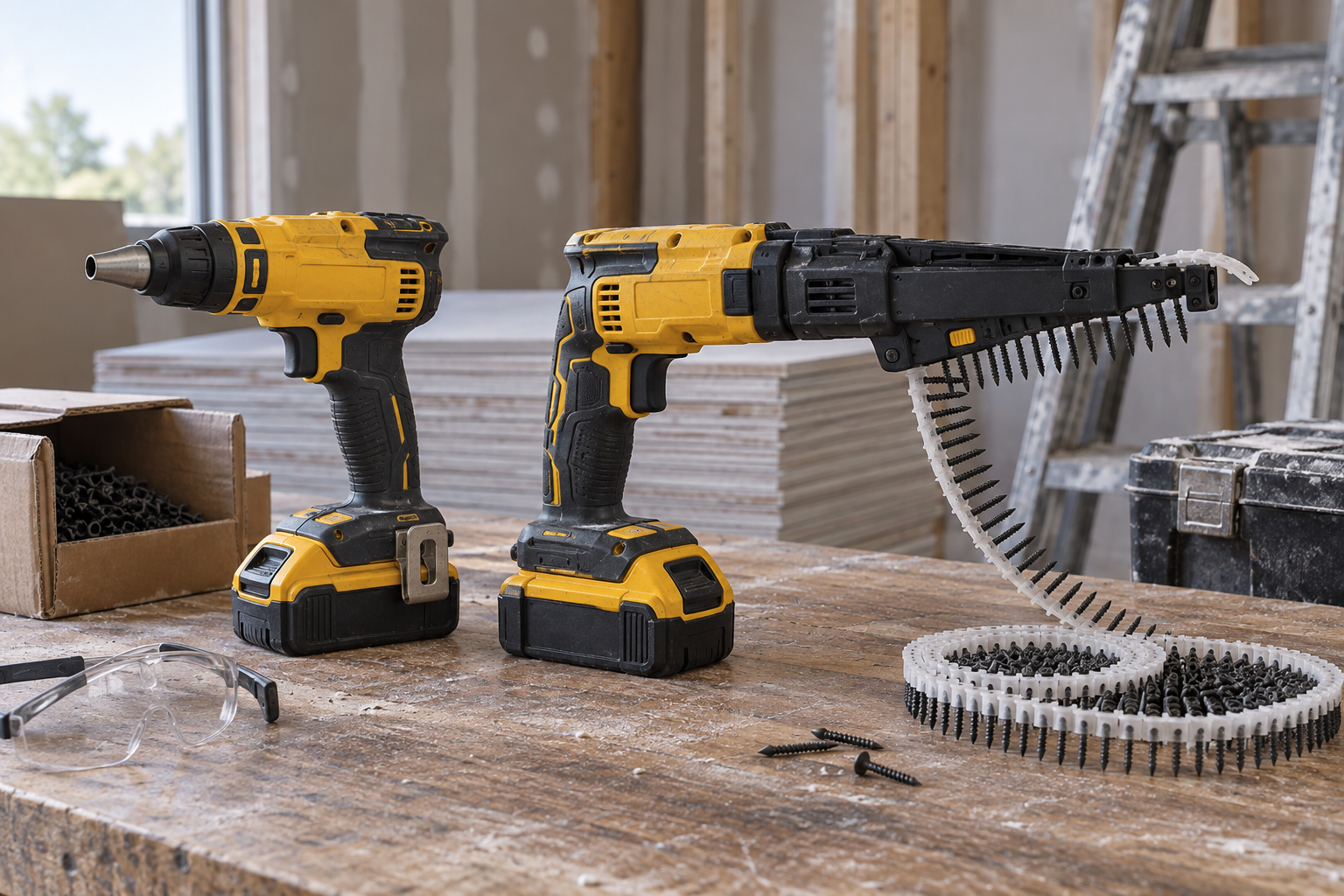
Belt-feed drywall screw guns usually reload faster during repetitive hanging. A collated strip holds many screws, so you can keep one hand on the tool and drive the next screw without reaching for a loose fastener. A magazine-feed gun that takes individual screws is slower per screw, but it costs less, handles small jobs well, and avoids the jams and setup that can come with collated strips.
The right choice depends on how many screws you’ll drive in a session, how often you change screw length, and whether speed matters more than simplicity. Here’s what to expect on the job.
As an Amazon Associate we earn from qualifying purchases at no extra cost to you.


Our Top Picks
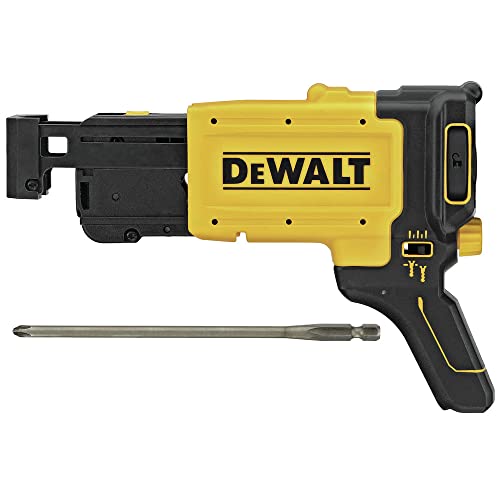 DEWALT Drywall Screw Gun Collated AttachmentOne Size6.38 x 2.63 x 9.25 inches1.4 PoundsCheck on Amazon

How the two feeds work
A belt-feed drywall screw gun uses a detachable nose attachment that advances screws held together in a plastic collated strip. The gun drives one screw, then the attachment indexes the next into position. You still need to load strips, but you aren’t picking up and placing each screw.
A magazine-feed gun, often called a standard or single-screw drywall gun, accepts one loose screw at a time. You place the screw on the bit, press the gun against the panel, and drive it. Some users keep screws in a pouch or magnetic holder to reduce the time spent reaching for them.
Which reloads faster?
For continuous work, belt feed wins. The biggest time saving isn’t the few seconds it takes to load a strip; it’s avoiding a separate grab-and-place motion for every screw. On a full sheet of drywall, that means dozens of fewer interruptions. On a large ceiling or multi-room job, the difference adds up across hundreds or thousands of fasteners.
Magazine feed can be quick in practiced hands, especially when a screw pouch is within easy reach. But each screw still has to be picked up and seated on the bit. A belt-fed attachment also isn’t instant: the strip has to be aligned, and an empty or misindexed strip means stopping to correct it. Expect belt feed to be faster overall, not trouble-free.
| Factor | Belt feed | Magazine feed |
|---|---|---|
| Fastener loading | Load a strip, then drive screws in sequence | Place each screw on the bit |
| Best fit | Repeated fastening on larger jobs | Small jobs, repairs, and occasional use |
| Fastener flexibility | Usually limited to compatible collated screws and lengths | Loose screws are easy to swap as the task changes |
| Common slowdown | Strip jams, misalignment, or changing attachments | Repeated picking up and placing screws |
| Cost and setup | Higher upfront cost; more parts to configure | Cheaper and simpler for occasional work |
When belt feed pays off
Choose a belt-feed setup if you’re hanging several rooms, fastening a long ceiling, or doing drywall work regularly. It’s especially useful overhead, where each pause to grab a screw can mean lowering the gun or shifting your stance. A collated tool also helps maintain a steady rhythm when one person is fastening while another positions panels.
Before buying, check which screw lengths the attachment accepts and whether it’s compatible with your gun. Collated strips aren’t interchangeable by default. A mismatched strip can fail to advance, sit crooked in the nose, or leave screws poorly positioned for the bit. Keep strips clean and dry, and bring enough for the job rather than relying on a partly used strip to behave perfectly.
If speed is your priority, compare belt-feed drywall screw guns with the cost of compatible strips and attachments, not just the tool’s sticker price.
When magazine feed is enough
For patching a room, fastening a few sheets, or doing occasional DIY work, a single-screw gun is usually the sensible buy. You can use loose screws, switch lengths without changing a collated setup, and avoid storing special strips. If you already own a compatible drill or screw gun, a suitable drywall nose attachment may be a less expensive way to get depth control than buying a dedicated tool.
Its main cost is handling time. A pouch or magnetic screw holder keeps fasteners close, but it doesn’t remove the step of placing each screw on the bit. That is a fair trade for a small repair; it can become tedious when you’re fastening full sheets all day. See single-screw drywall guns if low cost and straightforward operation matter more than maximum throughput.
Depth control matters more than reload speed
Both styles need to set screws consistently. The head should sit just below the paper surface without breaking the paper. A screw driven too deep can lose holding strength; one left proud can interfere with finishing. Use the depth stop, test on a scrap piece of drywall, and check the first few screws after changing board thickness or backing.
Belt-feed tools have extra failure points: a strip can advance poorly, a screw can bend, or dust and debris can interfere with the nose. Stop and clear a jam rather than forcing the tool; forcing it can damage the strip or leave a screw at an angle. With magazine feed, the common mistakes are dropping screws, starting one off-center, or repeatedly reaching for fasteners from an awkward position. Neither system compensates for a worn or incorrect bit.
A practical buying choice
Count the work, not just the sheets. If you’ll drive a few hundred screws over a weekend and expect more drywall projects, belt feed can save meaningful handling time. If you’re doing one small room or occasional repairs, magazine feed is cheaper, more flexible, and usually fast enough. For a large job, a belt-feed gun is easiest to justify when its attachment and consumables match the screw lengths you’ll actually use.
Whichever you choose, test the setup before starting on finished walls, keep the bit clean, and stage screws where you can reach them. A belt feed reloads faster in sustained work; a magazine feed can still be the better tool when the job is short, the fasteners vary, or the budget is tight.