Key takeaways
- A platform-level high output tool battery comparison covering DeWalt, Milwaukee, Makita, Bosch, Metabo HPT and the value brands, judged on range, warranty, availability and price behavior.
What's inside
As an Amazon Associate I earn from qualifying purchases. This post may contain affiliate links at no extra cost to you.
Cordless tools rarely stop because the battery is empty. They stop because the pack cannot feed the motor fast enough: the saw bogs in wet framing lumber, the grinder fades in the cut, the tool shuts down hot with charge still on the gauge. That is the gap this high output tool battery comparison is meant to close, because amp-hours tell you how long a pack runs, not how hard it can push.
This comparison stays at platform level. Design philosophy, range, warranty, availability and price behavior are things you can verify before you buy. Someone else’s runtime chart is not.
As an Amazon Associate we earn from qualifying purchases at no extra cost to you. Product prices and availability are accurate as of the date shown and are subject to change.




| Platform | Design approach | Best suited to | Trade-off |
|---|---|---|---|
| DeWalt 20V MAX (XR, PowerStack, FlexVolt) | Multiple pack families on one mount, from pouch-cell compacts to voltage-switching FlexVolt | One battery footprint for light and heavy duty | Confusing tiers, easy to buy the wrong pack |
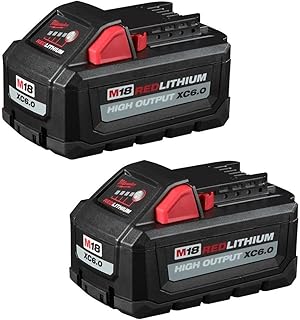
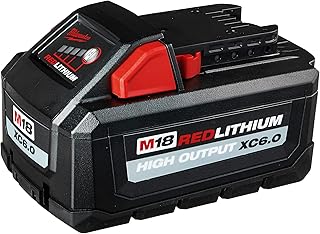
| Milwaukee M18 (High Output, FORGE) | Current delivery first, packs sold as what unlocks the biggest tools | Trades running high-draw tools daily | Premium pricing, shallow discounts |
| Makita 18V LXT and 40V max XGT | Two separate systems instead of one bridging pack | A big LXT collection, or a clean jump in voltage | Running both means two chargers, two pack stocks |
| Bosch 18V ProCORE | High-current cells on a mature pro platform, strong on hammers | Users already invested in Bosch | Thinner US availability than the top two |
| Metabo HPT MultiVolt | Voltage-switching packs plus an AC adapter option | Corded-like duty without stocking many packs | Smallest dealer footprint here |
| Ryobi ONE+ HP, Kobalt, Craftsman | Value ecosystems with one premium tier above the basics | Homeowners and occasional heavy jobs | Lower sustained-load ceiling |
What high output actually means
Every brand uses its own label, but the engineering is similar. Older packs were built around 18650 cells. Premium packs now lean on 21700 cells or pouch cells with tabless-style construction, and both changes lower internal resistance. Less resistance means less voltage sag when the motor pulls hard, and less waste heat inside the pack.
Cell count matters as much as cell type. A larger pack usually has two parallel groups instead of one, so each cell carries roughly half the current for the same demand. That is why a circular saw often feels stronger on a mid or large pack than on a compact, and why the compact heats up first. Thermal protection, not empty cells, is what ends most hard runs, so a pack that stays cooler works longer and charges sooner.
High output tool battery comparison by platform
DeWalt
Breadth on a single mount is the strategy. Compact pouch-cell packs, standard and high-capacity 20V MAX packs, and FlexVolt packs that switch to 60V all share one tool interface, so a drill and a big miter saw live on the same system. The cost is shelf confusion: three premium tiers sit side by side and the box art explains more than the model naming does. Decide which tier you need before you shop.
Milwaukee
Milwaukee has been the most consistent about positioning packs as a requirement rather than an upgrade, and its heaviest M18 tools are specified with that in mind. For repeated cutting, breaking and grinding, the pack story and the tool story line up. Expect to pay for it, since prices hold well and savings arrive as kit bundles rather than bare-pack markdowns.
Makita
Makita split the problem instead of bridging it. LXT stays 18V with an enormous tool range, XGT is a separate higher-voltage system for the heavy end. Clean engineering, but a real fork in the road, because the packs do not interchange. If you already own a wall of LXT, better LXT packs are usually cheaper than switching.
Bosch, Metabo HPT and the value brands
ProCORE packs are strong, particularly behind rotary hammers, but US availability of Bosch tools and packs is thinner, which matters when a replacement is needed on a Saturday. MultiVolt is genuinely clever, including wall-power operation on some tools, though the dealer network is the smallest here. Ryobi’s premium tier is a real step up inside its own ecosystem with unmatched Home Depot stock, while Kobalt and Craftsman are bought on kit price at Lowe’s.
High output 18V and 20V class packs
The mid-to-large premium pack is what changes how saws, grinders and recip tools behave. Buy it in the platform you can restock locally, and buy from the brand store or Amazon itself rather than an unknown marketplace seller.
Warranty, availability and price behavior
Battery warranties are usually shorter than tool warranties, commonly falling in the two to three year range across the major brands, often with a registration step and always with a receipt requirement in practice. Terms change, so read the brand’s current policy. The more useful question is who handles the claim near you: a service desk, a shipping claim, or a dealer who hands you a pack across the counter.
Availability is a spec. Milwaukee and Ryobi are the Home Depot answer, Kobalt and Craftsman are the Lowe’s answer, DeWalt is nearly everywhere, and Makita, Bosch and Metabo HPT depend on your region and on specialist dealers. If work stops when a pack dies, buy what you can replace the same day.
Pricing follows a pattern rather than a number. Bare packs are the weakest value, two-pack bundles and free-battery-with-tool promotions carry the real discounts, and they cluster in spring, around Father’s Day and in late November. Read listings carefully, since premium packs attract imitations with inflated capacity claims.
- ✔ Much less voltage sag under heavy load
- ✔ More cells sharing current, so lower pack temperatures
- ✔ Unlocks the top of a tool line instead of limiting it
- ✔ Fewer stops for cooling and charging
- ✘ Heavier and taller, which hurts overhead and in tight spaces
- ✘ Premium price with limited discounting
- ✘ Overkill on drills, drivers, lights and small tools
- ✘ Counterfeit and off-brand versions are common online
Compact premium packs for drills and drivers
Pouch-cell style compacts give up capacity but keep respectable output in a package that does not turn a drill into a club. Pair two of these with two large packs instead of buying four of the same size.
Matching the pack to the tool
Most people over-buy on one axis and under-buy on the other. Drills, impact drivers, lights and inspection tools gain nothing you can feel from a large pack beyond runtime, and they gain weight. Circular saws, recip saws, angle grinders, rotary hammers, blowers and mowers are the loads that cause sag and heat, so those are where high output packs earn the price.
A workable kit for most users is two mid-to-large high output packs, two compacts, and a charger that handles both without a queue. If you run one demanding tool all day, a third large pack beats a faster charger.
Higher-voltage packs for the heavy end
For concrete, demolition or outdoor power equipment, a 36V to 40V class system carries the load more comfortably than an 18V platform. Confirm your tool lineup exists there first, since pack costs run higher.
Frequently asked questions
Does a bigger amp-hour battery make my tool more powerful? Indirectly, yes. Larger packs usually have more cells sharing the load, so voltage sags less under heavy draw and the tool holds speed better. On light-duty tools you notice only extra runtime and extra weight.
Are third-party replacement packs worth the savings? On a low-draw tool in an older platform they can be acceptable. On high-draw tools they are a poor bet: capacity claims are often overstated, protection electronics vary, and there is no warranty path.
Can I run a high output pack on my older tools? Within the same platform, almost always yes, since the tool draws only what it needs. The reverse is the problem, as some newer high-demand tools refuse to run, or run limited, on old compact packs.
Choose the platform on range and local availability first, then buy the pack tier that matches your heaviest tool rather than your lightest. That order gets the decision right more often than any spec sheet.
Check prices on Amazon →