What's inside
As an Amazon Associate I earn from qualifying purchases. This post may contain affiliate links at no extra cost to you.
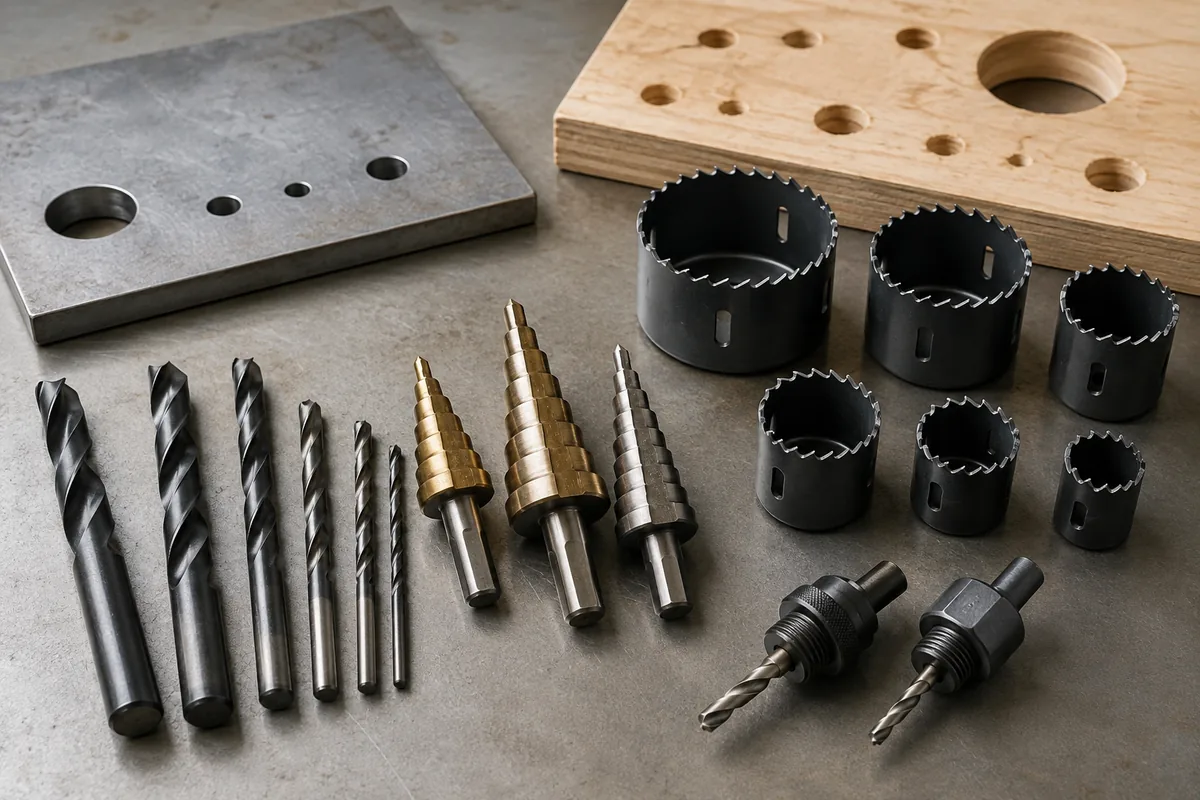
For repeated drilling in steel, cobalt bits usually last longer than titanium-coated bits. The reason is simple: cobalt is part of the bit’s cutting material, while titanium nitride is a thin surface coating. Once that coating wears through at the cutting edge, the bit behaves much like the high-speed steel underneath.
That does not make cobalt the right buy for every toolbox. Titanium-coated bits cost less and work well for occasional holes in mild steel. The better choice depends on the metal, hole count, cutting speed and whether you can keep the bit cool.
As an Amazon Associate we earn from qualifying purchases at no extra cost to you.



Our Top Picks
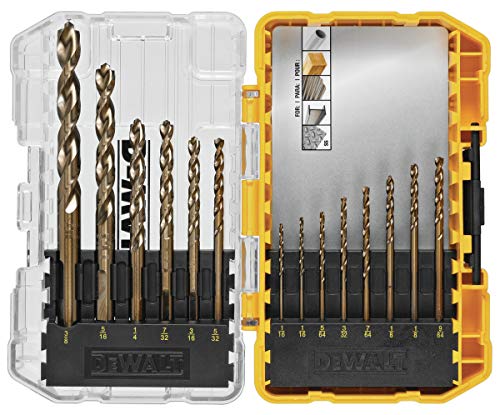 DEWALT Cobalt Alloy Steel Drill Bit Set withOne Size8.75 x 1.74 x 8.75 inches0.8 PoundsCheck on Amazon
 BOSCH CO14B 14-Piece Cobalt Drill Bit Set With14-Piece Drill Bit Set7.2 x 5.6 x 1.8 inchesCheck on Amazon
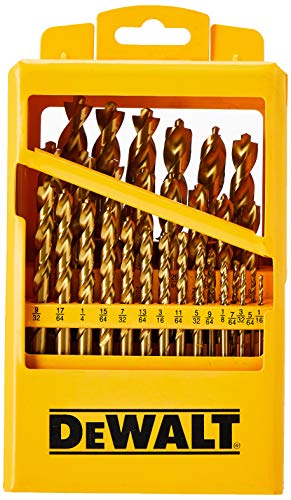 DEWALT Titanium Nitride Coated Drill Bit Set withOne Size10 x 7 x 3.75 inches3 poundsCheck on Amazon


What “cobalt” and “titanium-coated” actually mean
Cobalt drill bits are generally made from high-speed steel alloyed with cobalt—commonly M35, which contains about 5% cobalt, or M42, with about 8%. The cobalt is distributed through the bit, helping it retain hardness at higher temperatures. The cutting edges can be sharpened, and the bit still has cobalt alloy throughout.
Most bits sold as titanium-coated are high-speed steel with a thin titanium nitride (TiN) coating. The coating reduces friction and helps resist wear while it remains intact. It is not a solid titanium bit. Sharpening removes the coating at the cutting edge, so a resharpened bit no longer has the same surface advantage there.
Which lasts longer in steel?
In sustained work, cobalt usually wins. It is better suited to tougher steel, larger holes and repeated drilling where heat builds up. A TiN-coated bit can start out cutting cleanly, but heat, abrasion or resharpening can wear away its coating. Once that happens, its life depends on the underlying steel and how it is used.
There is no reliable number of holes that either type will drill before wearing out. A 1/8-inch hole through thin, mild sheet steel is far easier on a bit than a 1/2-inch hole through thick plate. Feed pressure, speed, lubrication, alignment and the steel’s hardness all change the result. In practice, a correctly run cobalt bit may outlast a coated bit by a wide margin in repeated jobs, but a poorly run cobalt bit can dull quickly too.
| Factor | Cobalt bit | Titanium-coated HSS bit |
|---|---|---|
| Construction | Cobalt-alloy HSS throughout | HSS with a thin TiN surface coating |
| Best fit | Repeated holes, harder steel, demanding shop work | Occasional holes in mild steel and general DIY |
| Resharpening | Can be sharpened while retaining its alloy | Sharpening removes coating at the cutting edge |
| Cost | Usually higher | Usually lower |
| Common failure cause | Overheating, poor geometry or excessive feed | Coating wear, overheating or a dull underlying edge |
When a titanium-coated bit is enough
For a few holes in mild steel—such as a bracket, thin angle iron or a small repair—a coated HSS bit is often the sensible budget choice. If the bit cuts smoothly and you are not drilling all day, paying extra for cobalt may not save enough time or replacement cost to matter.
Choose a quality set rather than assuming the word “titanium” guarantees durability. Use a pilot hole for larger diameters, and do not expect a coated bit to stay sharp through repeated work in thick plate. A titanium-coated HSS drill bit set can be a reasonable choice for light, occasional steel drilling.
When cobalt is worth the extra cost
Buy cobalt when you expect regular drilling in steel, need larger holes, or work with harder alloys such as stainless steel. Stainless is especially unforgiving: if a bit rubs without cutting, heat can harden the surface and make the next attempt harder. A sharp cobalt bit gives you more temperature tolerance, but it still needs proper technique.
M35 cobalt is commonly sufficient for general metalworking. M42 has more cobalt and can offer better hot hardness, but it is also more brittle. Neither grade is immune to chipping if the bit is misaligned, snagged or used with a heavy, uneven feed. For repeated work, consider a M35 cobalt drill bit set; check the maker’s stated alloy rather than relying on “cobalt” alone.
Technique matters more than the label
Use a drill press when the work allows it, clamp the stock securely and select a slower speed as bit diameter increases. As a rough starting point for mild steel, a 1/8-inch HSS bit is often run around 1,000–1,500 rpm, while a 1/2-inch bit may be closer to 250–400 rpm. These are starting ranges, not fixed rules; harder material and cobalt bits generally call for lower speeds. Follow the bit maker’s chart when available.
Apply steady pressure so the bit cuts chips rather than polishing the surface. Use cutting fluid for deeper holes or tougher steel, and withdraw the bit periodically to clear chips. Letting the bit spin dry at high speed can overheat the cutting edge; pressing hard on a dull bit can do the same. Stop if the bit squeals, smokes or turns blue. Those signs point to excessive heat, not a need to push harder.
For a long run of holes, use a sharp cobalt bit, suitable cutting fluid and controlled speed. For a small repair in mild steel, a coated HSS bit is usually adequate. In both cases, good setup and chip control are what keep the cutting edge working. When replacing a worn set for regular steel work, a cobalt drill bit set for steel is the stronger long-term bet.