What's inside
As an Amazon Associate I earn from qualifying purchases. This post may contain affiliate links at no extra cost to you.
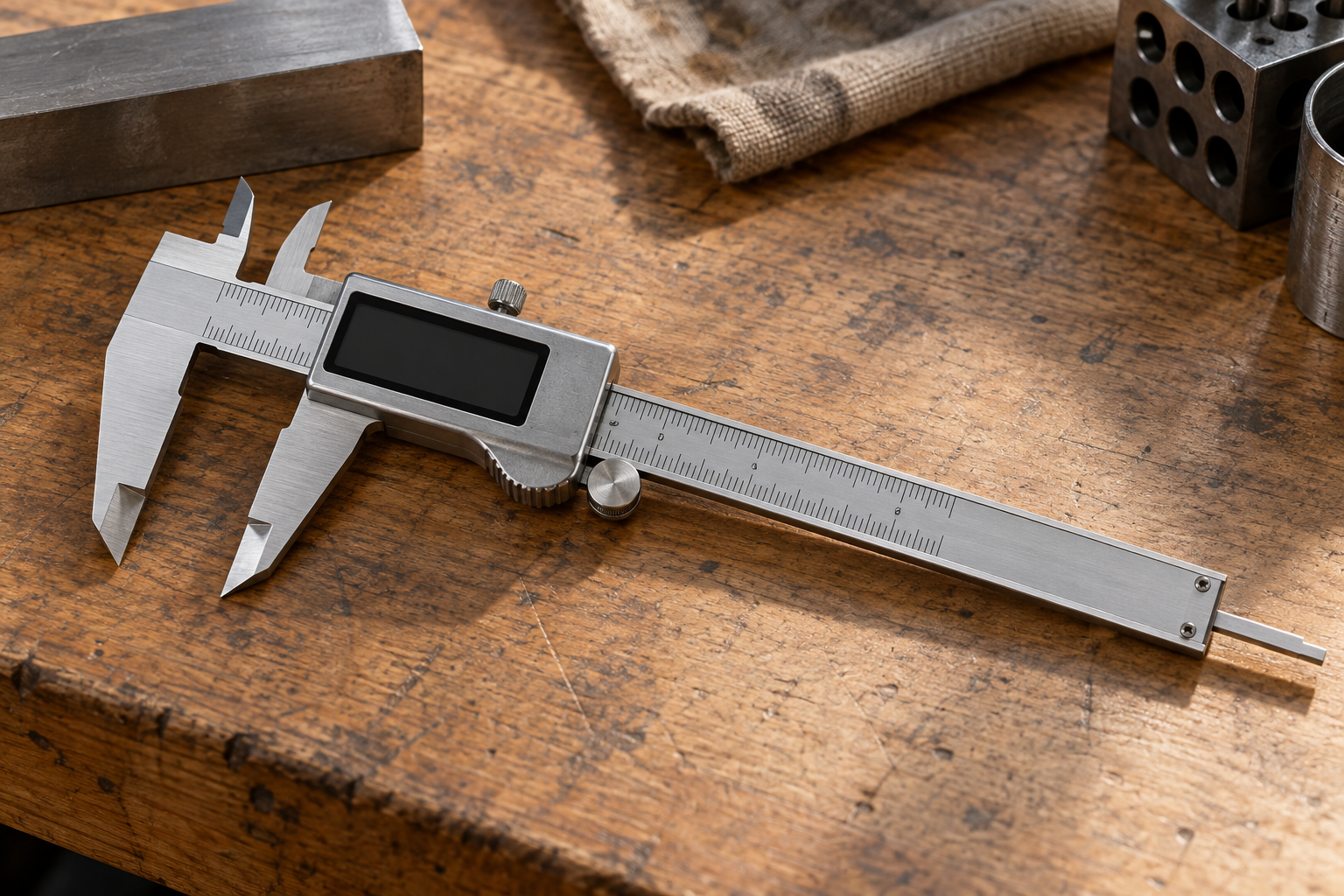
A 6-inch digital caliper is a practical size for checking router bit shanks, drill bits, screws, washers and other small hardware. For those jobs, the important question is not whether the display has extra features. It is whether the jaws meet cleanly, the reading repeats, and the tool stays reliable around sawdust and shop grime.
For most woodworking shops, a basic stainless-steel digital caliper with a clear display and a locking screw is enough. Spend more if you need better fit and finish, more consistent measurements, or frequent use across a range of shop tasks. Whichever you choose, treat the reading as a useful check—not proof that a bit fits a collet safely.
As an Amazon Associate we earn from qualifying purchases at no extra cost to you.


Our Top Picks
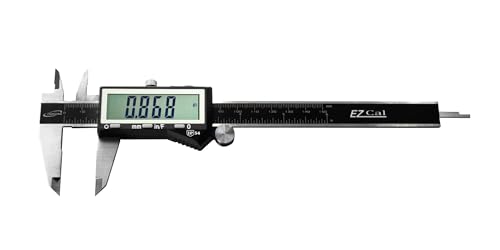 iGaging IP54 Electronic Digital Caliper 0-6" Display Inch/Metric/Fractions6 to 7.9 Inches6 x 6 x 0 inches0.1 PoundsCheck on Amazon


What a caliper can tell you about a router bit
Most common router bit shanks are nominally 1/4 inch or 1/2 inch. Those convert to 6.35 mm and 12.7 mm, respectively. A digital caliper can help identify which size you have and reveal an obvious mismatch, such as a shank near 6 mm rather than 1/4 inch. It can also measure screw diameters, washer thickness, small stock and the inside width of a slot.
Clean the shank first, then measure on a smooth section—not across a flat, flute, burr or damaged area. Close the outside jaws gently. Heavy pressure can skew the reading, especially on a small part or inexpensive caliper. Rotate the bit and take readings in a few places; a bent, worn or out-of-round shank may not give one consistent number.
A caliper is not a substitute for the router manufacturer’s collet instructions. A shank and collet that look close on the screen may still be the wrong combination. Never force a bit into a collet, and don’t use a measurement alone to justify fitting a metric shank into an inch-size collet, or vice versa.
Caliper types compared
| Type | Best use | Trade-off |
|---|---|---|
| Basic digital, stainless steel | Occasional shop checks and general hardware | Good value, but quality control and battery life vary |
| Better-finished digital | Frequent measuring and repeat checks | Costs more; still needs careful handling and calibration checks |
| Dial caliper | Users who prefer a mechanical readout | No battery, but the dial can be harder to read and is vulnerable to impact |
| Plastic digital caliper | Light-duty, noncritical measurements | Light and cheap, but less rigid and less suitable for repeatable shop work |
What to look for before buying
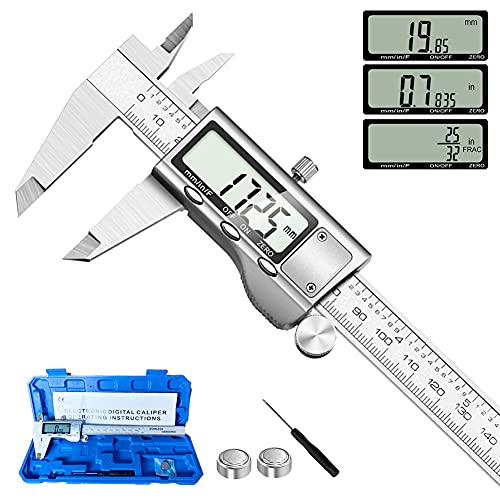
For router shanks and hardware, a 6-inch (150 mm) range is ample. Look for stainless-steel construction, smooth jaw travel, a display that is easy to read at arm’s length, and a zero button that works without fiddling. A lock screw helps hold a setting while comparing parts, although it does not improve accuracy by itself. A protective case is useful because dropped calipers can develop jaw damage or a sticky slider.
Resolution and accuracy are different. A display that increments in 0.01 mm or 0.0005 inch does not guarantee that every measurement is accurate to that amount. For typical bit-shank identification, repeatability and clean contact matter more than a very fine last digit. If you want a low-cost option for occasional checks, compare basic 6-inch stainless digital calipers. The cheaper choice is reasonable if you can verify its zero and it repeats on a known object.
If you measure parts often, pay attention to how the jaws close and whether the display holds steady as you move the slider. A better-finished caliper may feel smoother and be less frustrating, but a higher price is not a guarantee of calibration. Consider a 6-inch digital caliper supplied with a case if the tool will live in a busy shop or toolbox.
Check the tool before trusting a reading
Wipe the measuring faces clean and close the jaws gently. The display should read zero. If it does not, clean the faces again, close them without squeezing, and press zero. Repeat the check after opening and closing the jaws several times. A display that returns to different values suggests dirt, damaged jaws, a loose slider or a poor-quality instrument.
Then check a known reference if you have one, such as a gauge block or a reliable steel rule for a rough sanity check. A rule is not a precision standard, but it can expose a gross error. Measure the same object at least three times, removing and repositioning the caliper each time. If the readings vary by several hundredths of a millimeter, don’t rely on the final decimal for close-fitting work.
Keep the jaws and slider free of resin and dust. Digital calipers are not sealed against shop debris, and fine sawdust can make the slider gritty or interfere with the contact faces. Don’t clamp the tool on a spinning bit, measure hot parts, or store it loose with heavy steel tools. Remove the battery if the caliper will sit unused for a long period; a leaking cell can ruin the electronics.
Which one makes sense?
Choose a basic stainless digital caliper if you mainly need to distinguish 1/4-inch from 1/2-inch shanks, check fasteners and confirm rough dimensions. That is enough for many home shops, provided the jaws close cleanly and repeated readings agree. A dial model is worth considering if you dislike batteries or prefer an analog display; look at 6-inch dial calipers, but inspect the dial and slider for smooth movement.
Buy a better-finished digital model if you measure frequently, need repeatable comparisons, or find that a budget tool’s jaws or display are inconsistent. For either type, the most useful upgrade may be a case and better handling habits rather than more display digits. A caliper is a quick, handy check for small parts; for a router bit, the correct shank-and-collet pairing still comes from the tool’s specifications.