What's inside
As an Amazon Associate I earn from qualifying purchases. This post may contain affiliate links at no extra cost to you.
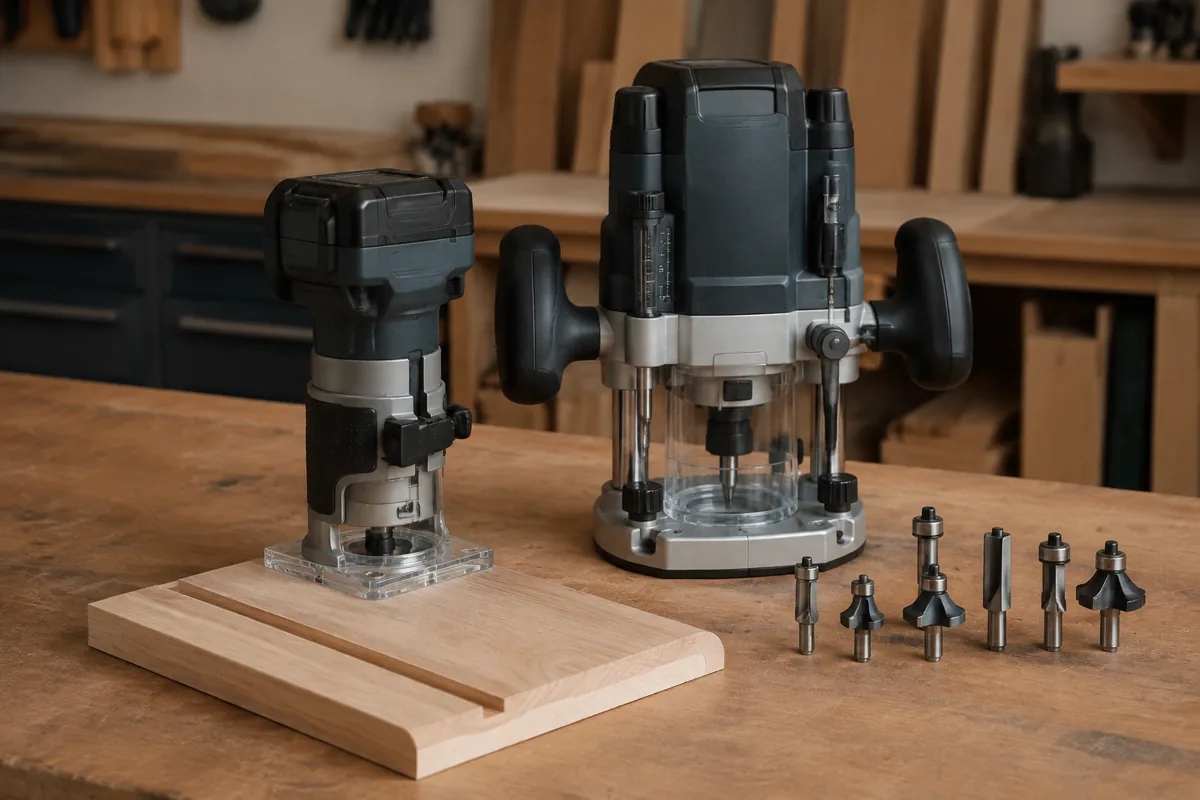
Choosing between a 1/4-inch and 1/2-inch router bit shank is mostly a question of what your router accepts and how demanding the cut will be. A larger shank is generally stiffer and less prone to chatter, but it cannot go into a router that only takes 1/4-inch bits. For a small workshop, the right choice depends on the router you own, the work you do, and whether buying two collet sizes is worth the added cost.
Our Top Picks


The basic difference
The shank is the smooth cylindrical part held by the router collet. Common sizes are 1/4 inch and 1/2 inch; some regions and machines also use metric sizes. Match the bit shank to the collet exactly. A 1/2-inch shank is not a safe substitute for a 12 mm collet, even though the sizes are close.
A 1/2-inch shank has four times the cross-sectional area of a 1/4-inch shank. In practical terms, it usually bends less under load, especially with a large cutter, deep profile, or heavy cut. That can mean less vibration and a cleaner result. It does not automatically make the cutting edges sharper, the router more powerful, or the bit suitable for a particular speed.
Compare the options
| Shank size | Best fit | Trade-offs |
|---|---|---|
| 1/4 inch | Small routers, light work, compact bits, and occasional routing | Often less expensive and widely available in small-bit sets; more prone to flex with large cutters or aggressive cuts |
| 1/2 inch | Full-size routers, larger profiles, deep cuts, and frequent use | Stiffer and often smoother under load, but bits can cost more and may not fit compact routers |
| Both sizes | A workshop with compatible routers or a router that accepts interchangeable collets | More choice, but requires buying and correctly installing the matching collet; check the router manual first |
Start with the router
Check the router’s manual or the markings on its collet before shopping. Some compact routers accept only 1/4-inch shanks. Many full-size routers accept 1/2 inch and may include a 1/4-inch collet, but do not assume yours does. A reducer sleeve or improvised adapter is not a substitute for the correct manufacturer-approved collet.
If you are buying a router and expect to make furniture, cabinetry, or raised-panel-style profiles, a machine supplied with a genuine 1/2-inch collet gives you more options. If your work is limited to edge easing, small roundovers, trim, or occasional hinge recesses, a 1/4-inch router can be a sensible, lighter, cheaper choice. Compare compact routers with 1/4-inch collets against full-size machines by capacity, not just price.
Match the shank to the cut
For small bits such as a 1/8-inch roundover or a narrow straight bit, a 1/4-inch shank is commonly adequate when used within the router’s limits. Large-diameter cutters and long bits put more leverage on the shank. For these, choose a 1/2-inch version when your router accepts it, and follow the cutter maker’s maximum speed and depth instructions.
Take deep cuts in stages rather than trying to remove all the material at once. As a starting point, a light pass of roughly 1/8 inch of depth can be easier to control than a full-depth cut, but the right amount depends on the bit, wood, feed rate, and router. Listen for a steady motor note and watch for burning, vibration, or the workpiece shifting. These are reasons to stop, check the setup, and reduce the cut—not to force the router through.
Cost and availability
For common small profiles, 1/4-inch bits are easy to find, and a budget-conscious user may get good results with a reputable basic bit rather than paying extra for a larger shank that the work does not need. A cheap, poorly ground bit can still cut badly in either size. Check that the shank is straight and free of damage, and avoid bits with loose cutters, cracked brazing, or unexplained vibration.
Half-inch shank bits are often available in the larger cutters used for heavier work. They may cost more and take up more space, but buying a second bit set is unnecessary if your existing router cannot accept that shank. If you need common profiles for either collet, compare 1/4-inch roundover and straight-bit options with their 1/2-inch counterparts. Compare the actual cutter diameter and cutting length as well as shank size.
Safe fit and use
Insert the shank far enough into the collet for secure grip, while keeping it clear of the bottom of the collet bore. Many makers advise inserting fully and then withdrawing slightly before tightening; follow the router’s instructions for the correct procedure. Do not leave most of the shank exposed, and do not clamp on the cutting flutes. Tighten with the supplied wrench arrangement, then check the bit is secure before switching on.
A loose or mismatched bit can slip, vibrate, damage the collet, or be thrown from the router. Excessive cutter projection and a dull bit can also increase heat and strain. Unplug the router before changing bits, secure the work, and make a test cut in scrap. If a bit chatters, burns the wood, or leaves a rough edge despite a sound setup, reduce the feed or depth and inspect the bit for damage or resin buildup.
A practical buying rule
For a small workshop with a 1/4-inch-only trim router and light jobs, buy good-quality 1/4-inch bits and stay within their size limits. If you regularly make deeper cuts, use larger profiles, or are choosing a first full-size router, prioritize a machine with a 1/2-inch collet; add a 1/4-inch collet only if the manufacturer provides one and you need smaller bits. The collet determines compatibility, while the cut determines how much stiffness you need.