What's inside
As an Amazon Associate I earn from qualifying purchases. This post may contain affiliate links at no extra cost to you.
Our Top Picks
 BOSCH GLM100-23 100 Ft Blaze Laser Distance Measure17"3.9 x 1.7 x 0.9 inches0.2 poundsCheck on Amazon
 Bosch GLM165-40 Blaze Pro 165 Ft. Laser Measure1625"1.63 x 1 x 4.13 inches0.41 poundsCheck on Amazon
 Klein Tools 93LDM100C Compact Laser Distance Measure100-Foot4.7 x 1.13 x 1.26 inches0.1 poundsCheck on Amazon
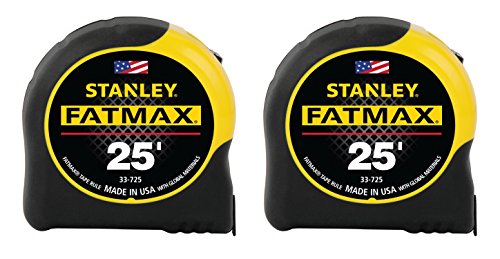 Stanley FMHT74038A FatMax 25 Foot Tape Measure 2PK7.6 m5.13 x 3.38 x 3.63 Inches1.2 PoundsCheck on Amazon


The short answer
For measuring a clear distance across a room, a laser distance meter is usually faster and can be more repeatable than a tape measure. But it is not automatically more accurate in every setup. A good tape held correctly can be more reliable over short spans, especially when the laser has no solid target or you need to measure around corners and along an edge.
For ordinary room measurements, the difference is often small: many consumer laser meters specify accuracy around ±1/16 to ±1/8 inch over typical indoor distances, while a tape’s accuracy depends on its markings, condition, and how well you keep it straight and level. The practical question is less “Which tool is more accurate?” and more “Which one is less likely to give me a bad reading in this room?”
As an Amazon Associate we earn from qualifying purchases at no extra cost to you.


How the tools measure
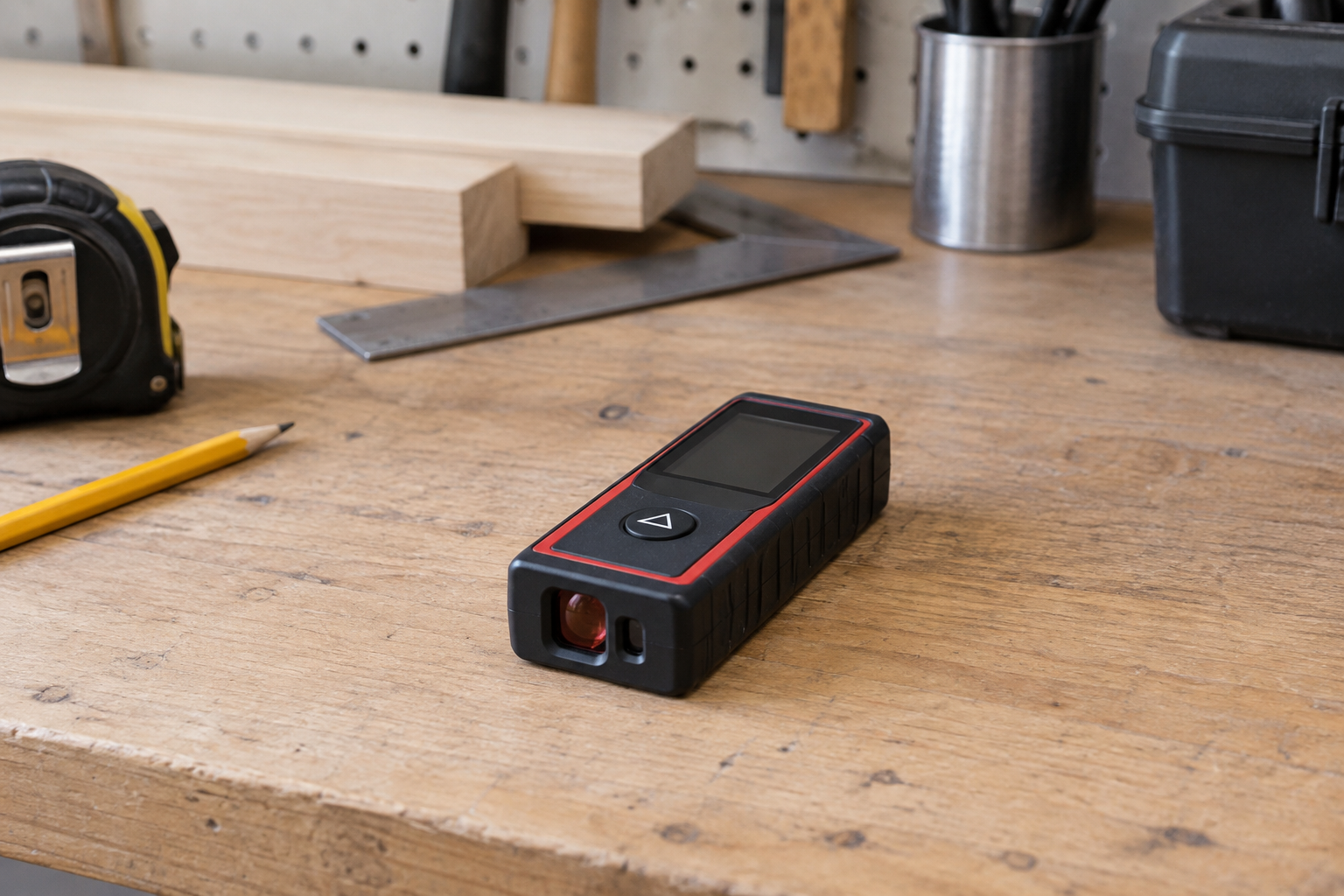
A laser meter sends a beam to a surface and calculates distance from the returning signal. You place the tool against a starting point—usually a wall—and aim at the opposite surface. It is quick for a clear, straight shot, and one person can measure a room without stretching a long blade.
A tape measure gives a direct physical measurement. You hook or hold its end at the starting point, extend the blade to the other surface, and read the scale. The result depends on keeping the blade straight, avoiding sag, and reading the correct mark. A second person can help, but a tape can still be used alone for many room dimensions.
Accuracy in real room conditions
On a clear shot between flat walls, a laser meter generally wins on speed and repeatability. A reading of 12 feet 7 3/8 inches takes seconds, and you avoid errors caused by a bowed or sagging tape. A tape, however, can be very accurate at short distances when pulled taut along the floor or wall. For a 6-foot closet opening, a tape may be just as dependable and easier to position.
Published laser accuracy is not a promise that every room reading will be right to that tolerance. The beam may hit a trim edge, a picture frame, or an angled surface instead of the wall you intended. Bright sunlight, glass, dark or textured targets, and a shaky hand can also make the reading difficult or inconsistent. Some meters display an error rather than a number; others may return a plausible reading from the wrong surface.
Tapes have their own failure modes. A blade that bows across a wide room can shorten the measured span. A loose hook, bent blade, or worn markings can introduce error. If the tape is not aligned with the direction you need, a diagonal measurement may look like a room length. These problems are easy to miss unless you check the setup.
At-a-glance comparison
| Factor | Laser distance meter | Tape measure |
|---|---|---|
| Clear wall-to-wall measurement | Fast; easy for one person | Reliable if the blade stays straight |
| Short openings and edges | Can be awkward to aim precisely | Usually simple to position |
| Target requirements | Needs a surface the beam can read | Needs physical access for the blade |
| Common error | Reading a nearby or angled target | Sag, misalignment, or a bad hook |
| Best use | Room spans, repeated measurements, area calculations | Trim, openings, short runs, and edge-to-edge checks |
Which should you buy?
If you measure rooms regularly for flooring, paint, cabinetry, or renovation estimates, a basic laser distance meter can save time. Look for a stated accuracy suitable for indoor work, a clear display, and a reference setting that lets you measure from the front or back of the tool. A range of 40 to 100 feet is ample for most homes; extra range matters more in large buildings than in bedrooms.
If you only measure occasionally, a decent 16- or 25-foot tape is enough for most rooms. A 25-foot blade reaches across many residential spaces, though it can sag if unsupported. Choose one with legible markings and a hook that moves slightly to account for inside and outside measurements. A sturdy 25-foot tape measure is also the better choice for measuring a door opening, baseboard, or a cabinet where the blade can sit directly against the surfaces.
For a first home tool kit, buying both is reasonable but not essential. If you do not want two tools, choose the tape for general DIY work and the laser if room-sized measurements are a frequent task. Neither tool replaces the other for every job.
How to get a trustworthy room measurement
With a laser, press the tool firmly against the starting wall and confirm whether it measures from the front or back edge. Aim at a flat, unobstructed patch on the opposite wall, not at glass or a narrow trim strip. Take the reading twice. If the results differ noticeably, check the target and the tool’s position before recording either number.
With a tape, keep the blade level and in line with the walls. For a long span, have someone hold the far end or use a stable contact point rather than letting the blade droop. Read the mark straight on to avoid parallax, and check that the hook is seated correctly. For wall-to-wall work, take a second measurement at a different height; out-of-square rooms are common, and the two readings may genuinely differ.
Before ordering flooring or cutting material, measure the room’s length and width separately and note alcoves, doorways, and changes in shape. A single diagonal reading is not a substitute for those dimensions. For flooring, add a waste allowance based on the layout and material—often around 5% for a simple room, but more for complex patterns or many cuts. Tool accuracy cannot compensate for a poor measuring plan.
The practical verdict
A laser distance meter is usually the better tool for fast, repeatable measurements across open rooms. A tape measure is often more dependable for short, constrained, or edge-based measurements and costs less. For the most confidence, use the laser to measure long wall spans and verify critical dimensions with a tape. If the readings disagree, inspect the setup rather than assuming one tool is always right.