What's inside
As an Amazon Associate I earn from qualifying purchases. This post may contain affiliate links at no extra cost to you.
The Makita XDT19 and Bosch GDR18V-200 are compact 18-volt impact drivers aimed at everyday fastening, but their controls and output give them different strengths. For finish work—cabinet hardware, trim screws, drawer slides, and other jobs where a slipped bit can mark a visible surface—maximum torque matters less than control, bit fit, and stopping accurately.
The Makita offers multiple operating modes, including modes designed to limit overdriving. The Bosch is a simpler, capable driver with a lower speed ceiling and fewer ways to tune its behavior. Either can handle finish fasteners with the right bit and technique. The better choice depends on whether you want built-in control options or a straightforward tool at a lower cost.
As an Amazon Associate we earn from qualifying purchases at no extra cost to you.


Our Top Picks
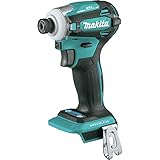
 Makita 18V Lxt Lithium-Ion Brushless Cordless Quick-Shift Mode3.82 x 8.39 x 5.51 inches2.27 poundsCheck on Amazon
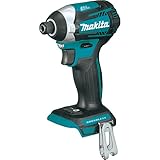
 Makita XDT14Z 18V LXT Lithium-Ion Brushless Cordless Quick-Shift(Pack of 1)8.3 x 3.5 x 6.5 inches2.05 PoundsCheck on Amazon

Key differences
| Feature | Makita XDT19 | Bosch GDR18V-200 |
|---|---|---|
| Platform | 18V LXT | 18V |
| Maximum torque | 1,590 in-lb | 2,000 in-lb |
| Maximum speed | 3,600 rpm | 3,400 rpm |
| Impact rate | Up to 3,800 ipm | Up to 4,200 ipm |
| Drive modes | Four speeds plus assist modes | Three speed settings |
| Chuck | 1/4-inch hex | 1/4-inch hex |
| Best fit | Users who value detailed control | Users who want strong output and simpler settings |
Published torque figures are not a finish-work ranking. A driver’s ability to avoid damage depends on how its trigger responds, the selected mode, screw type, material, and the operator’s feel. The Bosch’s higher rated torque is useful for tougher fastening, but it does not make it the safer tool for small screws.
Control on finish work
The XDT19’s advantage is its range of settings. Four standard speed selections let you reduce output for delicate work, while its assist modes are intended to help with tasks such as tightening screws or driving self-tapping fasteners. These settings can make repeat work less tiring: set the driver for the material and fastener instead of relying on a feather-light trigger pull every time.
That is helpful, not foolproof. A driver can still sink a screw too far, especially in soft pine, thin plywood, or a cabinet face with little material behind it. Assist modes are not a substitute for testing on scrap. Start with the lowest suitable speed and drive the last part of the screw slowly. For hardware that must sit flush, finish with a hand screwdriver if exact seating matters more than speed.
The GDR18V-200 gives you three speed settings and a trigger, which is enough for many users. Its 200 Nm (about 1,770 in-lb) torque figure is not the same as 2,000 in-lb; Bosch’s published specification is 200 Nm, equivalent to roughly 1,770 in-lb. Check the exact listing and regional specification before comparing retailer figures, since product pages can mix units or carry errors. In practice, use a low setting for small screws and reserve higher settings for larger fasteners.
How to avoid damage
Both tools accept standard 1/4-inch hex bits. Use a sharp, correctly sized bit that fully engages the screw head. A worn Phillips bit or a loose-fitting bit can cam out, chew up the head, and skid across a finished surface. Keep the driver square to the fastener, particularly with cabinet screws and small hinge screws.
For visible work, drill a pilot hole when the material or screw calls for one. A pilot hole reduces splitting and the torque needed to seat the screw. In hardwood, choose a pilot diameter based on the screw’s core rather than its outer thread diameter. In thin stock, a pilot that is too large can leave the screw with little grip; test on offcuts when the material is unfamiliar.
Neither impact driver is ideal for every finish task. Their impacts can be abrupt at low speed, and they are louder than a drill-driver. For tiny screws, delicate fittings, or frequent work close to an edge, a drill-driver with a clutch is often easier to control. A compact set of quality impact-rated driver bits is a sensible upgrade if your current bits are worn or poorly matched.
Batteries and ownership cost
Platform compatibility can settle the decision. The XDT19 uses Makita LXT batteries; the Bosch uses Bosch 18V batteries. If you already own several batteries and a charger in one system, staying there usually saves more than a small difference in bare-tool price. A bare tool is only a bargain if you can power it without buying a second battery platform.
Battery size also affects balance. A compact battery keeps an impact driver nimble around drawer boxes and cabinet interiors. A larger pack adds runtime, but it can make overhead or one-handed work tiring. For finish work, the smaller pack is often the better fit unless you are driving hundreds of screws between charges.
Which one should you buy?
Choose the Makita XDT19 if you already use LXT batteries or want more options for dialing in a driver. Its mode selection is useful when switching between cabinet screws, general assembly, and tougher fastening. It is still possible to overdrive a screw, so use a test piece and keep a hand screwdriver nearby for final seating.
Choose the Bosch GDR18V-200 if you are on the Bosch 18V platform, prefer fewer settings, or find it at a meaningfully lower kit price. For occasional shelves, furniture assembly, and general household fastening, its simpler controls are not a serious limitation. If you mainly need careful work on small screws, spend the difference on a clutch-equipped drill-driver with an adjustable clutch rather than expecting any impact driver to behave like one.
For a buyer starting from scratch, compare the price of each complete kit, not just the bare tool, and consider which battery system offers the other tools you expect to buy. If finish work is only an occasional part of your workload, the cheaper Bosch can be entirely adequate. If you regularly move between delicate and demanding fasteners, the Makita’s extra control settings are the more practical advantage.