What's inside
As an Amazon Associate I earn from qualifying purchases. This post may contain affiliate links at no extra cost to you.
For most household repairs, the best hammer for home use is a 16-ounce claw hammer with a comfortable, non-slip handle and a curved claw. It is light enough for picture hooks and small nails, yet substantial enough for basic furniture fixes and trim work; the curved claw also helps remove nails without demanding much storage space.
As an Amazon Associate we earn from qualifying purchases at no extra cost to you.


Our Top Picks
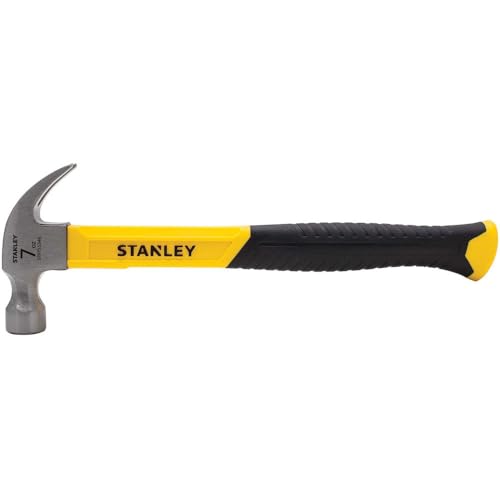 Stanley STHT51346 7Oz Curve Claw Fiberglass HammerOne Size4.7 x 1.2 x 12.2 inches0.9 poundsCheck on Amazon


Quick picks by household situation
- One hammer for an apartment or general home maintenance: a 16-ounce curved-claw hammer with a fiberglass or steel handle and a cushioned grip.
- Mostly small nails, crafts, or delicate trim: a 10- to 12-ounce hammer with a wood or fiberglass handle for more controlled swings.
- Frequent repairs or stubborn nail removal: a 20-ounce hammer with a longer handle and a well-shaped claw, provided you have room to swing it safely.
- Very limited storage: a compact 12- to 16-ounce hammer, ideally with a hanging hole or a short handle. A magnetic nail-starting feature can be handy overhead.
Compare the practical differences
Hammer weights usually refer to the head, not the entire tool. Total weight varies by handle material and length, so check both when a tool will be carried in a small toolbox or used for long stretches. The figures below are common ranges, not specifications for every model.
| Hammer type | Typical head weight | Handle and feel | Nail-pulling ability | Best fit |
|---|---|---|---|---|
| Light curved-claw | 10–12 oz | Often 11–13 in.; easy to control | Good for short, ordinary nails | Small repairs, crafts, delicate work |
| General-purpose curved-claw | 16 oz | Often 13–16 in.; balanced for varied tasks | Good for common household nails | Most homes and first toolkits |
| Heavier curved-claw | 20 oz | Often 16–18 in.; more reach and striking force | Strong leverage for larger nails | Frequent repairs and tougher removal jobs |
| Rip-claw | 16–20 oz | Usually a longer, straighter claw | Can pry and pull forcefully | Demolition and rough carpentry; less gentle on finished surfaces |
Choose by the jobs you actually do
For a first home toolkit: 16-ounce curved claw
This is the most versatile starting point for hanging a frame, assembling a simple project, tapping a loose part into place, or pulling a misplaced nail. The weight is a workable compromise: a lighter head can require more swings, while a heavier head can feel tiring or awkward in a confined room.
Look for a claw that has a smooth, rounded curve and a handle long enough to provide leverage but short enough to fit your toolbox. If possible, hold the hammer before buying. A head-heavy tool may feel tiring even when its listed weight seems reasonable.
For small, careful work: 10- to 12-ounce hammer
A lighter hammer offers better control for small nails and delicate materials, where a forceful miss could dent trim or damage a surface. It is not a shortcut for every task: driving a large nail may take more swings, and trying to compensate by swinging faster can make placement less accurate. Keep a scrap of wood or a nail set nearby when working near finished surfaces.
For stubborn nails or frequent repairs: 20-ounce hammer
A heavier head and longer handle can help drive larger nails and give the claw more leverage. The trade-off is maneuverability. In a closet, near a window, or overhead, the longer swing may be difficult to control. If nail removal is the main job, prioritize claw geometry and handle leverage rather than simply choosing the heaviest hammer.
Handle materials: comfort versus durability
- Wood: Hickory is common and absorbs some vibration. Wood can be repaired or replaced on some designs, but it can loosen, crack, or be damaged by moisture. Check regularly where the handle meets the head.
- Fiberglass: Often paired with a cushioned grip, fiberglass resists moisture and is a practical low-maintenance choice for a home toolbox. Inspect it for cracks or splitting, particularly after a hard impact.
- Steel: A one-piece steel construction is durable and keeps the head securely attached, but it can transmit more vibration. A quality grip helps with comfort; avoid using a hammer with a loose, damaged, or slippery grip.
Whatever the material, a secure head matters more than a fashionable finish. Do not use a hammer if its head is loose, its handle is cracked, or the striking face is badly chipped. Wear eye protection when striking or pulling nails, and keep fingers out of the path of the hammer and claw.
Decision matrix: match the tool to your home
| Your situation | Practical choice | Why |
|---|---|---|
| First toolkit, occasional repairs | 16 oz, curved claw, fiberglass or steel handle | Broad range of uses with modest maintenance |
| Small apartment and limited toolbox space | 12–16 oz, compact handle, hanging hole | Easy to store; adequate for light household tasks |
| New user prioritizing control | 10–16 oz, comfortable grip | Manageable swing weight can help with accurate placement |
| Repairs every week or larger nails | 20 oz, longer handle, curved claw | More striking force and leverage, if space allows |
| Mostly small trim or craft projects | 10–12 oz, smooth face | Less force behind a swing and better control on small work |
Curved claw or rip claw?
A curved claw is the more forgiving choice for ordinary home repairs. Its shape gives leverage when pulling nails, and it can be rocked against a block of scrap wood to reduce the chance of denting a finished surface. A rip claw is straighter and better suited to prying boards apart or rough demolition. That extra prying ability can mark wood or drywall, so it is not automatically the better household option.
For either type, use a thin scrap of wood as a fulcrum when removing a nail from a finished board. This spreads the pressure over a wider area. If a nail is too long to pull in one motion, reposition the claw and work it out gradually rather than levering sharply against the surface.
Storage and ownership details that matter
A hanging hole is useful if the hammer will live on a pegboard; a compact handle is easier to store in a kitchen drawer or small toolbox. A magnetic nail starter can help hold a nail in place for the first strike, especially when access is awkward, but it does not replace a stable workpiece or careful hand placement. Avoid storing a hammer loose where its head can damage other tools or surfaces.
Most wear shows first at the grip, striking face, or handle-to-head joint. Keep the striking face clean and dry, and check wooden handles for looseness or splits. Do not use a hammer as a pry bar, wrench, or chisel unless it is specifically designed for that job. The wrong use can damage the hammer or cause it to slip.
Bottom line
For a single do-it-all tool, choose a 16-ounce curved-claw hammer with a secure, comfortable handle. Go lighter for delicate work and cramped storage; choose 20 ounces only if you regularly drive larger nails or need extra leverage. The best hammer for home use is the one whose weight and handle you can control comfortably—and whose claw suits the repairs you expect to make.