Key takeaways
- Choosing a brand is really choosing a battery mount for the next ten years. Here is how the five major ecosystems compare on the things that actually cost you money later.
What's inside
- Rule 1: Count The Tools You Will Own In Five Years
- Rule 2: Batteries Cost More Than You Think
- How To Weigh The Criteria Against Each Other
- What Separates A Good Pick From A Bad One At Each Price Band
- Rule 3: Match The Platform To Your Trade, Not To A Review
- Rule 4: Ignore Voltage Marketing
- Buy The Right Packs, Not The Most Packs
- Mistakes That Cost Real Money
- FAQ
- The Short Answer
- Related Guides
- Rule 1: Count The Tools You Will Own In Five Years
- Rule 2: Batteries Cost More Than You Think
- How To Weigh The Criteria Against Each Other
- What Separates A Good Pick From A Bad One At Each Price Band
- Rule 3: Match The Platform To Your Trade, Not To A Review
- Rule 4: Ignore Voltage Marketing
- Buy The Right Packs, Not The Most Packs
- Mistakes That Cost Real Money
- FAQ
- The Short Answer
- Related Guides
As an Amazon Associate I earn from qualifying purchases. This post may contain affiliate links at no extra cost to you.
Every cordless purchase after your first one is constrained by the battery you already own. That makes the platform decision the most expensive decision in this whole category — and most people make it by accident, because a combo kit was on sale. The drill costs what the sticker says. The platform quietly sets the price of every tool, pack and charger you buy for the next ten years.
Here is the comparison that matters: not who has the strongest drill, but whose ecosystem still serves you in year eight. This guide covers how to choose a power tool battery platform using things you can verify before spending anything: how deep the tool range actually goes, what a spare pack costs on that system, whether bare tools are easy to buy, and what the warranty covers on packs as opposed to tools.
As an Amazon Associate we earn from qualifying purchases at no extra cost to you. Product prices and availability are accurate as of the date shown and are subject to change.


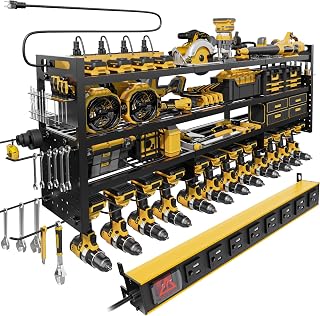


We are not going to rank motors or quote torque figures, because none of it survives the platform question. A slightly better impact driver on the wrong battery is a worse purchase than an average one on the right battery.
Read the table for shape rather than for a winner. The useful column is the last one.
| Platform | Tool range | Battery cost | Warranty | Best for |
|---|---|---|---|---|
| DeWalt 20V MAX + FlexVolt | Largest | Moderate | 3 years | Widest general coverage |
| Milwaukee M18 + M12 | Very large | Higher | 5 years | Trades, specialist tools |
| Makita LXT + XGT | Large | Moderate | 3 years | Comfort, finish work |
| Bosch 18V | Moderate | Moderate | Varies | Precision, European trades |
| Ryobi ONE+ | Very large, consumer | Lowest | 3 years | Homeowners on a budget |
Rule 1: Count The Tools You Will Own In Five Years
If the answer is three, almost any platform works and you should buy on price — Ryobi ONE+ is genuinely good value here, with an enormous consumer range including outdoor tools.
If the answer is twelve, buy DeWalt, Milwaukee or Makita. Depth of range is what saves you from a second platform later.
Count honestly, and include the tools nobody plans for: a work light, a shop vacuum, an inflator, a fan, a hedge trimmer, an oscillating multi-tool, a right-angle drill the day you run cable through joists. Those purchases reveal whether a platform is deep or merely popular. Breadth beats specification at this stage, because the gap between a good drill and a great drill is small, while the gap between owning a cordless tool for a job and driving to the rental counter is not.
Rule 2: Batteries Cost More Than You Think
Over a decade you will buy more batteries than tools. A pack is a consumable — three to five years of real use, less if it lives in a hot truck. Before committing, check the price of a 5Ah pack on your chosen platform and multiply by six. That number is your real cost of entry.
Two line items belong in the same sum. Chargers are the first: a second charger stops your workflow stalling on one slot, and fast chargers cost more than the basic unit bundled with kits. Bare tools are the second. A platform that sells most of its range without batteries lets you expand cheaply forever, while a platform that funnels you into kit after kit leaves you with a drawer of small packs you never chose. Check the pack warranty separately from the tool warranty, too — the terms are often different, and the pack is the part that wears out.
How To Weigh The Criteria Against Each Other
When two systems both look reasonable, rank them in this order and stop at the first clear difference:
- Range depth in the tools you will genuinely buy — not the headline tool count, but whether your next four tools exist.
- Pack price and availability — the recurring cost, and the one that compounds.
- Bare tool availability — decides whether growing the set is cheap or expensive.
- Warranty length and service access — weighs heaviest if the tools earn money.
- Ergonomics and weight — decisive for all-day handheld work, secondary otherwise.
- Torque and speed figures — last, and usually irrelevant to this decision.
What Separates A Good Pick From A Bad One At Each Price Band
Consumer band
A good consumer pick is a real platform: a large tool family, cheap packs, and a range that stretches into the yard. A bad one is a boxed set from a brand with nothing behind it — a drill, a bag, two tiny batteries and no fifth tool you would ever want on that mount. If the brand cannot sell you a fifth tool, you have bought a purchase, not a platform.
Prosumer band
Most serious hobbyists should shop here, and the trap is buying the flagship version of a tool used twice a year. A good pick is a mainstream pro platform bought sparingly: one solid drill and driver kit, two large packs, then bare tools as jobs demand them. A bad pick is three discounted kits from three brands.
Professional band
At the top every tool is competent, so buy for the specialist range and for service. A good pick has the odd tools your trade actually needs, dealers who stock parts, and a warranty you can claim without shipping a tool into a void. A bad pick is a platform chosen around one hero tool, leaving you renting or duplicating everything else.
Ryobi ONE+ kits
Over 300 tools on one battery, cheap packs, and a range that covers lawn care as well as the workshop. Not built for daily trade abuse — but for a homeowner it is very hard to beat on cost per tool.
DeWalt 20V MAX starter kits
The safest long-term platform choice for someone who wants both jobsite and woodworking tools on one battery.
Rule 3: Match The Platform To Your Trade, Not To A Review
Electricians and plumbers should look hard at Milwaukee M12 before anything else — the compact range is the deepest on the market. Cabinet makers should look at Makita. Framers and remodelers are well served by DeWalt. Homeowners maintaining a house and a yard should look at Ryobi first and stop worrying.
The inverse is just as useful. Skip Milwaukee if you are buying three tools for a garage; you would be paying a trade premium for depth you never reach. Skip Ryobi if the tools run all day and pay the mortgage. Skip Bosch as your one-battery-for-everything answer in the US, where the cordless range is narrower than the brand’s precision reputation implies, and treat it as the system you add for rotary hammers and jigsaws. Skip the Makita premium if comfort and finish work are not what you do — the ergonomics are the reason to pay it.
Rule 4: Ignore Voltage Marketing
18V and 20V MAX are the same battery architecture measured differently. 40V and 60V systems are real steps up, but only for tools that need sustained current — large saws, rotary hammers, outdoor equipment. Nobody needs 60V to hang a door.
Amp-hours are runtime, not power, with one caveat: larger packs generally hold larger cells that sag less under load, so a big pack can make a hungry tool feel stronger as well as last longer. It also makes that tool heavier overhead, which is why a mixed set of pack sizes beats a uniform one. The question that actually matters about high-voltage lines is compatibility — some brands let their big packs run the 18V tools you already own, others run a separate system with separate chargers. Check which before you assume one charger covers the shelf.
Buy The Right Packs, Not The Most Packs
Two large-capacity packs plus one compact pack cover almost every home workshop; add a third large pack if you own anything that draws hard, like a circular saw or a blower. Keep one on the charger and one in the tool instead of four half-charged packs in a drawer. Heat is what kills cells, so let a pack cool before charging, store spares indoors rather than in a truck or an uninsulated shed, and never leave one baking in the sun.
Mistakes That Cost Real Money
Each of these is avoidable with a five-minute check before you pay.
- ✘ Buying a cheap kit on a platform you will abandon in a year
- ✘ Owning two platforms because each had a good deal once
- ✘ Buying only small 2Ah packs, then finding every tool runs flat
- ✘ Chasing peak torque numbers you will never use
The pattern behind all four is reacting to a discount instead of following a plan. Write your five-year tool list before the next sale, decide which platform serves it, then judge every deal against that list. A cheap kit on the wrong platform is not a saving; it is a deposit on a second charger, a second set of packs and a second shelf.
FAQ
Are third-party batteries safe? Cheap ones are a genuine fire risk and void warranty. If you buy aftermarket, buy from a known brand with protection circuitry — and never charge unattended.
How long do packs last? Three to five years typical, or 500–1000 charge cycles. Heat kills them faster than use.
Can I switch platforms later? Yes, but sell your old kit as a complete set — bare tools and orphan batteries sell badly.
Is running two platforms ever sensible? Deliberately, yes: a main system for everything, plus a compact or specialist one for the few tools it does uniquely well. What you want to avoid is the accidental second platform, assembled one sale at a time, where both halves are incomplete.
The Short Answer
Pick the platform whose tool list still excites you at tool number twelve, buy two large-capacity packs early, and stop buying kits you do not need just because they are discounted. Get those three right and the individual tool choices stop mattering much, which is the whole point of choosing a system instead of collecting bargains.
Compare platform starter kits →