Key takeaways
- Both are brushless, both run on 20V MAX, and the boxes look similar. The difference is size, sustained power and about $60 — here is which one you need.
What's inside
As an Amazon Associate I earn from qualifying purchases. This post may contain affiliate links at no extra cost to you.
Walk the DeWalt aisle and you will see three families on the same battery: the standard 20V MAX line, XR, and ATOMIC. All three fit the same packs. The naming does not explain itself, so here it is plainly.
The trap is that the three names sound like a ladder — good, better, best — and they are not. ATOMIC and XR are both brushless, and both sit above the basic brushed tools. They solve different problems. ATOMIC is a size decision. XR is a duty cycle decision. Once you frame it that way, the question stops being which line is better and becomes how you actually work: how tight the worst access point on your jobs is, and how long the trigger stays held down.
As an Amazon Associate we earn from qualifying purchases at no extra cost to you. Product prices and availability are accurate as of the date shown and are subject to change.

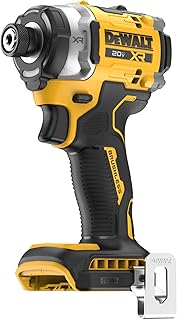


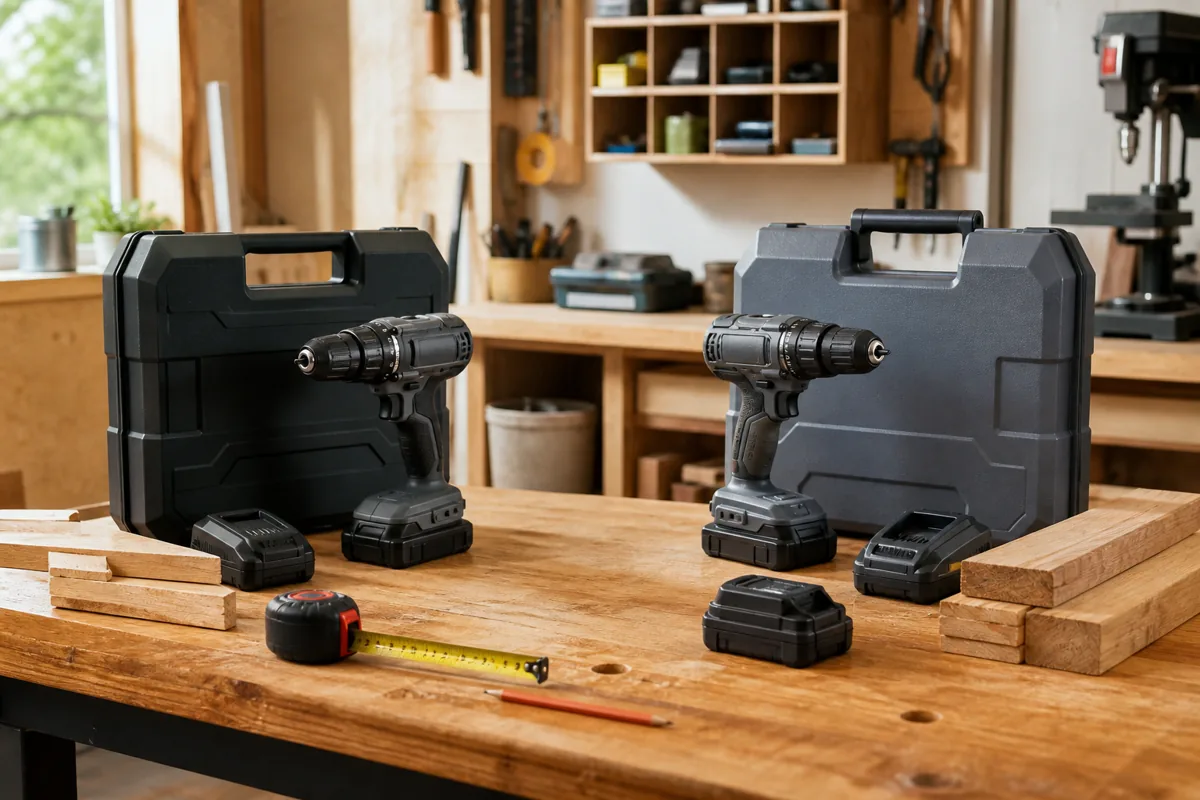
Nothing on the packaging explains that, because both boxes print the same vocabulary: brushless, high performance, LED work light, belt hook. So this guide covers DeWalt XR vs ATOMIC using the things you can check standing in the store or reading a listing — physical length, weight, transmission, kit contents, battery pairing and service access — rather than numbers nobody can verify at the shelf.
| Line | Motor | Size | Power | Typical buyer |
|---|---|---|---|---|
| 20V MAX standard | Mostly brushed | Full size | Entry | Occasional DIY |
| ATOMIC | Brushless | Compact, short nose | Mid | Tight spaces, homeowners, light trade |
| XR | Brushless | Full size | High | Daily trade use, heavy work |
ATOMIC: compact-first, not cheap-first
ATOMIC is DeWalt’s subcompact brushless line. The design goal is length and weight — short head, light body, easy to work between studs, inside cabinets, under sinks. It is brushless, so efficiency and runtime are good, and it costs less than XR.
What you give up is sustained torque. ATOMIC will drive lag screws, but do it all day and it will heat up faster than XR.
That is physics more than corner-cutting. A shorter motor and a smaller gearcase simply hold less metal, and metal is what absorbs heat before the electronics start protecting themselves. A compact tool does the same work as a big one in short bursts; it is the twentieth fastener in a row, under load, that tells the two lines apart. Read the name as compact, not cheap — the actual entry tier is the brushed standard line, and confusing the two is the single most common mistake in this aisle.
The quiet advantage of ATOMIC is that light tools get used. A drill you can hold overhead one-handed, or run off a ladder without your wrist complaining, ends up doing more work in a week than a heavier tool that stays in the case because fetching it feels like effort.
XR: the workhorse tier
XR is where DeWalt puts its better electronics, bigger motors and features like three-speed transmissions and tool-connect on some models. If a tool is going to be used hard and often, XR is the tier that survives it.
The extras that matter day to day are unglamorous. An extra speed range gives you a genuinely low gear that holds torque at low RPM, which is what you want for hole saws, augers, self-feed bits and mixing. Better clutch resolution means the difference between snugging a cabinet screw and snapping it. A better chuck holds round-shank bits without creeping. And a tool built with more thermal headroom recovers between pulls instead of easing off on you halfway through a run.
What you pay is money, length and weight. XR heads are longer, which is precisely the thing that makes a compact tool worth owning alongside one.
DeWalt ATOMIC compact tools
Shorter head length is the entire point. If you work in cabinets, joist bays or electrical boxes, this is the line that stops you swearing.
DeWalt XR brushless tools
More torque, better electronics, more speed settings. The right answer when the tool earns money rather than just favours.
Five criteria that actually decide it
These are in weighting order for most buyers. Where two of them conflict, duty cycle wins if this is your only tool, and access wins if it is your second.
1. Your worst access point, measured
Think of the tightest place you regularly have to drive a screw — a joist bay, the back of a cabinet, a panel box, an engine bay — and measure it. Then compare head lengths on the spec sheets rather than trusting the words compact and subcompact. If your honest answer is “I work on a bench and in open framing”, head length is worth almost nothing to you and you should stop paying attention to it.
2. How long the trigger is held
Short bursts favour the compact tool. Continuous load — long augers, big hole saws, mixing, deck screws by the box — favours XR, because heat is the real limit and the bigger tool has more room to dump it.
3. The torque you use, not the torque printed
Peak figures are marketing; both lines will exceed what a cabinet screw needs. The useful question is what happens at the top of your workload, not at the top of the chart. If your heaviest job appears a few times a year, buy for the other 95% of the work and rent or borrow for the outlier.
4. Battery pairing
This is where people undo their own decision. Hang a high-capacity pack off a subcompact tool and you have thrown away the balance and much of the weight advantage; feed an XR tool nothing but the smallest compact packs and you will feel it sag under sustained load. Buy compact packs for the compact tool and keep at least one larger pack for the heavy tool.
5. Kit contents and service access
Compare kits on batteries and charger, not on the bag. Two packs beat one, a proper charger beats the slowest one in the range, and a case you will actually carry beats a soft bag you will not. Before committing to any tier, search the model plus “parts diagram” and see whether exploded views and orderable parts come up. A tool you can get a switch or a chuck for in a few years is a different purchase from one you replace whole.
Good pick versus bad pick at each price band
The entry band
A brushed standard kit is a good buy when you know what it is: a closet tool for shelves, blinds, flat-pack furniture and the occasional repair. It becomes a bad buy the moment its price creeps close to an ATOMIC kit, because at that point you are paying brushless money for a brushed motor and shorter runtime.
The middle band
Here you are choosing between an ATOMIC kit and a bare XR tool. If you already own packs and a charger, bare XR is usually the better value in the band. If you own nothing, an ATOMIC kit with two batteries gets you working with less compromise than a single-battery kit at the same money.
The top band
Big XR combo kits are excellent value when you would have bought at least three of the included tools anyway and the pack sizes are ones you want. They are poor value when the fourth and fifth tools are there to pad the box, or when the batteries are the smallest in the range and you will buy larger ones within a month.
Common mistakes
- Assuming ATOMIC is the budget line. It is the small line. The budget line is the brushed standard tools.
- Buying one tool to do both jobs. A single mid-tier tool asked to be both compact and heavy-duty disappoints at both.
- Shopping peak torque across lines. Duty cycle and heat decide real work; the headline number decides arguments online.
- Mismatched batteries. The biggest pack on the smallest tool is the most common self-inflicted ergonomic wound in this aisle.
- Buying the combo for the bag. Count the tools you would pay for individually. If it is fewer than three, buy them individually.
- Ignoring your own history. If your current drill lives in its case, the answer is not a more expensive drill.
Who should buy which, and who should skip both
Buy ATOMIC if
You work in cabinets, joist bays, panel boxes or vehicles; you do a lot of overhead or ladder work; you want a second tool that gets picked up more than your first; or you are a homeowner who values weight and reach over a torque ceiling you will rarely touch.
Buy XR if
The tool earns money, runs several days a week, or spends real time under continuous load. Also buy XR if you only intend to own one drill and you build things bigger than furniture — the extra speed range and thermal headroom are what you are actually paying for.
Skip both if
You already own a healthy battery platform from another brand and the only reason to switch is the name on the tool. Also skip if your need is large cutting work rather than drilling and driving; that is a different question, answered below. And if the tool comes out twice a year, an entry kit and a good set of bits will serve you better than either brushless line.
The honest buying rule
Buy ATOMIC as your second drill and XR as your first. Most people who own both reach for ATOMIC more often than they expected — light tools get used — but they are glad XR is there when a hole saw or an auger bit comes out.
If you can only own one and you are a homeowner: ATOMIC. If you can only own one and you build for a living: XR. If you are building a kit over time, buy XR in the tools that fight you — drill/driver, impact wrench, reciprocating saw — and ATOMIC in the ones you carry all day.
Where FlexVolt fits
Neither XR nor ATOMIC is a 60V line. FlexVolt is separate and aimed at large cutting tools. A FlexVolt battery will run your XR and ATOMIC tools, which is the main reason people buy one.
Treat it as a runtime and capability purchase, not an upgrade path. FlexVolt packs are heavier and dearer, which is the last thing a subcompact tool wants hanging off it. Buy one because you need a big saw or a heavy rotary hammer, and enjoy the long runtime on your 20V tools as a bonus.
FAQ
Is ATOMIC brushless? Yes, the whole line is. Do not confuse it with DeWalt’s older brushed entry tools.
Is XR worth double the price of a basic kit? If the tool works weekly, yes. If it works twice a year, no — buy the cheaper kit and spend the difference on good bits.
Do they share batteries? Yes. All 20V MAX packs run both lines.
Bare tool or kit? Bare, once you own two working packs and a charger you are happy with. Until then, kits are the cheaper route to batteries, and batteries are most of what you are buying anyway.
The short answer
ATOMIC buys you access. XR buys you endurance. Choose based on how many hours the trigger is actually held down — and if the honest answer is “sometimes a lot, sometimes in a cupboard”, own one of each and stop reading spec sheets.
See both lines on Amazon →