Key takeaways
- Makita builds beautifully and DeWalt sells relentlessly. Here is how LXT and XGT stack up against 20V MAX and FlexVolt when you have to spend your own money.
What's inside
As an Amazon Associate I earn from qualifying purchases. This post may contain affiliate links at no extra cost to you.
Makita and DeWalt attract different buyers. Makita has a reputation for refinement — smooth motors, tidy ergonomics, tools that feel good in the hand hour after hour. DeWalt has scale, availability and aggressive pricing. Both are top-tier. The tie-breaker is usually battery strategy.
That is worth saying plainly before the detail starts, because almost nobody shopping this comparison is really choosing a drill. You are choosing the shape of a battery drawer you will live with for the next decade. The drill is a fifteen-minute decision. The platform is a ten-year one, and the cost of getting it wrong is not the tool you bought — it is the next four tools you buy at whatever that platform charges.
As an Amazon Associate we earn from qualifying purchases at no extra cost to you. Product prices and availability are accurate as of the date shown and are subject to change.


So the useful questions are narrower than “which brand is better”. How many tools will you end up owning on one battery? Will any of them need more than an 18V pack can sensibly deliver? Does your hand care about vibration and balance, or is the tool in it ten minutes at a time? And do you wait for sales? Answer those four honestly and this decision mostly makes itself.
| Category | Makita | DeWalt | Notes |
|---|---|---|---|
| Main 18V platform | LXT (18V) | 20V MAX (nominal 18V) | Same cells, different naming |
| High-power platform | XGT 40V MAX | FlexVolt 60V | FlexVolt is backward compatible, XGT is not |
| Compact platform | 12V MAX CXT | 12V XTREME | Makita range is broader |
| Ergonomics | Widely rated best-in-class | Good, slightly bulkier | Makita |
| Tool count | 275+ on LXT | 350+ on 20V MAX | DeWalt |
| US availability | Good | Excellent, everywhere | DeWalt |
| Discounting | Rare | Frequent | DeWalt |
The XGT problem you should understand before buying
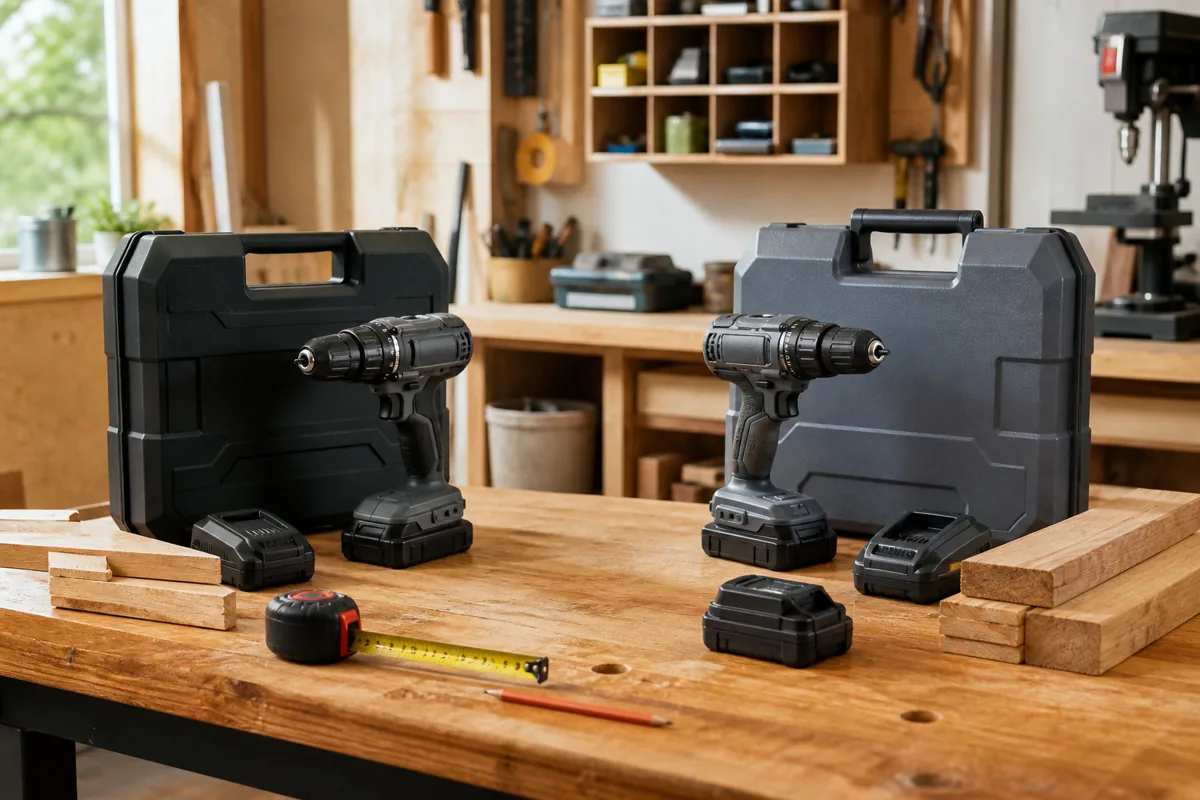
This is the single most important thing on this page. DeWalt’s FlexVolt batteries drop into standard 20V MAX tools. Makita’s XGT 40V batteries do not fit LXT tools — XGT is a separate platform with its own chargers and its own packs.
That is not automatically bad. XGT was designed clean-sheet for high-demand tools, and it performs. But it means a Makita user chasing serious power ends up maintaining two battery systems, while a DeWalt user buys one FlexVolt pack that works in both worlds. If you hate juggling chargers, weight that heavily.
The practical test is short. Write down the most demanding tool you can imagine owning in five years. If that list stops at drills, impact drivers, circular saws, oscillating tools, sanders and a jigsaw, the XGT question never reaches you — LXT covers all of it comfortably. If it includes a large rotary hammer, a rear-handle saw, a chainsaw or serious outdoor equipment, you will eventually be standing in front of a second charger. Decide how you feel about that now, while you own two batteries instead of six.
DeWalt’s answer is not free either. FlexVolt packs are larger, heavier and pricier than standard 20V MAX batteries, and hanging one off a compact drill turns a nimble tool nose-heavy. The elegance is in the compatibility, not in the pack itself.
Build quality and ergonomics
Pick up a Makita LXT brushless drill next to its DeWalt equivalent and the Makita usually feels more balanced, with less vibration and a quieter motor. Over a full day of overhead work, that is not a small thing. Makita’s dust extraction accessories and their finish-sanding line are also excellent.
DeWalt’s advantage is toughness of the outer shell and a service network that is everywhere in the US. Drop both off a scaffold and neither will thank you, but a broken DeWalt is easier to replace on a Saturday afternoon.
If you would rather judge this yourself, three checks work in a store aisle. Hold each tool by the grip with your arm extended and see which one wants to tip forward — that is balance, and it is what your wrist notices after an hour. Run both at no load and listen for pitch and buzz through the handle, because vibration is fatigue you do not feel until the end of the day. Then look at where the metal is: gearcase, chuck collar, belt hook mount. Weight in the right places is durability; weight anywhere else is just weight.
Makita LXT brushless drill kits
The LXT line is where Makita’s reputation was built. If you already own LXT batteries, adding bare tools is the cheapest way to grow a kit.
DeWalt 20V MAX XR drill kits
XR is DeWalt’s brushless mid-tier: strong, widely stocked, and discounted often enough that patience saves real money.
Woodworking: a genuine split
For fine woodworking, Makita’s trim routers, track saws and sanders have a devoted following — the Makita track saw in particular is a favourite among cabinet makers. DeWalt counters with a stronger range of jobsite table saws, miter saws and planers, plus FlexVolt versions of the big cutting tools.
Rough framing and site carpentry: DeWalt. Cabinetry and finish work: Makita. That generalisation holds up more often than it fails.
The reason it holds is flagship priority, not marketing. Makita spends its effort on tools that leave a clean edge, and on dust extraction that connects to them without a drawer full of adapters. DeWalt spends its effort on tools that move material fast and live in a truck. Neither is bad at the other’s specialty, but if your work leans heavily one way, buy the brand whose flagships match and accept being second-best at the rest.
What you will actually pay
Makita rarely discounts hard. DeWalt discounts constantly, particularly around Black Friday and Father’s Day. Over a five-tool build-out, that difference compounds — it is realistic to save several hundred dollars going DeWalt if you buy on promotion and are patient.
Makita’s counter-argument is longevity and resale. Well-kept Makita tools stay usable and sellable for a long time.
Entry band: the first kit
The cheapest way into either brand is a brushed two-tool combo with small-capacity packs, and it is also the most expensive way to own either brand, because those batteries are the first thing you will want to replace. A good entry pick is a brushless drill and impact driver with two mid-capacity packs. A bad one looks identical in both colours: brushed motors, one small battery, chosen on sticker price.
Middle band: growing the kit
Once you have working batteries, bare tools are the entire point of a platform, and this is where DeWalt’s discounting bites hardest. Never buy a second kit when a bare tool exists. Makita’s answer at this band is that the bare tool you add tends to be the one you still reach for years later.
Top band: the specialist tools
Track saws, large rotary hammers, high-capacity packs — discounts thin out on both sides and the decision goes back to capability. Buy the tool that does the job properly, but make sure it eats a battery you already own.
Mistakes that cost real money
Nearly every expensive regret in cordless tools is one of these:
- Owning both. Three Makita and three DeWalt tools means two chargers, two sets of ageing packs and no depth in either range.
- Buying the headline price. Kit discounts are usually funded by the batteries in the box. Check capacity before you celebrate.
- Assuming XGT packs fit LXT tools. They do not, and no adapter makes that a good idea.
- Reading voltage as power. Motor, electronics and pack capacity decide performance, not the number on the label.
- Buying for a one-off job. Rent the tool you need once; buy the tools you pick up weekly.
Who should buy which
Both platforms are deep enough that no reasonable buyer ends up stranded. The split is temperament as much as trade.
- ✔ Choose Makita for comfort, low vibration and all-day handling
- ✔ Choose Makita for finish carpentry, cabinetry and track-saw work
- ✔ Choose Makita if you value quiet, refined tools over raw specs
- ✘ Choose DeWalt for the widest tool range on one battery
- ✘ Choose DeWalt if you want FlexVolt dual-voltage simplicity
- ✘ Choose DeWalt if buying on sale is part of your plan
Skip Makita if your buying is opportunistic rather than planned, because waiting for Makita deals is mostly just waiting. Skip DeWalt if nearly all your work is fine woodworking and your hands are the limiting factor — you will buy Makita finish tools anyway and end up running two platforms by accident.
FAQ
Is Makita 18V the same as DeWalt 20V? Effectively yes. DeWalt measures peak voltage (20V), Makita measures nominal (18V). Same five-cell architecture.
Should I buy into XGT or stay LXT? Stay LXT unless you specifically need 40V-class tools — large rotary hammers, big saws, high-demand outdoor equipment. LXT covers the vast majority of home and site work.
Which is better for a beginner? DeWalt, mostly on price and availability. A beginner does not benefit enough from Makita’s refinement to justify the premium.
Do cross-brand battery adapters work? Some fit physically, but avoid them. They sit between the pack and the tool that are supposed to be managing heat and current together, and they end any warranty conversation immediately.
The short answer
Buy Makita if the tool is in your hands all day and comfort compounds. Buy DeWalt if you want the biggest single-battery ecosystem in America and the best chance of a deal. Both are safe ten-year decisions — the unsafe decision is owning three of each.
Check current prices on Amazon →