What's inside
As an Amazon Associate I earn from qualifying purchases. This post may contain affiliate links at no extra cost to you.
Our Top Picks


The short answer
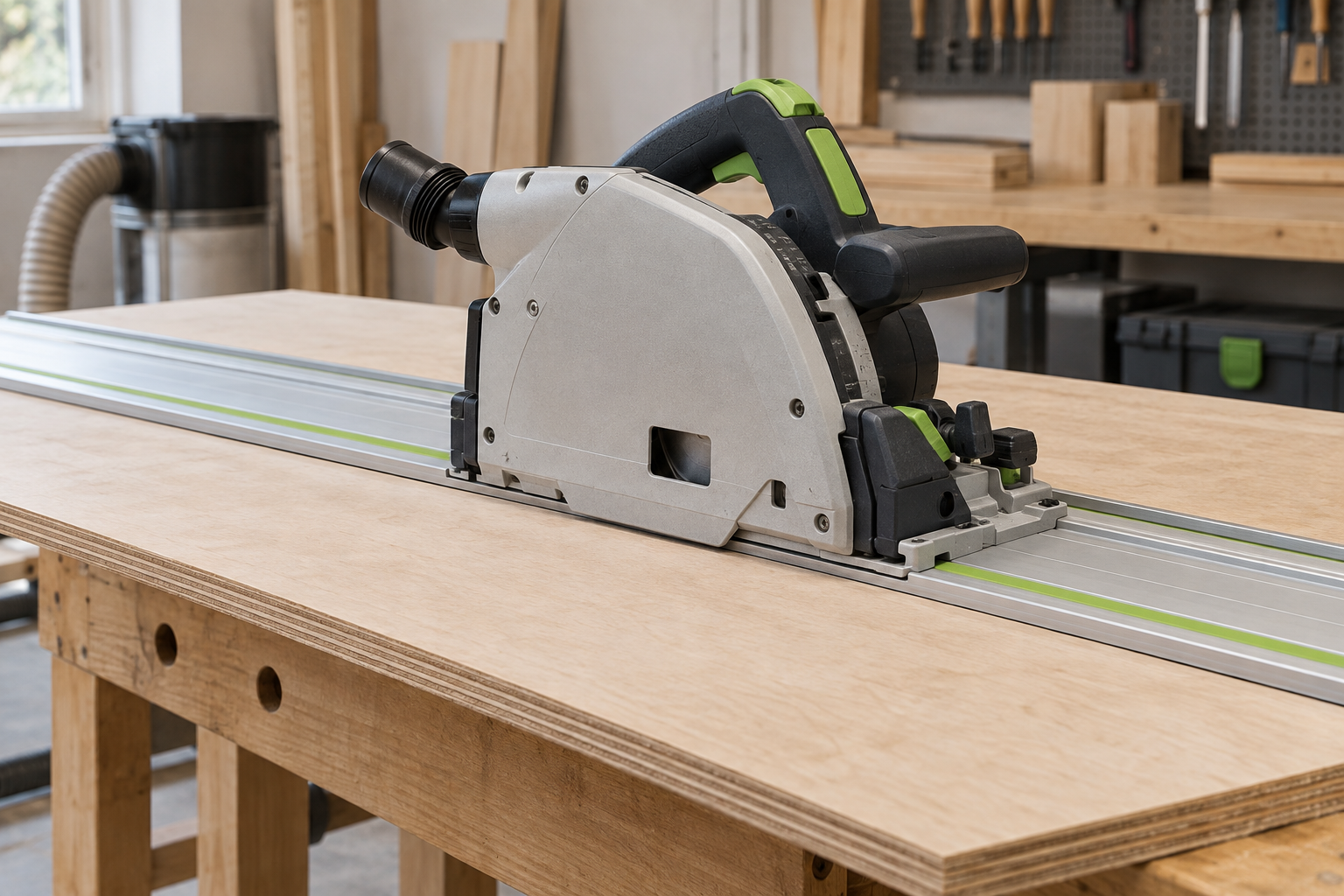
The DeWalt DWS520 and Festool TS 55 are both excellent plunge-cut track saws, but their rail systems are not equally interchangeable. The DWS520 is generally the more flexible choice if you already own Festool-style rails or want to share rails between brands. The TS 55 is the safer buy when you plan to stay inside the Festool system and want the cleanest, most predictable fit.
In practical terms, a DWS520 can usually run on Festool FS guide rails after its rail-adjustment cams are set correctly. A Festool TS 55 should be treated as a Festool-rail saw. Do not assume it will run correctly on DeWalt rails just because the tracks look similar.
As an Amazon Associate we earn from qualifying purchases at no extra cost to you.



Rail compatibility at a glance
| Feature | DeWalt DWS520 | Festool TS 55 |
|---|---|---|
| Native rail system | DeWalt guide rails | Festool FS guide rails |
| Can use its own brand rails | Yes | Yes |
| Use on Festool rails | Generally yes, with careful adjustment | Yes |
| Use on DeWalt rails | Yes | Not a dependable, supported setup |
| Rail connector compatibility | Use the matching brand connector | Use Festool connectors for Festool rails |
| Main compatibility risk | Loose fit or misadjusted cams | Wrong groove dimensions and poor tracking |
Rail compatibility is more than whether the saw sits on top of the track. The base must engage the guide rib with minimal side play, the plunge mechanism must remain stable, and the splinter guard must line up with the blade. A saw that technically fits but shifts 1 mm during a cut is not compatible in any useful shop sense.
How the DeWalt works on Festool rails
The DWS520 uses adjustable guide-track interfaces on its base. These let you tighten the saw against the rail and remove sideways play. That is why it is commonly used with Festool FS rails, whose top profile is close enough for the DeWalt base to engage.
Expect to spend a few minutes setting it up. Put the saw on the rail, loosen the adjustment knobs, and tighten them until the saw slides smoothly without rocking. If the saw binds, back off slightly. If you can lift the rear of the saw and see visible side movement, it is too loose.
This adjustment is important when moving between rail brands. A setting that feels right on a DeWalt rail may be too tight or too loose on a Festool rail. Check the fit at both ends of the track, not just near the saw’s front. Also confirm that the blade will cut on the correct side of the splinter strip before making a finished cut.
The DWS520 is therefore a practical option for a mixed-brand shop. It can be a good reason to choose the DeWalt if you already own several Festool rails but do not want to buy a Festool saw. You can compare current DWS520 track saw and rail options before committing, but verify the rail length and included accessories carefully.
Why the TS 55 is less flexible
The TS 55 is engineered around Festool FS rails. Its base engages the rail using a specific profile and guide arrangement, and Festool’s system depends on close tolerances. DeWalt rails may appear nearly identical, but small differences in the guide rib and underside channels can prevent the TS 55 from seating correctly.
Even if a TS 55 can be placed on a non-Festool rail, that does not mean it will track safely or cut accurately. Common symptoms include noticeable lateral play, the saw lifting slightly during a plunge, or the base rubbing instead of sliding. A cut can start accurately and drift as pressure changes, especially in thick sheet goods.
For that reason, buy the TS 55 with Festool rails unless you have physically tested the exact saw and rail combination. Rail generations and regional versions can differ, so internet claims based on an older TS 55 or a different track are not a substitute for checking the fit.
The Festool system is expensive, but the extra cost makes sense for cabinet work, repeated sheet breakdown, and shops already using Festool connectors, clamps, routers, or guide-rail accessories. If you need a Festool FS guide rail, match its length to the work: a 55-inch rail suits most plywood cuts, while a longer rail is useful for doors and countertops.
Rail length and joining tracks
Neither saw becomes more accurate simply because the rail is longer. Longer tracks help you complete a cut without stopping, but they are also easier to bump out of alignment. For a 48-inch sheet, a 55-inch rail is usually more convenient than joining two shorter rails. A 75-inch rail is useful for full-length cuts through 8-foot panels, but it needs more support and floor space.
When joining rails, use the correct connector and make the joint straight. A connector that is slightly loose can create a step at the joint. The saw may pass over it, but the cut line can show a small change in direction. Set both rails on a flat surface, tighten the connector screws alternately, and check the joint by running the saw over it before cutting valuable material.
Which one should you buy?
Choose the DWS520 if rail flexibility matters, you already own DeWalt cordless or corded tools, or you can buy quality used Festool rails at a good price. Its cross-brand potential is useful, but you must accept manual rail adjustment and confirm compatibility before every unfamiliar rail purchase. If you only need occasional straight cuts, a track saw guide-rail kit from the same brand is the least troublesome route.
Choose the TS 55 if cut quality, plunge control, dust management, and a tightly integrated rail system matter more than mixing brands. The more expensive Festool setup is justified for frequent cabinetry and interior work. It is not automatically worth the premium for breaking down a few sheets of plywood each year; the DeWalt is fine for that job when paired with a straight, properly adjusted rail.
Before buying used, place the actual saw on the actual rail. Check for side play, binding, damaged guide ribs, and a splinter strip that is not badly torn. Those five minutes of testing are more reliable than assuming two rails are interchangeable because their colors and dimensions look alike.