What's inside
As an Amazon Associate I earn from qualifying purchases. This post may contain affiliate links at no extra cost to you.
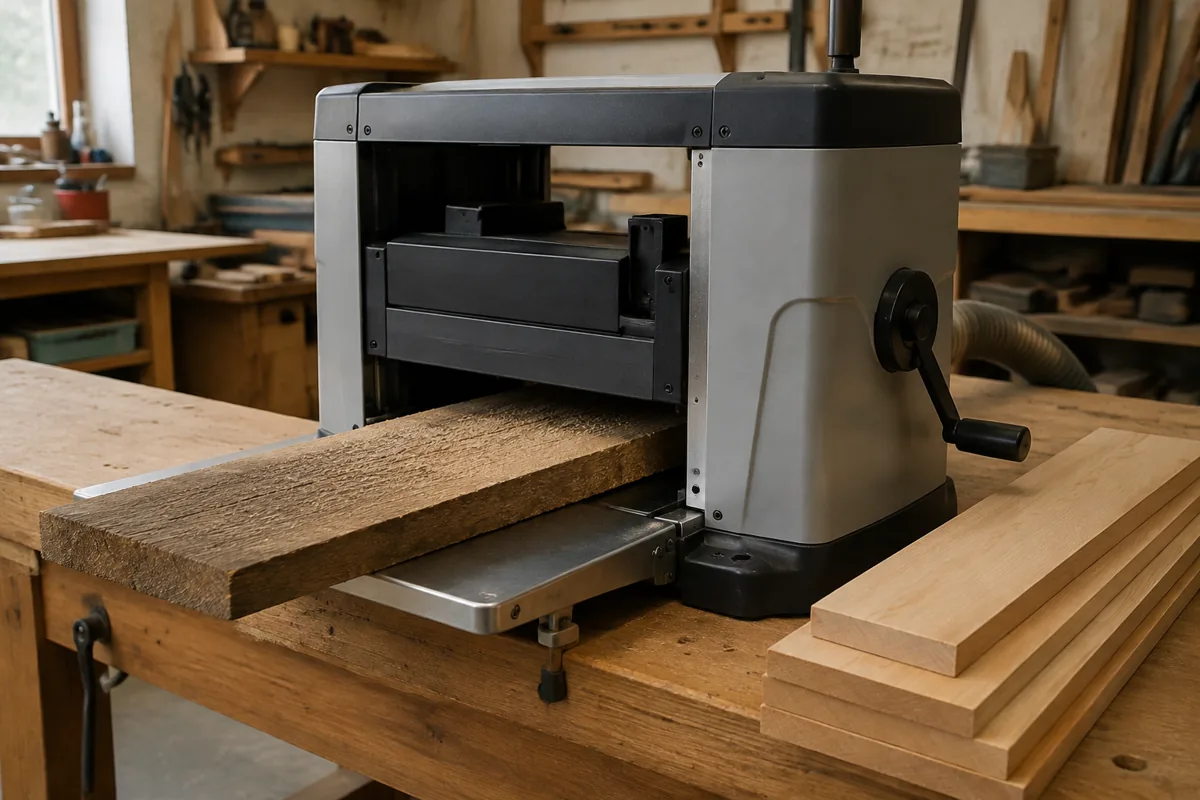
The Makita 2012NB and Bosch PL2632K are both called planers, but they are built for different jobs. The Makita is a benchtop thickness planer: you feed boards through it to make their faces parallel and consistent in thickness. The Bosch is a handheld power planer: you push it across a board to remove material from a surface, edge, or door.
That difference matters more than the weight listed on the box. The Bosch is much easier to carry, but it cannot replace the Makita for dimensioning rough lumber. The Makita is portable for a thickness planer, yet it is still a substantial machine to lift and transport.
As an Amazon Associate we earn from qualifying purchases at no extra cost to you.


Our Top Picks
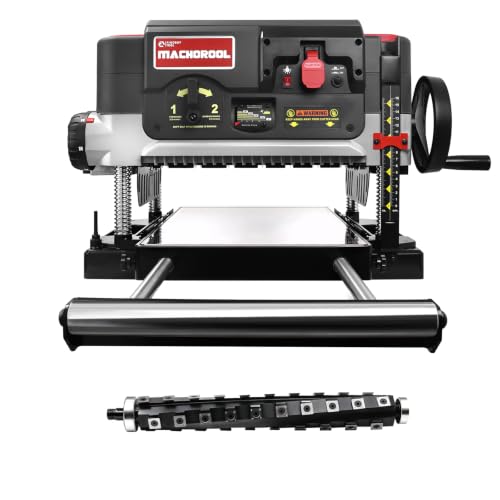 FindBuyTool 13" Benchtop Thickness Planer with Helical Cutterhead22 x 22 x 17.7 inches70 poundsCheck on Amazon

Makita 2012NB vs Bosch PL2632K at a glance
| Feature | Makita 2012NB | Bosch PL2632K |
|---|---|---|
| Tool type | Benchtop thickness planer | Handheld power planer |
| Weight | About 61 lb | About 6.3 lb |
| Cutting width | 12 inches | 3-1/4 inches |
| Maximum depth of cut | Up to 1/8 inch, depending on board width | 1/16 inch per pass |
| Typical use | Making boards uniform in thickness | Fitting doors, leveling edges, and removing localized material |
| Best portability advantage | Compact compared with floor-standing planers | Light enough to carry and use one-handed |
Which planer is easier to carry?
The Bosch PL2632K wins easily. At roughly 6.3 pounds, it can be carried with one hand along with an extension cord or small tool bag. It is practical for taking to a jobsite, carrying upstairs, or keeping in a service van. Its relatively narrow body also fits on a shelf without needing a dedicated stand.
The Makita 2012NB weighs about 61 pounds before you add infeed and outfeed support, a dust hose, and a work surface. Its built-in carrying handles help, and the machine is notably compact for a 12-inch thickness planer. However, it is still a two-handed lift for many users. Moving it from a truck to a bench is manageable; carrying it through a house or up stairs is a different proposition.
If “portable” means you need to move the tool between rooms or jobs regularly, choose a handheld power planer. If it means taking a thickness planer to occasional weekend projects, the Makita’s smaller benchtop format is useful, but do not confuse compact with light.
Where the Bosch is the better portable tool
The Bosch is suited to jobs where only part of a board needs material removed. A common example is a door that rubs at the top or latch side. You can set the depth to a small cut, make a pass, check the fit, and repeat. It is also useful for trimming proud framing, flattening a rough edge, and chamfering corners.
Its 3-1/4-inch shoe is both a strength and a limitation. It keeps the tool compact, but it means you must make overlapping passes on wider surfaces. That makes it difficult to produce a reliably flat, uniform face across a wide board. The operator’s pressure and stance affect the result, especially at the beginning and end of a pass. A new user can easily create a dip at the leading edge or a step between passes.
A handheld planer also throws chips aggressively unless connected to dust collection or fitted with a suitable chip bag. Keep both hands on the tool when possible, support the work securely, and avoid starting a cut with the blade already engaged against an unsupported edge.
Where the Makita is worth carrying
The Makita 2012NB is the correct tool for reducing board thickness consistently. Feed a rough board through the machine, make shallow passes, and the cutterhead removes material across the full 12-inch width. That is a fundamentally different result from working a surface freehand.
Its compact design is valuable in a small shop. The folding tables reduce storage space, and the planer can sit on a sturdy bench when needed, then be put away afterward. The automated head lock helps reduce snipe, although setup and support still matter. Long boards need proper infeed and outfeed support; otherwise, their weight can lift or drop the board as it enters or exits, leaving thinner sections at the ends.
The main carrying failure mode is underestimating the machine’s weight. Lifting it by the tables, dust hood, or loose accessories is poor practice. Use the intended handles, keep the cutterhead secured, and get help if the route includes stairs or awkward footing. For frequent jobsite use, a planer stand or wheeled cart can make the Makita far more practical than carrying it by hand.
Cut quality and job fit
Choose the Makita when the finished dimension matters: cabinet parts, furniture stock, shelving, and rough-sawn lumber. It gives you a repeatable thickness and leaves both faces parallel when the board is fed correctly. You still need to account for grain direction, board support, and the number of passes.
Choose the Bosch when the job is fitting or shaping rather than dimensioning. It is faster to deploy for one sticking door than setting up a thickness planer. It also handles edge work that would be inconvenient or impossible on the Makita.
Neither tool is a jointer. The Makita makes faces parallel to each other, but it does not automatically make a warped board flat on one face. The Bosch can flatten a local high spot, but it is not a substitute for a jointer, router sled, or hand plane when you need a broad, reference-flat surface.
Which one should you buy?
Buy the Bosch PL2632K if carrying ease is the deciding factor, your work involves doors and edge adjustments, or you only remove small amounts of material at a time. The cheaper handheld option is perfectly adequate for those jobs, and buying a 61-pound thickness planer would add cost, storage demands, and setup for capability you may never use.
Buy the Makita 2012NB if you regularly process rough lumber or need consistent thickness across boards up to 12 inches wide. It is the easier thickness planer to store and transport, but it is not genuinely light. Plan on a solid bench, dust collection, and a safe way to move it.
If your work includes both tasks, the tools complement rather than replace each other. Use the Makita for controlled thicknessing and the Bosch for final fitting and localized removal. For shoppers comparing benchtop thickness planers, weight and carrying handles should be part of the decision, but cutting capacity and the type of work should come first.