What's inside
As an Amazon Associate I earn from qualifying purchases. This post may contain affiliate links at no extra cost to you.
Our Top Picks
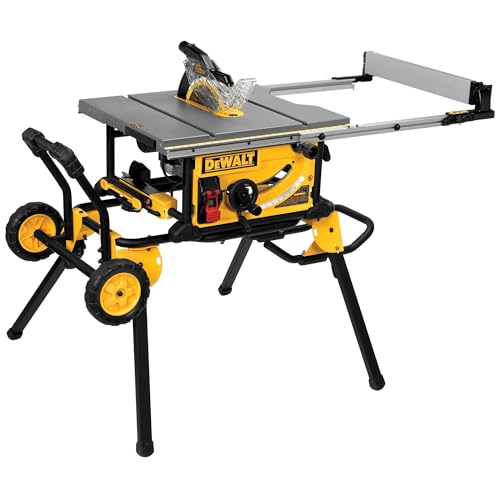
 DEWALT 15 Amp 8-1/4 in. Compact Portable JobsiteOne Size22.75 x 22.75 x 13 Inches54 poundsCheck on Amazon


The short answer
The Bosch GTS15-10 has the better rip capacity by a clear margin. Its fence travels far enough to rip boards and sheet goods up to about 32-1/8 inches wide on the right side of the blade, compared with 24-1/2 inches for the DeWalt DWE7485.
That does not automatically make the Bosch the better compact table saw for everyone. The DeWalt is smaller, lighter, easier to carry, and usually the more sensible choice for trim work, flooring, shelving, and job-site cuts where 24-1/2 inches is enough. Choose the Bosch when cutting full-width plywood is a regular job and you want more table-saw capacity without moving up to a much larger cabinet-style machine.
As an Amazon Associate we earn from qualifying purchases at no extra cost to you.


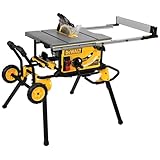

DeWalt DWE7485 vs Bosch GTS15-10 specifications
| Specification | DeWalt DWE7485 | Bosch GTS15-10 |
|---|---|---|
| Blade diameter | 8-1/4 inches | 10 inches |
| Maximum right rip | 24-1/2 inches | 32-1/8 inches |
| Maximum left rip | 12 inches | 14-1/2 inches |
| Motor | 15 amps | 15 amps |
| Maximum cutting depth at 90 degrees | 2-9/16 inches | 3-1/8 inches |
| Approximate tool weight | 46 pounds | About 71 pounds |
What the rip capacity means in practice
The DWE7485 can rip a 24-inch-wide piece from a sheet of plywood in one setup, assuming the sheet is supported properly. That covers many cabinet parts, narrow countertops, shelves, flooring strips, and most everyday dimensional lumber. Its rack-and-pinion fence adjustment is quick and repeatable, which is one reason this saw remains easy to use despite its smaller table.
The Bosch reaches 32-1/8 inches, giving it roughly 7-5/8 inches more right-side capacity. That difference matters when breaking down 4-by-8-foot plywood. A 30-inch cabinet side, for example, is within the Bosch’s stated range but beyond the DeWalt’s fence capacity. With the DeWalt, you would need a circular saw and guide, an auxiliary fence setup, or a second operation.
Neither saw turns a small table into a complete sheet-goods station. A full plywood panel can weigh 50 pounds or more and is awkward to control on a compact tabletop. Use outfeed support, side support, or a helper. If the panel hangs off the table, it can lift the workpiece into the blade, pinch the fence, or pull the saw out of alignment. Capacity on the specification sheet is only useful when the material is supported safely.
Where the DeWalt DWE7485 is better
The DeWalt’s biggest advantage is portability. At roughly 46 pounds, it is much easier to load into a vehicle, carry upstairs, or move around a workshop than the Bosch. The footprint is also easier to accommodate in a small garage. If you set up and pack away for every job, that weight difference becomes more important than the extra Bosch capacity.
Its 8-1/4-inch blade still cuts 2-9/16 inches deep at 90 degrees, enough for standard 2-by lumber in a single pass. The rack-and-pinion fence is a strong feature: turn the adjustment knob, lock the fence, and the front and rear ends stay aligned more reliably than on many inexpensive sliding-fence saws.
The limitation is not just the 24-1/2-inch number. The smaller tabletop gives large workpieces less support, and the reduced blade diameter leaves less cutting depth for thick hardwood or stacked material. Do not compensate by forcing the feed. A slow, steady feed with a sharp blade is safer and produces a cleaner edge than pushing hard through a dull blade.
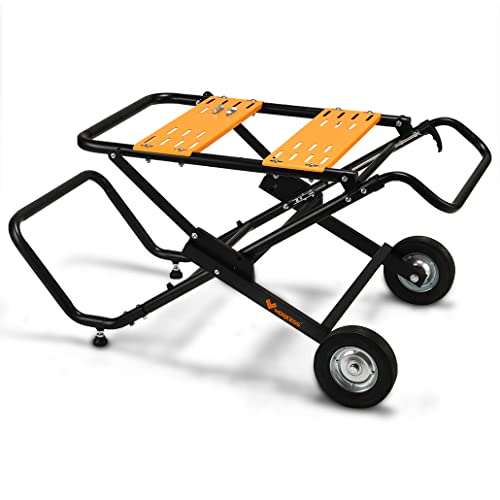
For a portable saw in this size class, the portable table saw stand is worth considering if you routinely cut long boards. A stable stand reduces tipping and gives you a better working height, but it also makes the setup less grab-and-go.
Where the Bosch GTS15-10 is better
The Bosch earns its larger size with a larger table, 10-inch blade, and substantially greater rip range. The 3-1/8-inch maximum depth at 90 degrees gives it more room for thick stock, although the actual result depends on blade kerf, blade condition, and the material. It is the more capable choice for cabinet parts, wide shelving, furniture panels, and repeated plywood work.
The Bosch also uses a soft-start motor, which reduces the abrupt jolt when the saw starts. That is useful on a compact stand, where sudden torque can make the machine shift. Its motor runs at a lower no-load speed than the DeWalt, but blade speed alone does not determine cutting performance. A suitable 10-inch blade and an appropriate feed rate matter more than comparing the headline RPM figures.
The trade-off is handling. At about 71 pounds, the GTS15-10 is portable in the broad sense, but it is not a pleasant one-person carry over stairs. Its larger table and fence assembly also take more storage space. If most of your cuts are under 24 inches wide, you may be carrying and storing extra saw for capacity you rarely use.
Fence accuracy, blades, and safety
Both saws need a setup check before serious work. Verify that the blade is parallel to the miter slot, then check that the fence is parallel to the blade. A fence that toes inward toward the blade can trap the workpiece and cause burning or kickback. Do not assume a factory setup remains correct after transport.
Use the supplied guard and riving knife unless a specific operation requires another approved configuration. Keep hands out of the blade path, use a push stick for narrow rips, and never reach over a spinning blade to retrieve an offcut. For plywood, a fine-tooth table-saw plywood blade can reduce splintering; for framing lumber, a general-purpose or combination blade is usually more practical.
Which one should you buy?
Buy the DeWalt DWE7485 if portability, quick setup, and lower cost matter more than wide-sheet capacity. It is the better fit for a remodeler, installer, or hobbyist who mostly rips boards and panels up to 24 inches. The cheaper option is entirely adequate when your material rarely exceeds that width.
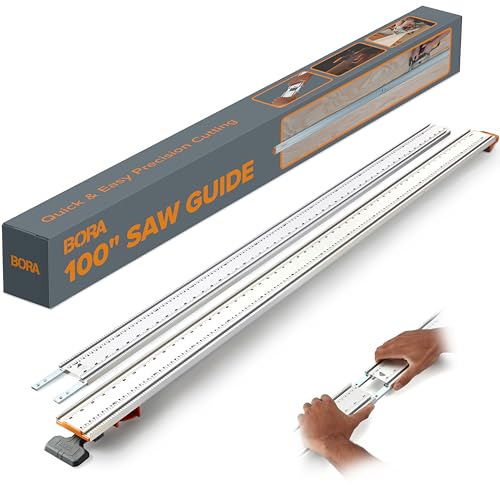
Buy the Bosch GTS15-10 if you regularly rip plywood wider than 24-1/2 inches, need the extra cutting depth, or want a larger working surface and 10-inch blade. The additional capacity can eliminate secondary cuts and reduce the need for a separate circular saw guide rail for plywood.
For pure rip capacity, the Bosch wins decisively. For carrying, storing, and handling, the DeWalt wins. The deciding question is simple: will you regularly cut wider than 24-1/2 inches? If not, the DWE7485 avoids paying for size you may not use. If yes, the GTS15-10’s extra 7-5/8 inches is a functional advantage, not just a larger specification.