What's inside
As an Amazon Associate I earn from qualifying purchases. This post may contain affiliate links at no extra cost to you.
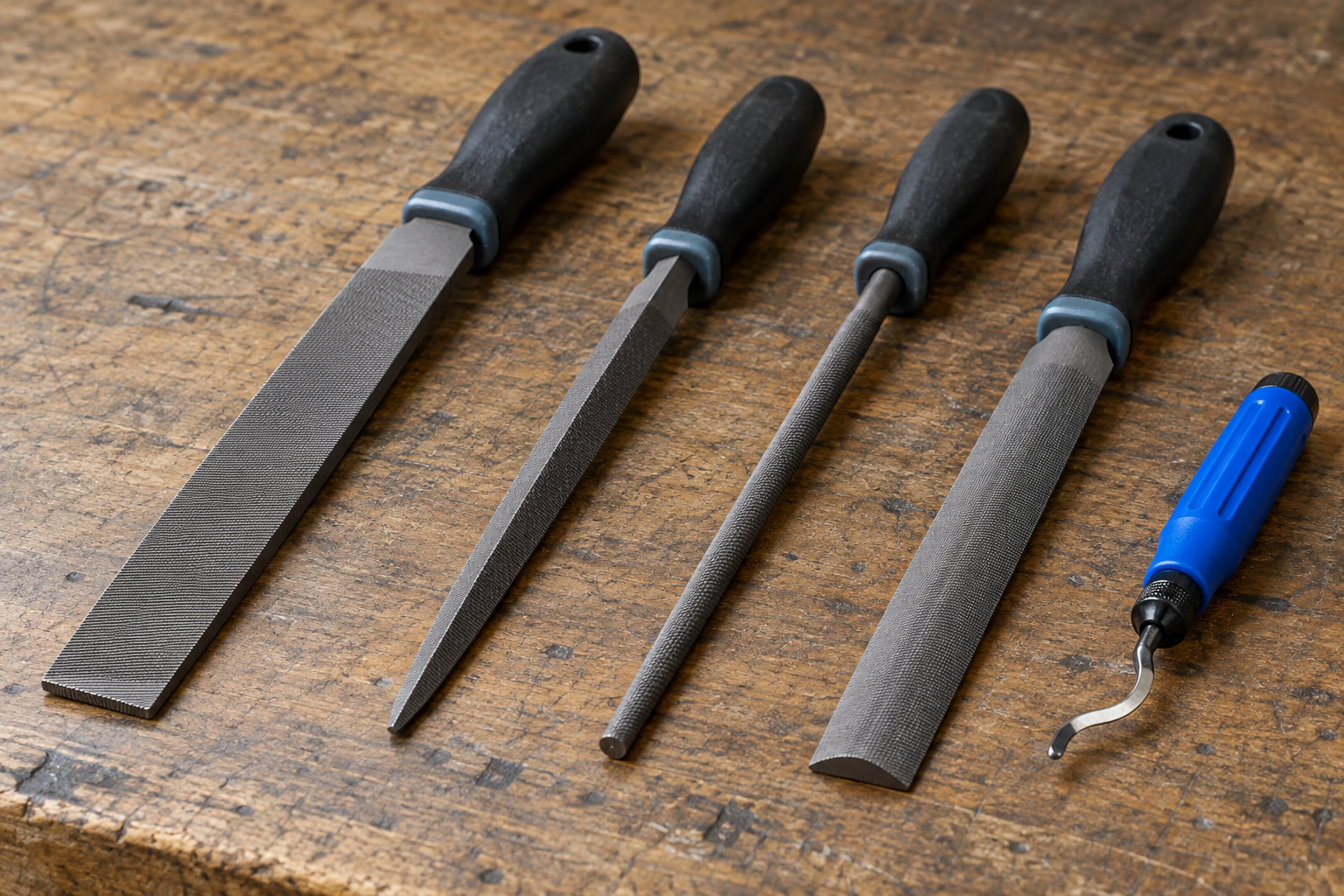
For shaping aluminum by hand, a bastard-cut file is usually the better starting point. A second-cut file gives a smoother surface and more control, but it removes metal noticeably slower. The right choice depends on whether you are still changing the part’s shape or are already close to the finished dimension.
As an Amazon Associate we earn from qualifying purchases at no extra cost to you.



Our Top Picks
What “bastard-cut” and “second-cut” mean
These names describe tooth spacing, not file quality. A bastard-cut file has larger, more widely spaced teeth. It bites aggressively and clears material quickly. A second-cut file has finer teeth, so it takes smaller chips and leaves a more refined surface.
On common 10- to 12-inch flat files, a bastard cut may have roughly 10 to 14 teeth per inch across its working face. A second cut is often in the range of 16 to 24 teeth per inch, though manufacturers vary. Do not treat those figures as a universal standard; tooth spacing and tooth shape matter as much as the label.
For most aluminum work, buy a bastard-cut aluminum hand file for stock removal and a second-cut file only if you need a cleaner finish or tighter control near the final line.
Bastard-cut versus second-cut
| Factor | Bastard cut | Second cut |
|---|---|---|
| Material removal | Fast; suited to reducing high spots and changing profiles | Moderate to slow; suited to refining an existing shape |
| Surface finish | Coarser, with more visible file marks | Smoother and easier to blend |
| Control near a scribe line | Less forgiving; easy to overshoot with heavy pressure | Better for sneaking up on the line |
| Clogging risk in aluminum | High if the teeth are fine or the file is pushed too hard | Very high unless the file is designed for soft metals |
| Best use | Rough shaping, edge correction, removing casting marks | Final fitting, smoothing, and light blending |
Which one should you buy?
Choose bastard cut when you need to remove more than about 1 mm of material, correct an uneven edge, or shape a rough-cut blank. It is also the more practical single-file purchase for brackets, plates, tubing, and general repair work. A 10- or 12-inch flat file offers a useful balance of reach and control; shorter files work in tight spaces but remove less per stroke.
Choose second cut when the part is already close to size, when the edge must look presentable, or when a bastard file keeps removing material faster than you can judge. It is particularly useful for fitting a cover, hinge plate, or mating edge where a fraction of a millimeter matters.
If you can buy only one, get a coarse or bastard-cut file specifically sold for aluminum or other soft metals. If the job includes both rough shaping and visible finishing, a two-file aluminum hand file set is usually more useful than one expensive general-purpose file.
The aluminum clogging problem
Aluminum is soft and gummy compared with steel. Instead of breaking into clean chips, it can smear across the teeth and pack the gullets. Once clogged, the file skates over the work, raises heat, and may leave deep scratches or rounded edges. Pressing harder usually makes this worse.
Large teeth help, but tooth geometry matters more than the cut name alone. Look for files labeled for aluminum, nonferrous metals, or soft metals. Some use a high-clearance tooth pattern or chipbreaker grooves that resist loading. A normal fine second-cut steel file can clog almost immediately on soft aluminum.
Keep a file card or stiff brass brush beside the vise. Brush in the direction of the teeth, not across them, and clean the file whenever the grooves begin to fill. A file card with a brass brush is inexpensive insurance. Do not use a file that has been contaminated with steel filings on a finished aluminum surface unless you clean it first; embedded steel particles can leave rust-colored marks later.
A reliable filing method
Mark the finished boundary with a scribe, then add a second reference line about 0.5 mm to 1 mm outside it. Remove most of the waste with the bastard file while staying on the waste side. Checking often is faster than trying to recover from an overshoot.
Clamp the work firmly, but use soft jaws or thin cardboard if the surface will show. Hold the file with both hands and push on the forward stroke. Use moderate pressure and lift the file on the return stroke; dragging it backward can rub clogged chips into the surface. A stroke of roughly 150 to 250 mm is effective on a typical flat edge.
Keep the file flat for a square edge. For a broad surface, cross-file first at about 45 degrees, then draw-file with the file held nearly perpendicular to the edge. Draw-filing produces a cleaner appearance, but it removes little material and is best left to the second-cut stage.
Use light pressure as you approach the scribe line. A practical sequence is bastard cut until roughly 0.5 mm remains, then second cut until the line is just reached. For a close-fitting part, stop slightly short, test the fit, and remove material in small passes rather than assuming the scribe line represents a perfect final dimension.
When neither file is the best choice
For heavy stock removal, a coarse rasp or carbide burr may be faster, but both can leave a difficult surface to clean up. For thin aluminum sheet, a file can catch and bend the edge; deburring tools, abrasive blocks, or a fine mill file may give better control. A smooth-cut file can be useful for the final finish, but it is easily clogged and rarely makes sense as the only file.
Skip ordinary body filler, oil, or random lubricants as a cure for clogging. They can turn aluminum dust into paste and make the file harder to clean. Clean teeth, a suitable coarse cut, light pressure, and frequent inspection solve most problems. Wear eye protection, and avoid using a file without a properly fitted handle; the tang can cause a serious puncture injury if the file slips.