What's inside
As an Amazon Associate I earn from qualifying purchases. This post may contain affiliate links at no extra cost to you.
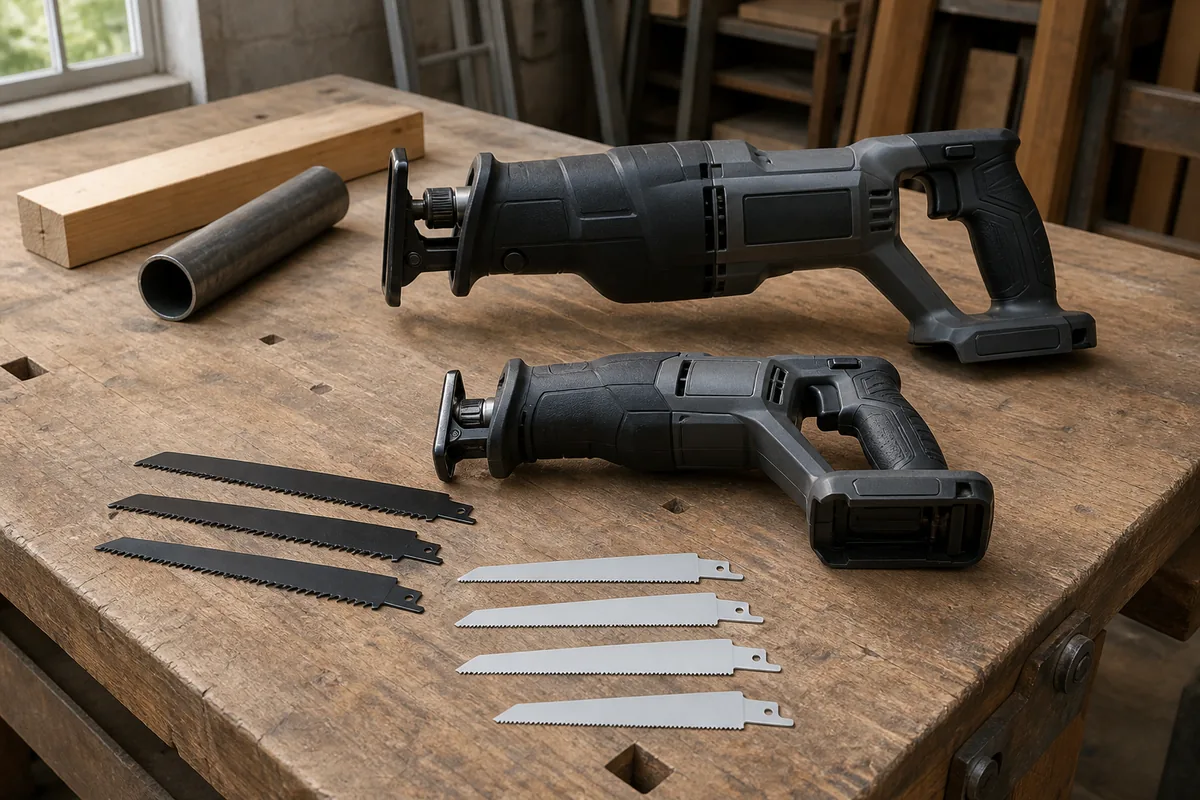
Working between wall studs is where a full-size reciprocating saw becomes awkward. The tool body hits the neighboring stud, the shoe cannot sit flat, and the blade may wander into wiring or plumbing. A compact reciprocating saw solves much of that problem by shortening the tool’s nose and reducing its overall height. The trade-off is less cutting speed, shorter battery runtime, and more vibration in some models.
For most remodeling work, the best choice is a compact 12V one-handed saw with a short shoe-to-grip length, a variable-speed trigger, and an orbital-action switch that can be turned off. A compact 18V or 20V saw makes more sense when you regularly cut thick lumber, cast-iron pipe, or demolition materials.
As an Amazon Associate we earn from qualifying purchases at no extra cost to you.


Our Top Picks
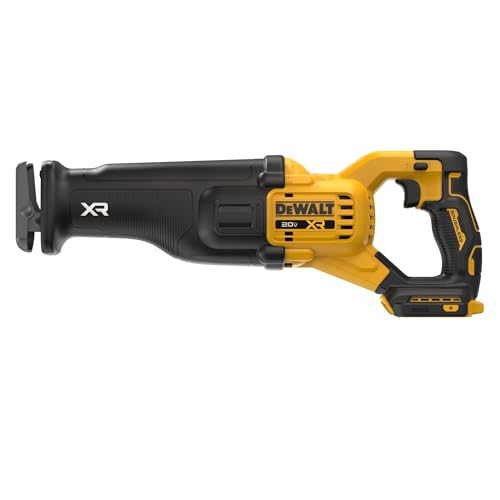 DEWALT 20V MAX* XR Brushless Cordless Reciprocating SawSTANDARD19.3 x 4.2 x 7.4 inches4.5 PoundsCheck on Amazon

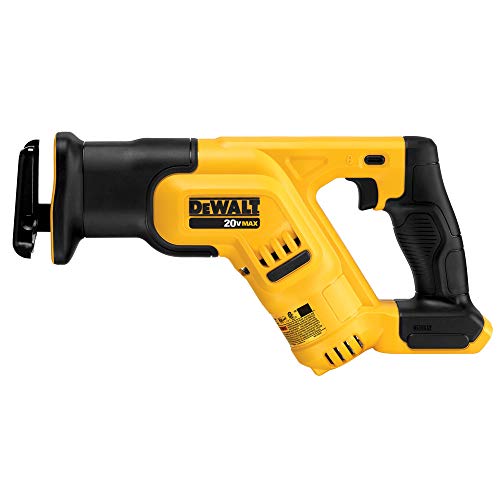

Best overall: a compact 12V one-handed reciprocating saw
A tool in the 12V class is the easiest size to control inside an open stud bay. The short body lets you approach a nail, pipe, or piece of blocking without the rear of the saw colliding with the opposite stud. It is also light enough to hold at shoulder height or at arm’s length while making a controlled plunge cut.
Look for a model with a stroke length around 5/8 to 3/4 inch and a no-load speed near 3,000 strokes per minute. That combination cuts ordinary 2x lumber and copper or plastic pipe well without making the saw excessively aggressive. A tool with a pivoting or adjustable shoe is useful, but it should lock firmly; a loose shoe makes the saw jump when the blade catches.
Examples include compact 12V reciprocating saws from the major cordless systems. Buy the bare tool if you already own compatible batteries. A kit can be the better value if you need the charger and battery, but compare the included battery size: a 1.5Ah or 2.0Ah pack keeps the tool light, while a 4.0Ah pack provides noticeably longer runtime at the cost of bulk.
Compact saws compared
| Type | Best use | Typical strengths | Main limitation |
|---|---|---|---|
| 12V one-handed saw | Cutting between studs, pipe, electrical boxes, and small blocking | Smallest size, low weight, good control | Slower in thick lumber and demolition |
| 18V/20V compact saw | Repeated framing cuts and heavier remodeling | More power and longer runtime | Heavier and more likely to hit the opposite stud |
| Small corded reciprocating saw | Occasional work near an outlet | Consistent power and no battery limit | Cord gets in the way; usually less convenient in a wall cavity |
| Oscillating multi-tool | Flush cuts and very precise shallow cuts | Excellent control and minimal blade travel | Much slower for cutting through studs or long sections of pipe |
Features that matter between wall studs
Overall length matters more than headline motor power. Measure from the front of the shoe to the back of the battery or motor housing. A difference of 2 inches can determine whether you can keep the blade square in a 14 1/2-inch stud bay. A narrow motor housing also helps, especially when the saw must be held sideways.
Variable speed is essential. Start slowly to establish the cut, then increase speed once the blade is tracking. A trigger lock is less important for this work because it can encourage pushing through a stuck blade, but a bright work light is useful in the shadow of a wall cavity.
Choose a tool with tool-free blade release, preferably positioned where you can operate it while wearing gloves. The release should clamp both standard reciprocating-saw blades and shorter compact blades. Short blades reduce flex and are easier to control; a 6-inch blade is usually more manageable than a 9-inch blade in a stud bay.
Orbital action is helpful when cutting clean wood quickly, but it makes the saw more aggressive and increases movement at the tip. Keep orbital action off for metal, plastic pipe, finish work, and any cut close to hidden materials. If the saw has no orbital switch, it is still usable, but you will need to control feed pressure more carefully.
When the cheaper 12V option is enough
A less expensive 12V saw is fine for cutting a few 2x4s, removing drywall backing, trimming plastic pipe, or cutting nails that hold blocking in place. It is often the smarter purchase for a homeowner who only opens walls occasionally. Use a sharp, appropriate blade and let the blade do the work; forcing a small saw is the quickest way to drain the battery and overheat the motor.
Step up to an compact 18V or 20V reciprocating saw if you will cut more than a dozen studs, remove nailed-in framing, or work on cast iron and thick steel. The extra power reduces stalls, but the added weight becomes tiring when the cut is above your head. It also does not eliminate the need for a short blade and careful positioning.
Blade choice and cutting technique
Use a 6-inch, 6-to-10-teeth-per-inch blade for fast cuts in ordinary wood. For nail-embedded lumber, choose a demolition blade rated for wood with nails. For clean metal cuts, use a bi-metal blade in the roughly 14-to-24-teeth-per-inch range. Finer teeth cut more smoothly but take longer and can clog in soft material.
Before cutting, shut off power and water where appropriate, and use a stud finder or inspection opening to locate cables and pipes. Do not assume a cavity is empty because the surface looks clear. Keep the shoe pressed against the work, start at low speed, and stop if the blade suddenly binds, sparks, or changes direction.
For a flush cut against a stud, a compact reciprocating saw works, but an oscillating multi-tool is often safer and cleaner. For general cutting inside a wall, however, the compact 12V reciprocating saw offers the best balance of reach, speed, and control. If your work involves frequent heavy demolition, choose the compact higher-voltage class; otherwise, spend the difference on good blades and a second small battery.