What's inside
As an Amazon Associate I earn from qualifying purchases. This post may contain affiliate links at no extra cost to you.
Our Top Picks
 SEESII Reciprocating Saw Cordless with 2 x 4.0Ah13.77 x 10.62 x 3.54 inches7.7 poundsCheck on Amazon

Choosing the Right Cutter for Steel Pipe Demolition
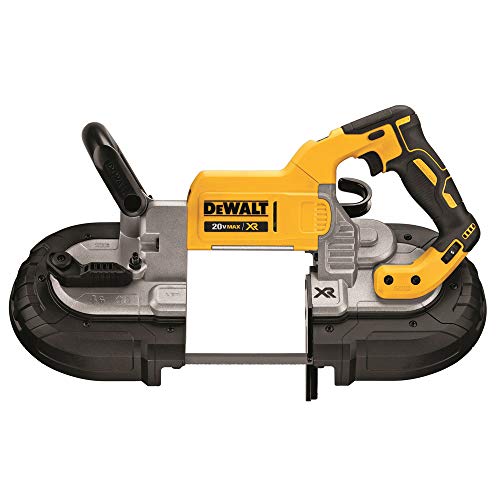
For demolishing steel pipe, a reciprocating saw is usually the cheaper and more versatile choice. A portable band saw is usually the faster, cleaner, and more controlled choice when you have repeated cuts to make.
The important distinction is how the tool handles the work. A reciprocating saw drives a short blade rapidly back and forth. It tolerates awkward access and can cut through pipe, brackets, bolts, wood, and insulation. A portable band saw runs a continuous toothed blade around two wheels. The blade cuts with less vibration and stays engaged with the pipe, but the tool needs more room and is less useful for general demolition.
As an Amazon Associate we earn from qualifying purchases at no extra cost to you.


For one or two cuts in an old steel line, buy or use a reciprocating saw with metal-cutting blades. For a large pipe rack, boiler room, or repeated cuts on thick-wall pipe, a portable metal-cutting band saw earns its higher price through speed and reduced fatigue.
Portable Band Saw vs. Reciprocating Saw
| Factor | Portable band saw | Reciprocating saw |
|---|---|---|
| Typical best use | Repeated, straight cuts through pipe and tubing | Mixed demolition and difficult access |
| Cut speed | Usually faster on thick steel pipe | Fast enough, but slows noticeably in heavy wall |
| Cut control | Stable, low vibration, square cut | More blade wandering and hand movement |
| Access | Needs clearance around the pipe for the blade frame | Can reach into tighter openings |
| Noise and vibration | Lower vibration and generally less harsh | More vibration, noise, and operator fatigue |
| Blade cost | Higher individual blade cost | Lower cost per blade, but blades can fail quickly |
| Versatility | Primarily for metal stock | Metal, wood, plastic, nails, bolts, and demolition work |
Where the Portable Band Saw Wins
A band saw is the better production tool. Its continuous blade has many teeth in contact with the pipe at once, so it does not hammer the work the way a reciprocating blade does. That matters when cutting 2-inch schedule 40 pipe, larger structural tubing, or thick fittings. The tool is easier to hold on a marked cut line, and the finished cut is commonly square enough to reuse the remaining section.
Low vibration is more than a comfort feature. It reduces the chance of losing control when the pipe breaks through at the end of the cut. It also puts less stress on the blade and your wrists. On repeated cuts, the difference becomes substantial: a band saw can make dozens of cuts with less fatigue, while a reciprocating saw may leave your hands numb after a long session.
Many portable band saws can cut stock roughly 4 to 5 inches in diameter, with deep-cut versions handling more. Check the published capacity rather than assuming a tool will cut a large pipe because it has a powerful motor. The frame must fit around the pipe, and the blade needs room to complete the arc.
The main failure mode is binding. If the pipe sags, twists, or closes the kerf, the band can stall or jump off its wheels. Support long sections on both sides of the cut, and make sure the pipe is fully depressurized and disconnected before cutting.
Where the Reciprocating Saw Wins
A reciprocating saw wins when access is poor or the demolition is unpredictable. Its narrow blade can enter a gap between a pipe and a wall, cut flush to a bracket, and work around elbows or nearby fittings. You can switch from a long demolition blade to a short bi-metal metal blade without changing tools.
It is also the better choice when the pipe is surrounded by nonmetallic material. A band saw is likely to snag on wood, plastic, or loose insulation. A reciprocating saw can handle a mixed cut, although the blade may be ruined by masonry, hardened fasteners, or excessive debris.
The trade-off is control. A long blade can flex and wander, especially when cutting thin-wall pipe. The teeth may grab the edge and bend the blade, or the blade can break when the cut closes. Use the shortest blade that reaches through the material, keep both hands on the saw when possible, and avoid forcing the shoe away from the work.
For occasional work, a cordless cordless reciprocating saw is often the sensible purchase. It is easier to carry up stairs and into mechanical spaces than a corded tool, and modern batteries provide enough runtime for intermittent pipe cutting. Keep a second battery available if the job involves more than a few dozen cuts.
Blade Selection Matters More Than Motor Power
Use a variable-pitch bi-metal blade for general steel pipe. A blade in the roughly 14/18 teeth-per-inch range is a useful starting point for medium-wall pipe. Finer blades, such as 18/24 TPI, work better on thin-wall tubing and sheet metal. Coarser blades cut faster in thick steel but need enough material to keep several teeth engaged.
For a reciprocating saw, choose a blade long enough to pass completely through the pipe without excessive extra length. A 6-inch blade is easier to control than a 9- or 12-inch blade in tight areas. For a band saw, install the blade in the correct direction and match its pitch to the pipe thickness. Running too fast creates heat, rounds the teeth, and can strip them from the blade.
Do not use an abrasive cutoff wheel as a substitute without considering the surroundings. Abrasive wheels create sparks, hot fragments, fumes from coatings, and a rougher cut. A toothed blade is usually the safer option around painted pipe, insulation, and occupied mechanical spaces, subject to the site’s fire and hot-work rules.
A Safer Pipe-Cutting Procedure
First identify what the pipe carried. Drain, isolate, lock out, and verify pressure before cutting. A line that looks abandoned may contain steam, fuel, refrigerant, compressed air, or hazardous residue. Cutting a pipe with trapped pressure can turn a routine demolition job into an uncontrolled release.
Support the section being removed. Steel pipe can pinch a blade as its weight shifts, and a falling section can injure someone even after the cut is complete. Mark the cut, clear bystanders, and inspect for electrical cables, combustible insulation, and hidden supports.
Wear eye protection and hearing protection. Gloves can improve grip, but keep them away from moving blades and do not wear loose sleeves. With either tool, let the blade do the work. Excessive pressure increases heat, vibration, blade deflection, and the chance of a broken blade.
Which Tool Should You Buy?
Buy the reciprocating saw if you need one tool for general remodeling, pruning, bolt cutting, and occasional steel pipe demolition. It is the cheaper option, and its access advantage often outweighs its slower cutting speed.
Buy the portable band saw if most of the job involves repeated cuts on accessible steel pipe or tubing. The higher purchase price is justified when clean cuts, lower vibration, and reduced blade wandering save time. If you already own a reciprocating saw, start with quality bi-metal reciprocating blades for steel rather than buying a second tool immediately.
In short, the band saw is the specialist for controlled production cuts. The reciprocating saw is the more practical demolition tool when the pipe is buried in clutter, attached to other materials, or only a small part of a larger teardown.