What's inside
As an Amazon Associate I earn from qualifying purchases. This post may contain affiliate links at no extra cost to you.
Cutting thick hardwood stair treads at an angle is a demanding job for a circular saw. The saw must hold a bevel accurately, leave enough blade depth after tilting, and keep moving without bogging down in dense oak, maple, or hickory. A basic 7-1/4-inch saw can work, but it is not automatically the best choice.
As an Amazon Associate we earn from qualifying purchases at no extra cost to you.


Our Top Picks
 DEWALT FLEXVOLT 60V MAX* Circular Saw with BrakeOne Size15.35 x 8.23 x 9.65 inches8.2 poundsCheck on Amazon
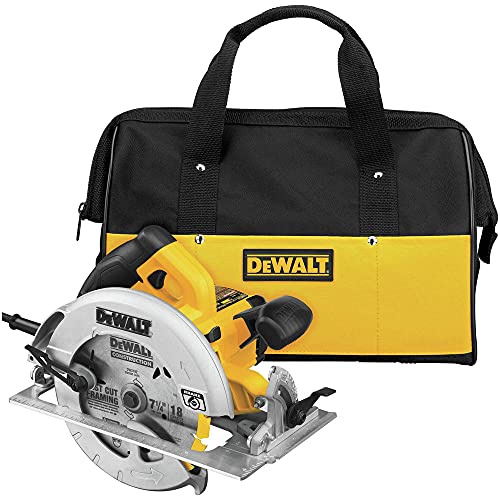
 DEWALT FLEXVOLT 60V MAX* Circular Saw for FramingOne Size18 x 9 x 8.2 inches10.9 PoundsCheck on Amazon


What matters most for bevel cuts
Start with blade capacity. A typical 7-1/4-inch circular saw cuts about 2-1/2 inches deep at 90 degrees, but only around 1-11/16 inches at 45 degrees. That is enough for a 1-inch or 1-1/4-inch tread, and sometimes enough for a 1-1/2-inch tread if the saw is set carefully. It may not fully cut a 2-inch tread in one pass.
An 8-1/4-inch saw usually offers roughly 2-15/16 inches of capacity at 90 degrees and about 2-1/8 inches at 45 degrees. That extra margin is useful when beveling thick stock, particularly if the tread has a rounded front nosing or the cut must pass through a temporary clamping guide.
Bevel adjustment is equally important. Look for a rigid shoe, a positive stop at 45 degrees, and a scale that is easy to read while the saw is on the work. Cheap shoes can flex when pushed through hardwood, changing the cut angle by a degree or two. That is enough to create a visible gap against a riser or skirt board.
The best saw type for stair treads
For most stair-tread work, the best all-around choice is a powerful corded 7-1/4-inch or 8-1/4-inch sidewinder with a quality 40-tooth or 50-tooth finishing blade. Corded power avoids the slowdown that can occur when a battery saw hits dense hardwood, and there is no need to stop midway through a long bevel cut to change batteries.
A high-output cordless saw is more convenient when working on an unfinished staircase without reliable power. The better brushless models have enough torque for hardwood, but use a large battery—generally 5 Ah or larger—and keep a second charged pack available. A small battery may trigger its protection circuit or cause the motor to slow, which increases burning and wandering.
A rear-handle or worm-drive-style saw can provide strong torque and good line visibility, but it is heavier. That weight is helpful when cutting on a bench and less helpful when trimming an installed tread from an awkward position. For most stair builders and remodelers, a conventional sidewinder is easier to control.
Here is how the main choices compare:
| Saw type | Strengths | Weaknesses | Best use |
|---|---|---|---|
| 7-1/4-inch corded | Affordable, light, consistent power | Limited bevel depth on thick stock | Treads up to about 1-1/2 inches |
| 8-1/4-inch corded | More bevel capacity and torque | Heavier and often more expensive | Thick treads and repeated cuts |
| 7-1/4-inch cordless | Portable and easy to position | Battery cost, runtime, possible slowdown | Remote or unfinished staircases |
| Track-compatible saw | Excellent straight-line control | Usually costs more; track setup takes time | Clean, repeatable visible cuts |
Recommended setup and blade
If your treads are 1-1/4 to 1-1/2 inches thick, a good 7-1/4-inch saw is enough. If they are closer to 2 inches, choose an 8-1/4-inch model or plan to finish the cut with a handsaw, jigsaw, or router. Do not force a 7-1/4-inch saw through material it cannot fully penetrate at the selected bevel.
For a buying shortlist, compare 8-1/4-inch corded circular saws if capacity is the priority. For lighter work, a 7-1/4-inch corded circular saw is usually the better value.
Use a sharp, thin-kerf blade with 40 to 60 teeth. A general-purpose 24-tooth framing blade cuts quickly but can leave chipped edges and rough tear-out in hardwood. A high-tooth-count blade gives a cleaner edge, though it feeds more slowly and creates more heat. For an exposed stair-tread end, use painter’s tape over the cut line and score the line with a sharp knife before sawing.
How to make the bevel cut accurately
Mark the cut on the underside or on a sacrificial face whenever possible. Clamp a straightedge guide to the tread rather than relying only on the saw’s narrow base markings. Account for the distance from the blade to the shoe edge, and make a test cut on scrap set to the same thickness and bevel.
Support the tread continuously on both sides of the cut. If the offcut drops or flexes, it can pinch the blade and kick the saw backward. Set blade depth so the blade extends only about 1/8 to 1/4 inch below the stock. Excessive exposure increases splintering and makes a kickback more severe.
Keep the saw shoe flat against the tread and bring the blade to full speed before entering the wood. Feed steadily without leaning harder when the motor loads. If the saw starts burning, stalling, or pulling away from the guide, stop and inspect the blade, depth setting, and support. A dull blade is a common cause, but a misaligned guide or closing kerf can produce the same symptoms.
When the cheaper saw is the right choice
You do not need an oversized premium saw for one staircase made from standard 1-inch or 1-1/4-inch oak treads. A basic corded 7-1/4-inch saw with a stiff shoe, a fresh finish blade, and a clamped guide can make an excellent cut. Spend the extra money on the blade and measuring setup first.
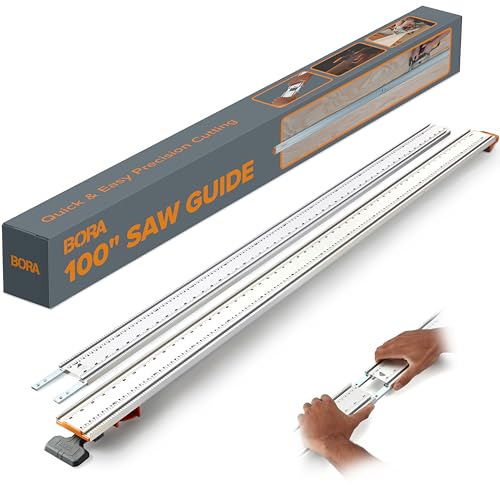
Upgrade to a larger saw when the treads are thick, the job includes many repeated bevel cuts, or the saw will also be used for framing and heavy stock. If portability matters more than runtime, compare brushless cordless circular saw kits. For the cleanest repeatable cuts, a circular saw guide rail can improve accuracy more than moving to a more powerful motor.